China's $54B Capital Injection: Lifeline or Economic Alarm?
Beijing is deploying an unprecedented $54 billion into state-owned banks and insurers—the largest fiscal capital injection in decades. The question isn't whether this stabilizes the system, but what it reveals about the depth of China's growth malaise.
The Scale Is Unusual Even for Beijing
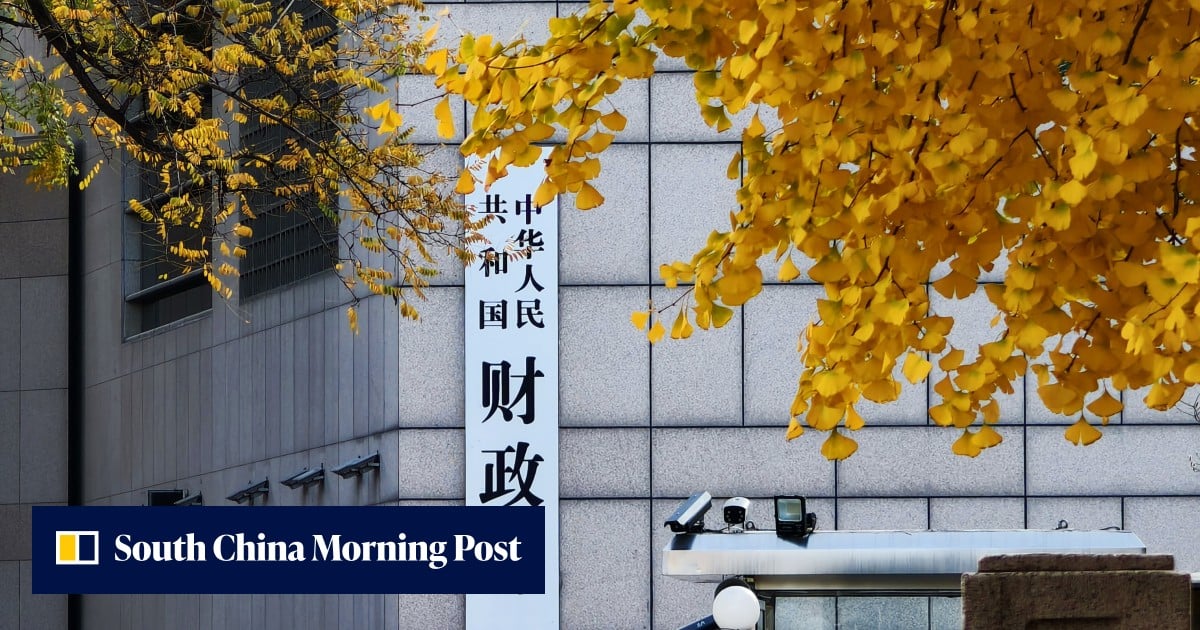
China’s Ministry of Finance did not quietly deploy 360 billion yuan—roughly US$54 billion—into the country’s largest state-owned financial institutions over the weekend. This was a signal, deliberately timed and calculated.
Capital injections of this magnitude into the financial sector are rare in China’s recent history. The last comparable move would have required revisiting the mid-2000s, when the state recapitalized banks after years of non-performing loans piled up from the Asian financial crisis fallout. Back then, the logic was clear: clean up the balance sheets, restore confidence, and let growth roll. Today, the logic is murkier. The economy is not collapsing. It is stagnating—slowly, steadily, with structural drag that no amount of balance-sheet cleansing can erase overnight.
That distinction matters.
Who Gets the Money—and Why
Let’s walk through the allocations, because they reveal more than headline totals.
The Agricultural Bank of China—the country’s largest bank by assets—is raising up to 160 billion yuan through a private placement of new A shares. The buyers? The Ministry of Finance, China National Tobacco Corporation and its subsidiaries. No foreign investors. No retail. This is an internal transfer: state money moving between state hands, with tobacco profits subsidizing bank capital adequacy ratios.
ICBC, the world’s largest bank by assets, is targeting up to 100 billion yuan from the same investor group. Another internal reallocation.
Export-Import Bank—the policy lender—receives 30 billion yuan. Xinhua’s wording is telling: the injection aims to “significantly enhance its capacity to support the real economy and opening up, while reinforcing its resilience in risk prevention.” Translation: Beijing wants Eximbank lending more aggressively, particularly into Belt and Road projects and emerging-market trade finance, while staying nimble if sovereign risk materializes.
China Life Insurance gets 35 billion yuan. The stated purpose: strengthening “ability to withstand risk.” That phrase—used almost verbatim from the company’s own announcement—suggests actuaries have been flagging something. Whether that is longevity risk, property exposure, or the compression of yields in a low-rate environment, the point is the same: China’s insurers are feeling the squeeze.
The full sum—360 billion yuan—breaks down into roughly equal parts recapitalization and political messaging.
The Policy Context: Growth Pressures Are Real
Recent Politburo meetings have all pointed in the same direction: fiscal policy must become more proactive. That has become the standard code phrase for spending money faster. The economy needs a shot in the arm, and the government is reaching for its balance sheet.
Shen Meng of Chanson & Co captured the sentiment accurately. Capital injections into financial institutions are not the only tool. They are, however, the most direct. Rather than cutting reserve requirement ratios—which works through the banking system with a lag—or issuing special bonds to fund infrastructure, Beijing is topping up bank equity capital directly. This shortens the time between decision and deployment. It also concentrates political visibility: the Finance Ministry is clearly responsible.
The implication is that growth concerns are acute enough to justify unprecedented fiscal intervention in the financial sector. Not infrastructure. Not consumption subsidies. Financial institutions themselves.
That is a shift in framing.
The Global Markets Reading
For commodity exporters—Brazil, Australia, Chile, Indonesia—this is not encouragement. A stagnant China does not consume less iron ore and copper in any single quarter, but the trajectory matters. If 360 billion yuan in capital injections is needed to maintain credit growth momentum, what happens if the next cycle requires a trillion?
The answer Beijing cannot yet give is what global markets will price in over the coming months. Equity investors in Asian financials may welcome the capital boost. Bond markets are watching for yield curve shifts. Currency traders are pricing in the likelihood of further yuan depreciation if capital outflows accelerate.
The United States and Europe, meanwhile, are calculating what this means for their own exposure. China’s state banks are growing faster than their balance sheets. ICBC’s overseas lending is expanding. The Eximbank injection directly fuels Belt and Road financing. These are not purely domestic transactions.
The Deep Structural Question
Here is the uncomfortable question beneath the headlines: if Beijing must inject tens of billions to prop up its financial sector repeatedly, what is the economic foundation sustaining those injections?
Tobacco revenue funds bank capital. Bank lending funds infrastructure. Infrastructure funding supports construction employment. Employment income supports consumption. Consumption taxes feed the budget. The budget funds—repeat.
This is a closed loop. It is not a virtuous cycle. It is a mechanical one. The question is whether mechanical cycles can survive productivity headwinds indefinitely.
China’s demographic trajectory, its property sector overhang, its external trade tensions—none of these are resolved by topping up capital ratios. The capital injection is tactical. The structural challenges are strategic.
What Beijing is signaling is not desperation. It is awareness. The government knows the engine is sputtering. It is choosing to pour premium into the carburetor rather than rebuild the engine.
That is a reasonable short-term move. It is not a long-term strategy.
Global markets should watch what follows. If the next quarter shows acceleration, the injection worked. If it shows further deceleration, the world will know that China’s financial sector is being stabilized, not revitalized—and that the real economy remains the unresolved problem.