China's AI Offer and India's Mineral Warning Reveal BRICS's Fault Lines
Xi Jinping's push for open-source AI cooperation at BRICS and Modi's warning on critical minerals capture the moment when technology and supply chains become the new arena for Global South alignment—and where that alignment is already fracturing.
The Hinge Moment
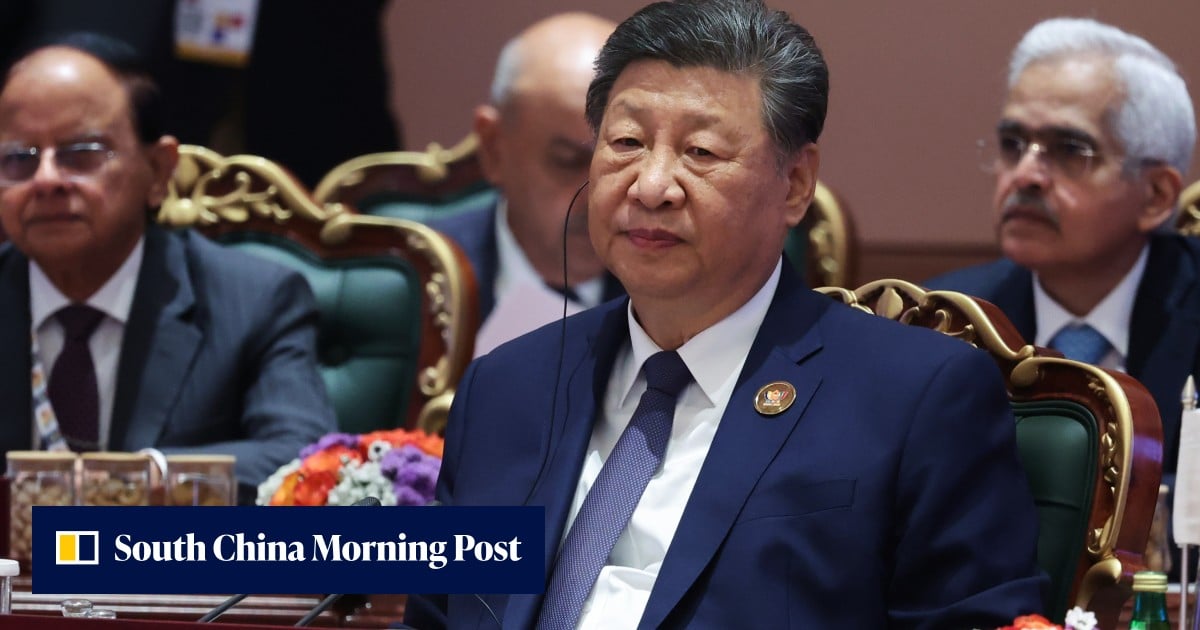
Two days of diplomacy in New Delhi produced what looked like unity. A joint declaration against U.S. tariffs, sanctions, and America-first pressure. Heads of institutions Washington once dominated now sitting at a Global South table. The optics were exactly what Beijing wanted.
But look closer and the fault lines appear instantly.
Xi Jinping arrived in India with an offer: China would help BRICS members develop open-source AI and smart manufacturing. Modi left with a warning: technology and critical minerals must not become economic weapons.
One is a proposition. The other is a boundary.
Together they capture something few outlets are fully parsing—the contest over AI supply chains and rare-earth leverage is reshaping Global South alignment faster than any diplomatic declaration can soften the reality.
Xi’s Open-Source Gambit
Xi’s pitch had three parts. Open-source AI frameworks. Smart factory technology. Training programs for young talent from member states.
On the surface this reads as generous. It is also strategic.
China has spent years building AI capability despite U.S. export controls on advanced semiconductors. The result is a country that has learned to innovate under constraint—a skill BRICS nations across Africa, Latin America, and the Middle East now face themselves.
The open-source angle is deliberate. By positioning China as the provider of accessible AI tools outside the Western ecosystem, Beijing creates dependency on Chinese standards, Chinese infrastructure, and Chinese talent pipelines.
This is not abstract. Huawei already operates data centers across BRICS markets. Baidu’s ERNIE models are being adapted for regional languages. Chinese technical universities are recruiting BRICS students at scale.
The offer sounds cooperative. The architecture it builds is not neutral.
Modi’s Mineral Boundary
Modi’s warning came on the second day, aimed squarely at the question neither leader wanted to discuss publicly: who controls the inputs to the next compute era?
Critical minerals—lithium, cobalt, rare earths—are the bottleneck behind every AI model, every semiconductor fab, every electric vehicle. India has massive reserves. It also has ambition to become a refining and manufacturing hub, not just a raw material supplier.
When Modi warns against turning minerals into weapons, he is warning against two directions of pressure simultaneously. One comes from China, which already dominates rare-earth processing. The other comes from the West, which has spent years building alternative supply chains to reduce dependency on Beijing.
India’s position is genuinely conflicted. It needs Chinese AI infrastructure to build domestic capability. It needs Western technology and investment to industrialize. It does not want to be either a supplier of raw materials or a consumer of finished goods—it wants to be a processor and a manufacturer.
That ambition is why the mineral warning matters. It signals New Delhi’s refusal to become a resource colony in whoever wins the AI race.
The Supply Chain War No One Is Naming
Western outlets covered the summit’s anti-tariff rhetoric. Asian outlets are covering something else: the quiet war over who controls the physical inputs to artificial intelligence.
Consider the timeline.
China refined approximately 70 percent of global rare-earth output in 2025. India holds an estimated 7 percent of global rare-earth reserves but less than 1 percent of processing capacity. The gap is structural, not accidental.
Meanwhile, the U.S. and EU have launched critical mineral partnerships with India, Australia, and African nations. The goal is explicit: reduce dependence on Chinese processing by building parallel supply chains.
Both projects will take years. Both are already shaping diplomatic alignment.
The BRICS summit revealed the tension between them. Xi’s AI offer assumes China provides the framework. Modi’s mineral warning assumes no single power should control the inputs. The two positions are not reconcilable without compromise—and neither side has signaled willingness to compromise.
Who Wins, Who Loses
The immediate winner is any BRICS nation that can extract concessions from both China and the West without fully aligning with either.
Brazil, South Africa, and the UAE have been moving in this direction—accepting Chinese infrastructure investment while deepening technical partnerships with European and American firms. The strategy is risky. Both sides prefer loyalty over ambiguity.
The immediate loser is the concept of a unified Global South tech bloc. The joint declaration against U.S. pressure was real. But realpolitik over minerals and AI standards is stronger than diplomatic consensus.
Washington sees the fracture coming. That is why the Critical Mineral Security Partnership and the Indo-Pacific Economic Framework are being accelerated. The U.S. is not trying to rebuild the old order—it is trying to build a new one around allies who share its concern about Chinese technological dominance.
Beijing sees it too. That is why the AI talent-training offer and the open-source push are being emphasized. If China cannot supply chips, it will supply everything else around the chips.
What Happens Next
The BRICS framework will continue expanding. More nations are applying for membership. The institutional architecture will grow more complex.
But the underlying question remains unresolved: who controls the inputs to the next computing era?
The answer will not come from summits or declarations. It will come from mine permits, refinery contracts, university admissions, and data-center construction timelines across the Global South.
Xi offered AI cooperation. Modi offered a warning. Between those two moves is the shape of the next decade of technological competition—and the realignment of countries that have spent decades pretending they had no choice in the matter.