China’s Chip Order Spikes Create Global Supply Bottleneck
Chinese tech giants ordered 6 million GPUs but expect only 10% fulfillment. Nvidia’s capacity squeeze reveals how US export rules are reshaping AI hardware economics worldwide.
The 10 Percent Problem
ByteDance, Alibaba and Tencent placed orders for more than 3 million Nvidia RTX PRO 5500 graphics cards — collectively worth over $35 billion — and expect to receive roughly 300,000 units.
That 10 percent fill rate is not a negotiation tactic. It is the physical limit of what Nvidia can deliver.
Chinese companies in total have ordered more than 6 million units. Nvidia’s global production capacity for next year tops out at around 3 million chips across all customers worldwide. The math is blunt: even if every unit went to one buyer, China’s orders alone would consume twice the world’s output.
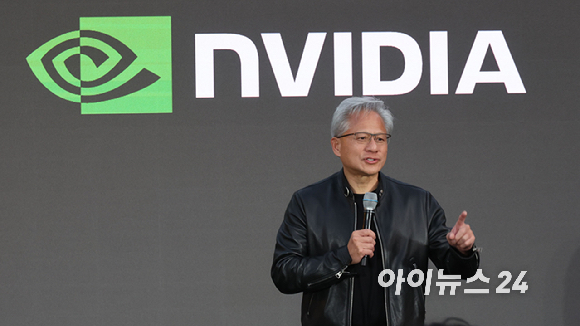
Jensen Huang did not mince words when he told reporters last year that Nvidia’s share of China’s AI datacenter GPU market had effectively vanished under US export restrictions. What the RTX PRO 5500 order flood proves is that while the high-end door is closed, the side window remains wide open — and every company in Beijing and Shenzhen is rushing through it.
The orders were placed across multiple quarters, often through third-party distributors in Southeast Asia and the Middle East who serve as intermediaries between Nvidia’s allocation system and Chinese end users. That layer of separation has not prevented Nvidia from tracking the ultimate destination of its chips, nor has it slowed the scramble. Supply chain sources say at least seven distinct Chinese cloud providers and AI startups have entered the queue, each seeking allocation ahead of competitors.
Why Workstation Chips, Not Datacenter Chips
The RTX PRO 5500 is not a datacenter GPU. It is a workstation card built for professional desktops and compact servers, priced at roughly $11,400 per unit. Its performance sits somewhere near the RTX 6000D, an earlier China-compliant chip Nvidia quietly discontinued after demand outpaced its limited availability.
The Blackwell B300 is banned outright. The Hopper H200 requires individual US government licenses that are granted sparingly and often delayed for months. That leaves products like the RTX PRO 5500 as the closest legally available path to meaningful AI compute for Chinese firms.
Chinese buyers are not using these cards for training. They are deploying them for inference — the process of running trained models against real-world queries. Inference requires a fraction of the compute that training demands, which makes a mid-tier card viable for a growing number of applications: recommendation engines, customer service chatbots, content moderation, search ranking, and lightweight model fine-tuning.
It also makes three million cards feel like a lifeline rather than a solution. A single large language model inference workload that might run efficiently on a cluster of A100-class datacenter GPUs can be distributed across hundreds or thousands of workstation cards — but only if they are available. Right now, they are not.
The Price of Being Restricted
When the RTX 6000D launched, Chinese companies largely refused to buy it at the listed price. The performance-to-cost ratio was unattractive compared to older black-market stock or parallel-imported chips. Now that card is gone and secondhand prices have reportedly doubled.
The RTX PRO 5500 faces a similar dynamic. Demand is surging because supply is artificially constrained, not because the product is compelling on its merits. That is a market shaped by regulation, not innovation.
Tanshun Technology, a Shenzhen-listed firm, announced in mid-November that it had contracted to buy 20,000 RTX PRO 5500 cards. The disclosure simultaneously flagged that delivery could be delayed or reduced because of supply shortages and overseas technology controls — language that is becoming standard in Chinese public-company filings related to semiconductor procurement.
This is the new normal: purchase agreements that exist on paper but not in warehouses. Companies are signing contracts they know will not be fulfilled, partly to secure a spot in Nvidia’s allocation queue and partly to signal to investors and partners that they are securing compute capacity. The contracts themselves carry little legal recourse across jurisdictions.
Secondary-market pricing tells the same story. Within weeks of the RTX PRO 5500’s initial sample shipments in December, resale listings on Chinese e-commerce platforms appeared at prices 40 to 60 percent above MSRP, with sellers advertising limited stock and wait times measured in months rather than days.
What This Means for Nvidia’s Bottom Line
Nvidia is in a strange position. It is telling customers they can receive only 5 to 10 percent of what they ordered, while simultaneously preparing to funnel most of its TSMC production capacity toward the next-generation Rubin platform — a datacenter chip family aimed squarely at markets outside China.
Rubin will consume TSMC’s most advanced nodes. That leaves even less room for consumer and workstation GPU output. If current procurement patterns hold, the RTX PRO 5500 shortage will worsen before it improves.
The revenue math is murky. Order value does not equal recognized revenue. Three million units at $11,400 represents $34.2 billion in potential sales. At a 10 percent fill rate, that drops to roughly $3.4 billion — meaningful, but far below what the order book suggests. Nvidia will recognize that revenue only as shipments materialize, and those shipments are likely to stretch across 2026 and into 2027 at current allocation rates.
Nvidia will likely prioritize higher-margin datacenter customers for its constrained capacity, leaving Chinese buyers with the leftovers and a waiting list. The company’s quarterly earnings calls have already begun reflecting this prioritization, with executives noting that non-China datacenter demand continues to exceed supply at margins above 70 percent.
Second-Order Effects: The Ripple Through the Ecosystem
The RTX PRO 5500 bottleneck is already creating downstream consequences. Cloud providers in China are adjusting their service offerings — scaling back AI inference pricing, rationing compute quotas for smaller customers, and in some cases delaying new product launches that depend on GPU availability. Startups that banked on cloud-hosted Nvidia infrastructure are reconsidering their go-to-market timelines.
Competitors are taking notice. AMD and Intel have both reported increased inquiry volume from Chinese buyers seeking alternative GPU pathways, though neither can currently match Nvidia’s software ecosystem or shipment volumes. Huawei’s Ascend series has seen renewed interest, but domestic production constraints limit how quickly it can scale.
The bottleneck is also reshaping datacenter architecture decisions. Chinese firms that previously planned greenfield builds around dense GPU clusters are now designing around hybrid configurations — pairing whatever Nvidia cards they can secure with domestic alternatives and older-generation stock held in reserve. That complexity increases operational costs and reduces efficiency, but it is the only viable path under current constraints.
The Domestic Semiconductor Question
China has been pushing hard to build its own AI chip ecosystem for years. The results so far are mixed. Domestic foundries cannot yet match TSMC’s leading-edge output, and access to advanced lithography equipment remains blocked by export controls. Companies like Huawei, Cambricon, and Moore Threads have produced viable chips, but scale and yield remain significant challenges.
The RTX PRO 5500 orders are evidence that Chinese companies still prefer Nvidia hardware even at reduced performance and inflated prices. That preference will not shift quickly. Nvidia’s CUDA ecosystem creates deep switching costs — entire codebases, toolchains, and engineering workflows are built around it. Migrating to an alternative requires rewrites, retraining, and risk that most companies cannot afford in a competitive market.
But supply constraints themselves may accelerate domestic substitution over time. When you cannot buy what you need, you start building what you can. That is a slow process, and one that US policy arguably hastens without achieving its immediate goal of ceding Chinese AI advancement. Every year spent without access to cutting-edge Nvidia chips is a year of redirected investment toward domestic alternatives that will eventually narrow the gap.
What Happens Next
Expect the RTX PRO 5500 to sell out within months of its commercial launch in early 2026, despite having only cleared initial sample shipments in December. Allocation will remain tight throughout the year as Nvidia directs TSMC capacity toward Rubin and datacenter products, deliberately starving the workstation segment.
Expect Chinese firms to keep placing orders as a form of insurance — locking in allocation in a market where fulfillment is never guaranteed. Order books will continue to swell even as fill rates stay near single digits, because the alternative is being locked out entirely.
Expect secondary-market prices to remain elevated well into 2026, and expect Chinese cloud providers to pass those costs through to enterprise customers, raising the price of AI inference services across the sector.
And expect the gap between Nvidia’s global revenue and its China revenue to widen further, even as Chinese demand for the company’s products remains stubbornly high. Nvidia will lose a market it once dominated, but the losses will be measured in opportunity cost rather than absolute decline — a different kind of defeat.
The 6 million-unit order book is not a sign of strength. It is a signal of a market operating under duress — where demand far outstrips supply because supply has been deliberately sliced by geopolitics. The RTX PRO 5500 is just the latest chapter in a story that began with the H100 ban and will continue long after Rubin ships. Until China’s domestic semiconductor pipeline matures, Chinese AI companies will keep ordering chips they cannot fully receive, and Nvidia will keep turning away the world’s most eager customers at its own doorway.