Chinas EV War Is Attacking Koreas Auto Parts Ecosystem
Chinese EVs now make up 35 percent of Koreas new electric vehicle registrations. But the real threat to Korean automakers isnt just competition on showroom floors — its the parallel invasion of the parts and repair market that could hollow out the entire domestic supply chain.
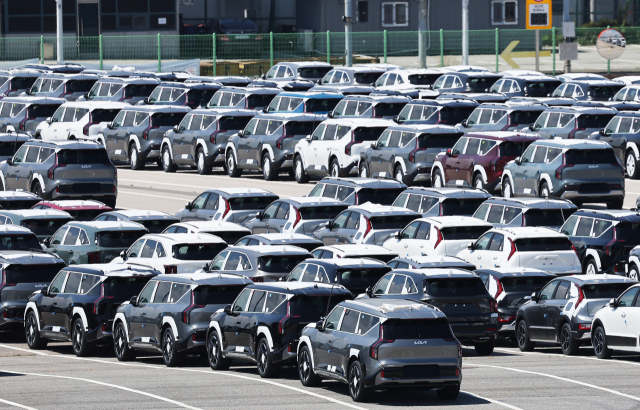
The Second Front of Chinas EV Offensive
The headlines about Chinese electric vehicles are usually about showrooms — units sold, market share, price cuts. But beneath that story, happening in workshops and supply-chain offices across Gyeongsangbuk-do and Daegu, is a slower, less visible erosion that may matter more over the next decade.
Chinese EVs now account for 35 percent of all new electric vehicle registrations in South Korea. That number jumped from 26.8 percent a year ago, with 69,513 Chinese-made EVs hitting Korean roads in the first half of 2026 alone. BYD, Tesla Shanghai, and Polestar are moving product. Korean consumers are buying them — partly because they are good cars, partly because they are inexpensive.
The damage to the Korean auto ecosystem, however, does not stop at the dealership door.
Price Cuts Inevitably Travel Down the Supply Chain
When Korean automakers face a pricing wall from Chinese rivals, the natural instinct is to cut prices. And when they cut prices, the pressure does not stay at the assembly line. It moves downward, into the supplier network, where margins are already thin and costs — raw materials, labor — are rising.
One supplier executive in Daegu put it plainly: the idea that Chinese cars are only popular because they are cheap is outdated. The perception is shifting that Chinese EV technology has pulled ahead. If Hyundai and Kia respond by lowering vehicle prices, the ask going downstream will be the same one every OEM faces in a price war — lower your costs too.
This is not hypothetical. Korean parts makers are already feeling the squeeze. The chain reaction is straightforward: cheaper cars require cheaper parts. Cheaper parts require suppliers to absorb more cost pressure. Absorb enough of it, and profitability deteriorates fast.
The question is whether Korean suppliers can absorb indefinitely, or whether the structural shift in the market is too large to manage through negotiation alone.
The Aftermarket Is the Quiet Trap
Here is what most English-language coverage of the China-Korea auto rivalry misses: the parts and repair market, known as the aftermarket, is where the real long-term vulnerability lies.
Every car on the road needs parts eventually. Brakes, batteries, sensors, body panels, electronics — all of it wears out, breaks, or gets replaced. The aftermarket is a multi-trillion-won recurring revenue stream that has historically subsidized the new-vehicle business. It is also far more difficult for Chinese automakers to capture directly, because it requires establishing a parallel supply chain in a foreign market. Until now.
Chinese parts manufacturers are moving into Korea alongside Chinese cars. A Daegu supplier noted that repair shops are already sourcing Chinese replacement parts because Korean EV buyers are now a significant share of the road. The feedback loop is tight: more Chinese cars on Korean streets means more demand for Chinese parts in the repair sector, which displaces domestic suppliers, which erodes the margin base that keeps the entire Korean parts industry healthy.
This is not a single-product threat. It is a systemic one. Chinese EVmakers are not just exporting vehicles — they are exporting an entire parts ecosystem. That is a strategy, not an accident.
The Value-Chain Risk Is Bigger Than Vehicle Sales
The broader concern, as KAMA president Jeong Dae-jin has argued, is that the electric-vehicle industry is not a single sector. It is a dense network — batteries, electronics, precision molds, sensors, semiconductors — linking hundreds of suppliers to a handful of final assemblers. When vehicle production moves or shrinks, the ripple effects do not stay contained.
Higher Chinese market share in Korea means fewer Korean-made EVs rolling off Korean assembly lines. Fewer vehicles means fewer parts ordered. Fewer parts orders mean less work for subcontractors, less hiring, and potentially layoffs in regions like Daegu and Pohang that have built entire economies around auto manufacturing.
The data on Korean EV exports to the United States — a near-98 percent drop in a single month — is an extreme example, but it points to a structural trend. If Chinese EVs continue gaining ground in Korea and other markets, the pressure on Korean production bases intensifies. The question becomes whether Korean automakers can compete on price without destroying the margin structure that funds R&D, plant investment, and worker pay.
What Changes Now
Korea cannot replicate Chinas subsidy engine. Beijing has directed enormous capital into battery supply chains, charging infrastructure, and consumer incentives. Seoul does not have that leverage, at least not yet.
What Korea can do is protect the parts ecosystem that sustains the industry. That means two things, practically.
First, policy support for domestic production incentives — tax breaks, workforce retention programs, and targeted investment in next-generation battery and semiconductor suppliers that keep the value chain anchored in Korea even as vehicle assembly faces competitive pressure.
Second, a proactive stance in the aftermarket. Korean suppliers should be developing parts specifically compatible with Chinese EV models already on Korean roads, rather than waiting for repair shops to source them elsewhere. Turning a competitive threat into a revenue stream is better than losing the revenue entirely.
The Daegu supplier quoted in the report has already adopted that second logic, repositioning to serve Chinese-EV repair demand. That is a tactical adjustment. The strategic question is whether the wider industry can make the same move at scale before the margin erosion becomes irreversible.
Chinese EVs are not just changing which cars Koreans buy. They are changing who profits from the cars once they are on the road. That shift, if left unaddressed, will reshape the Korean auto industry far more than any single price war on the showroom floor.