How China Used the Oldest Spy Trick to Take Down Jensen Huang
Jensen Huang's resignation exposes how personal vulnerability became national security failure. The oldest trick in espionage—using romance as leverage—crashed the world's most valuable company.
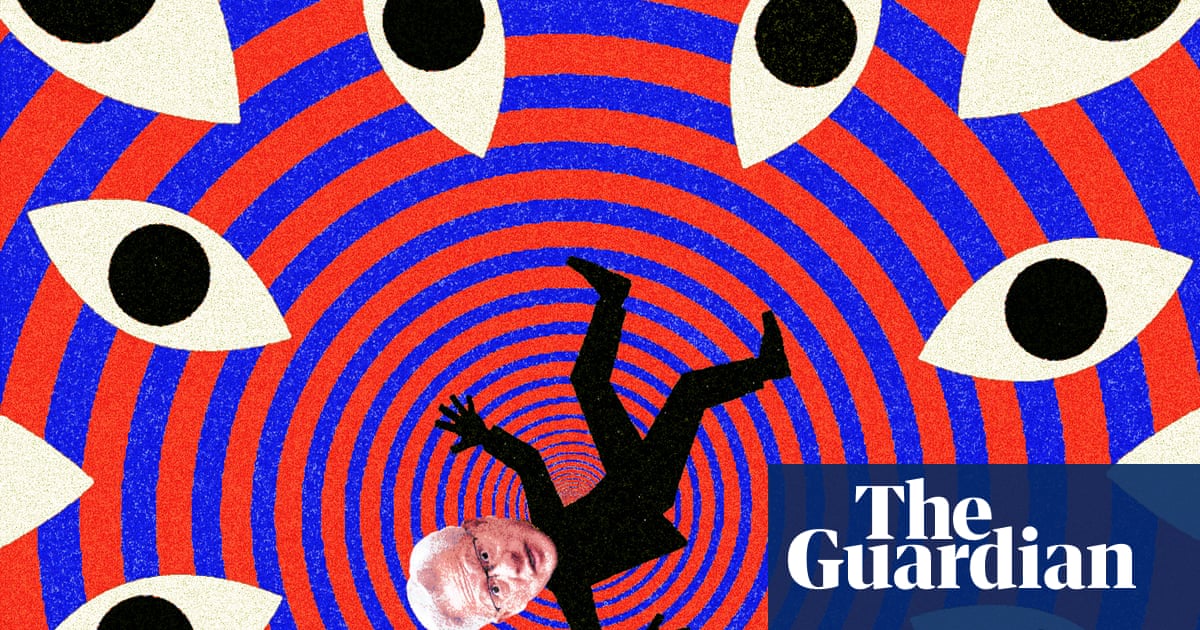
The Trap Was Never Digital
The $4 trillion collapse of Nvidia didn’t start with a firewall breach or a zero-day exploit. It began, apparently, with dinner in Taipei and a bar in Taiwan.
Jensen Huang’s resignation this week shatters one of Silicon Valley’s most untouchable figures. What makes it terrifying for the industry isn’t just that a former close ally of Donald Trump fell—though that alone rewires Washington’s tech-policy landscape—it’s that the method used against him is so embarrassingly ancient. Intelligence officials call it a honeypot operation: identify a powerful person’s weakness, build intimacy around it, and extract what you need before they realize they’ve been played.
As one former FBI counterintelligence agent put it bluntly: “What a target and a tremendous job by the Chinese.”
Who Lost, Who Gained
Losing: Nvidia shareholders lost hundreds of billions in market value in days. The Nasdaq dropped 4%. Export-control architecture built around chip restrictions to China now looks porous at the very top. The US government lost face—and possibly data—through its most important defense-industry partner.
Winning: If allegations hold, Beijing won access to advanced computing capability and potentially insights into Nvidia’s product roadmap, customer relationships, and policy advice it feeds to the White House. The broader win is psychological: proof that despite years of cyber-hardening and executive training programs at companies like OpenAI and Meta, human vulnerability remains the cheapest entry point into the world’s most secure firms.
Uncertain: Whether Huang actually shared classified or proprietary information, or whether his relationship with Alice Huang—the Megaspeed executive US officials suspect of spying—was purely personal. The legal proceedings haven’t established facts yet. What we do know is that billions in restricted chips appear to have flowed through Megaspeed’s channels during their relationship.
The Oversight Failure That Shouldn’t Exist
Here’s what keeps security consultants awake: someone at Nvidia almost certainly knew. Corporate threat-assessment professionals estimate that firms monitor C-suite executives’ movements, especially on international travel. Huang was making trips to Taiwan and meeting Chinese-linked executives during a period when the Commerce Department was already investigating whether Megaspeed was circumventing export controls.
Multiple sources indicate a classified memo overseen by Secretary of State Marco Rubio flagged the relationship to the White House as early as spring this year. If true, that means both the company and parts of the US government were aware of the operational risk months before Huang resigned.
The question now is whether anyone at Nvidia raised alarms internally, and whether those alarms were acted on. That’s the inquiry the law firm Nvidia hired will be digging into—and the subcommittee that will grill Huang before Congress.
Silicon Valley’s Long Uncomfortable History
This isn’t the first time foreign intelligence has tried to compromise American tech leaders through personal relationships. Declassified FBI documents show former California congressman Eric Swalwell admitted to romantic involvement with suspected Chinese operative Christine Fang. Soviet handlers ran similar operations during the Cold War out of consulates in San Francisco, targeting chip designers and defense contractors.
What makes the Nvidia case different is the sheer visibility of the target. Huang wasn’t a mid-level engineer with access to source code. He was the architect of the company’s technical strategy, a frequent advisor to the Trump White House on AI policy and export controls, and the public face of America’s AI dominance narrative. Compromising him wasn’t just about stealing IP—it was about influencing the conversation around how far the US should restrict chip sales to China.
The Human Layer Problem
Security firms report demand surging after the scandal. But the uncomfortable truth is that no amount of corporate training eliminates the fundamental asymmetry of these operations. Foreign intelligence services operate with patience, institutional backing, and no personal stakes. Their targets are often lonely, flattered, distracted—or simply human.
“These are really smart, accomplished people,” said Brian Stephens of Teneo, “and you don’t want to come across telling them that they don’t know how to behave themselves.”
The defense mechanism is real. Executives protest they’re not important enough to target, that everything about their lives is already public. Both arguments turned out to be spectacularly wrong in Huang’s case.
Supply Chains Under Scrutiny
The fallout extends far beyond Huang himself. Megaspeed, the Hong Kong-based intermediary at the center of the investigation, became an instant pariah in semiconductor distribution circles. Three major logistics partners terminated contracts within 48 hours of the scandal breaking. Industry insiders report that alternative distribution channels are scrambling to distance themselves from any connection to the Taiwan route, even tangential ones.
That creates a ripple effect across the AI hardware ecosystem. Foundries in Taiwan that supply specialized components to Megaspeed’s network are now fielding urgent audit requests from every major American AI company. Google, Amazon, and Microsoft have all quietly instructed vendors to certify the origin of every component in their supply chains—a process analysts expect will take months and inflate costs across the board.
The secondary consequence is geopolitical. Taiwan’s government, already navigating delicate relations with both Washington and Beijing, found itself diplomatically isolated during the initial crisis window. No public statement emerged from Taipei for three full days after the resignation, a silence that some analysts interpreted as either shock or complicity. The absence only intensified speculation that Taiwanese intelligence may have known about the surveillance activities and chosen not to intervene.
The Policy Vacuum Left Behind
Perhaps the most consequential dimension of the scandal involves the regulatory framework itself. Huang served on multiple advisory panels that shaped current chip-export restrictions. His access to both corporate secrets and government deliberations made him uniquely positioned to influence which technologies were deemed too sensitive to sell abroad—and which slipped through unnoticed.
If the allegations prove true, those judgments were being informed by someone who had intimate knowledge of the very restrictions he was helping design. That circular dependency represents a structural flaw no amount of cybersecurity spending can patch. The Trump administration’s reliance on a single executive to articulate its AI-strategy position meant that compromising Huang simultaneously degraded America’s negotiating posture with Beijing and weakened enforcement of the rules Huang helped create.
Federal agencies are now reportedly compiling a list of all policy recommendations Huang authored or influenced since 2023. Legal scholars predict challenges to any regulations directly tied to his input, arguing the guidance was tainted from inception.
What Happens Next
Huang faces a shareholder lawsuit in California, Congressional testimony, and an FBI investigation. Trump has publicly backed him as an “honorable guy,” but political protection has limits when export-control violations enter the picture. Commerce Secretary Howard Lutnick faces mounting pressure over why Megaspeed wasn’t placed on a national-security watch list despite existing intelligence.
For the AI industry, the lesson is structural rather than technical. Despite billions spent on cybersecurity, data encryption, and supply-chain audits, the weakest link in securing the AI revolution appears to be the unmonetized, unanalyzed, deeply personal behavior of its most powerful leaders.
The honeypot trap is, as one expert noted, “as old as the earth itself.” Nvidia’s collapse proves something equally old: that arrogance and isolation at the top make even the smartest man in AI vulnerable to the oldest con in the book.