China Pre-Frames Trump-Xi-Putin Summit Before It Begins
Beijing is setting the terms before the first US-China-Russia trilateral meeting even starts. The venue, the rhetoric, and the deliberate silence on nuclear disarmament and Ukraine reveal a strategy to control the narrative.
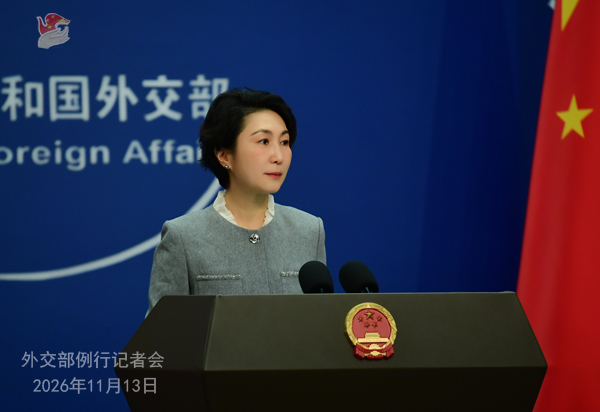
Beijing sets the stage before the cameras arrive
The first-ever meeting between the leaders of the United States, China, and Russia opens on November 19 in Shenzhen, Guangdong province, on the sidelines of APEC. By November 16, China had already defined what that meeting would not be.
Mao Ning, spokeswoman for the Chinese Foreign Ministry, told reporters that Beijing intended to focus on global peace and strategic stability among great powers. The Global Times, the state-linked tabloid that often signals party-line thinking, went further: it dismissed the idea that the gathering amounted to a new “Shanhaiguan system” — the term historians use for the informal great-power concert that arranged Asia’s fate after the 1895 Sino-Japanese War — calling such reading a misinterpretation.
What the dismissal really signals is a coordinated effort to frame the summit on Chinese terms before anyone else speaks. That is unusual diplomacy. Ordinarily, governments react to summits. China is doing something different. It is telling the world what the meeting means before the leaders sit down.
The Shenzhen choice is not neutral
Selecting Shenzhen as the venue is itself a message. The city sits in Guangdong, the industrial heartland of southern China, far from the ceremonial weight of Beijing or the diplomatic theater of Shanghai. It projects an image of pragmatic, development-focused engagement rather than grand ideology.
But there is a sharper implication. Holding the talk outside the traditional capitals subtly distances the event from Western-style multilateral staging. It also places the meeting in a port city with deep economic ties to Southeast Asia and a history of open-door policy. The signal to regional actors is straightforward: this conversation is about economics and stability, not about drawing new Cold War boundaries.
That signal is aimed partly at Washington, but more urgently at Seoul and Tokyo. Both countries watch any movement between the United States, China, and Russia with acute anxiety. A three-way great power deal that sidelines them would be a strategic earthquake.
The silence on nuclear disarmament and Ukraine
China deliberately avoided commenting on specific agenda items that the United States and Russia have signaled they want to pursue: nuclear arms reduction and the war in Ukraine. Mao Ning offered only broad language about discussing major international issues broadly, without naming either topic.
This silence is intentional. Nuclear disarmament remains a sensitivity for Beijing, which maintains a modest but modernizing arsenal and has resisted inclusion in bilateral US-Russia talks. Bringing it to a trilateral format would force China into a framework it designed no part of. Ukraine is equally awkward. Beijing has provided political and material support to Moscow since the full-scale invasion began, yet it has refused to call the war by that name or condemn Russia’s actions outright. A trilateral discussion chaired around those topics would put China in an impossible position.
By keeping the stated agenda vague, China preserves maximum flexibility. It can agree to general principles without committing to anything concrete. That is a classic negotiating posture, but executed with unusual speed given the summit is only days away.
What Beijing gains by framing first
Pre-framing the summit gives China three advantages. First, it controls the vocabulary. Rejecting the “Shanhaiguan” analogy preemptively blocks a narrative that would make the meeting look like imperial partition. Second, it positions China as the responsible partner — the one advocating for dialogue and strategic stability rather than ideological confrontation. Third, it raises the cost for the United States and Russia if they push for specific outcomes that contradict the cooperative language Beijing has already established.
For the Biden administration, or any incoming US leadership, this creates a diplomatic bind. If Washington enters the room demanding progress on nuclear weapons or Ukraine, it risks appearing confrontational against a backdrop China has already painted as collaborative. If it accepts vague statements, it gets optics without substance.
Why Seoul and Tokyo should pay attention
The implications for Japan and South Korea are direct. Both nations anchor their security strategies on alliances with the United States and view Russia’s war in Ukraine and China’s military expansion as existential threats. A US-China-Russia trilateral that produces vague commitments to stability without addressing either threat could quietly normalize the status quo in ways that disadvantage both allies.
South Korea, in particular, faces a tighter squeeze. President Yoon Suk Yeol has aligned firmly with Washington on China and Russia, but Beijing retains enormous economic leverage. A trilateral framing that casts Moscow and Beijing as partners in global governance undermines Seoul’s rationale for joining Western sanctions and rhetorical campaigns against Russia.
Japan’s concerns run deeper. A successful trilateral process could embolden China to argue that great power coordination — including on Taiwan — is legitimate international practice. The Shanhaiguan rejection rings hollow if Beijing privately entertains the same logic.
What happens next
The summit itself, when it occurs, will likely produce joint language leaning heavily on peace, stability, and cooperation. Expect few operational announcements. The value for China lies not in deliverables but in legitimacy — proving that Beijing can sit at the table with Washington and Moscow as an equal, on its own terms.
The harder test comes afterward. How do the three powers handle the issues they deliberately left off the agenda? Nuclear arms control negotiations between the United States and Russia continue regardless. The war in Ukraine will not pause for a photo opportunity in Shenzhen. And the question Beijing most fears — whether trilateral cooperation implicitly legitimizes Russian actions or Chinese coercion in the Indo-Pacific — will surface again.
China drew a line today. Whether the world follows it remains to be seen.