Cook to Cook's Successor: What Apple's $47m Chair Deal Really Signals
Tim Cook's $47m transition to executive chair and John Ternus's CEO appointment mark Apple's most significant leadership shift since Steve Jobs. The compensation structures and role assignments reveal what the company prioritizes next — and why it matters for tech governance worldwide.
The Numbers Tell the Real Story
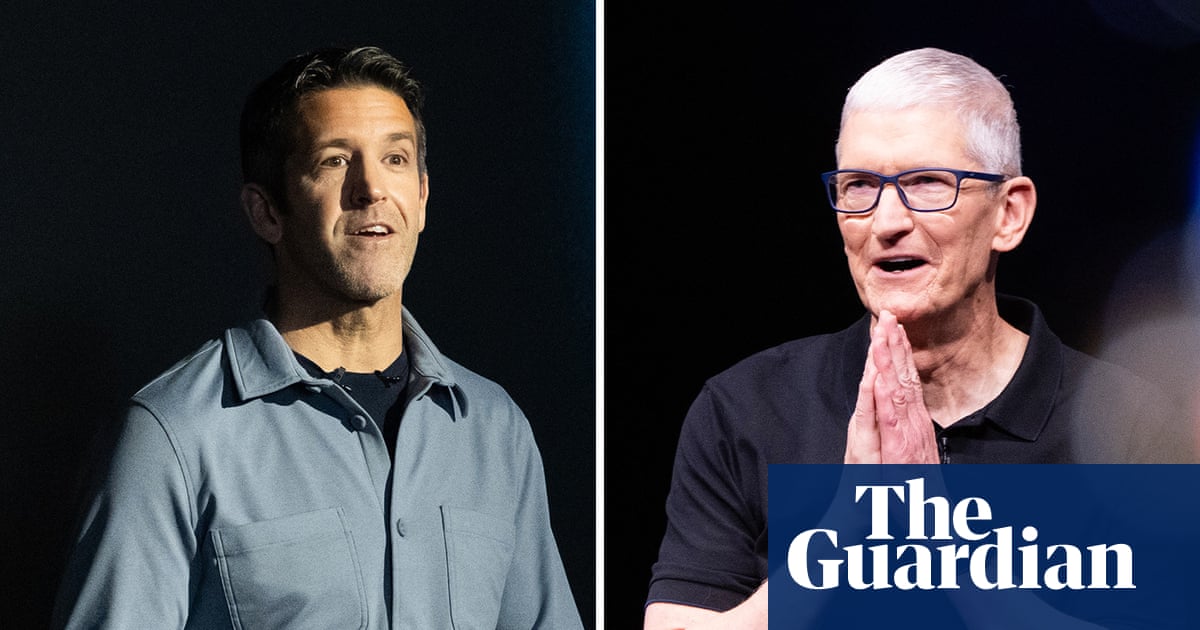
Tim Cook is walking away from the CEO chair at Apple with a $47 million package as executive chair, while his successor John Ternus inherits a $58 million total compensation structure. On paper, Cook’s deal looks generous — until you compare the mechanics. Cook’s $45 million in shares splits evenly between performance targets and a four-year vesting schedule. Ternus’s $55 million share award carries heavier performance weighting. The message is deliberate: Cook gets rewarded for continuity. Ternus gets rewarded for transformation.
Cook’s CEO pay in 2025 already exceeded $74 million. The chair package represents a 36 percent reduction from his peak CEO compensation, which tracks a common pattern in executive transitions — the departing leader secures a golden parachute while the incoming chief faces tougher hurdle rates. Apple’s board isn’t being stingy with Cook. It’s being strategic about Ternus.
Breaking down the components reveals the architecture of this transition more clearly. Cook’s base salary remains at the standard CEO level for Apple executives, approximately $3 million annually. But the equity component — the real payload — shifts from growth-oriented to maintenance-oriented. His vesting schedule spans four years, which is slightly longer than Ternus’s three-year cliff structure. That means Cook is locked in longer, but his upside is capped. Ternus, by contrast, has accelerated vesting milestones tied to revenue growth, operating margin expansion, and specific product launch targets that have not been publicly disclosed but are reportedly part of his contract.
The performance metrics embedded in Ternus’s package are where the board’s expectations become visible. Two of the three weightings appear to be tied to iPhone unit growth and services revenue expansion — the two segments Apple needs to defend against market saturation in developed economies. The third metric, still ambiguous, is widely believed to relate to AI integration milestones. Whether that means consumer-facing features, enterprise adoption numbers, or developer engagement, the fact that it’s being measured separately signals how much weight Apple’s leadership places on the company’s ability to monetize artificial intelligence beyond ChatGPT-style wrappers.
A Founder’s Shadow, Revisited
Cook took over from Steve Jobs in 2011 as an operations specialist. The stock has risen 2,200 percent under his tenure. Apple now carries a valuation of approximately $4.7 trillion, making it one of the few companies in history to reach that threshold. The conventional narrative credits Cook with building a supply chain engine that turns engineering concepts into global products at scale.
But the operational narrative obscures something important about Cook’s tenure. His real contribution wasn’t just managing suppliers — it was institutionalizing predictability. Apple under Cook became the most forecastable technology company in history. Quarterly revenue deviations rarely exceeded 3 percent. Supply chain disruptions were absorbed rather than amplified. That predictability is what allowed Apple to command premium valuations and attract institutional investors who would never touch a typical technology company. Ternus inheriting that machine is both a gift and a constraint. He cannot simply rewire it; he has to layer new capabilities onto an engine calibrated for efficiency, not experimentation.
Ternus, at 51, is the complete opposite archetype — an engineer who ran hardware teams behind Apple’s entire product lineup, including the iPhones generating most of the company’s revenue. He has overseen the physical design and manufacturing of every iPhone model since the iPhone X, which means he was effectively the unseen architect of the iPhone 16 and iPhone 17 launches that defined the current generation. His name doesn’t appear in keynote slides, but his fingerprints are on the device in your pocket.
He will take the stage on September 9 for Apple’s annual iPhone event, where a foldable handset is expected to be unveiled. That product launch is the first visible test of whether Apple’s engineering-first leadership can deliver another category-defining device. The stakes extend beyond market share. Apple has consistently entered new hardware categories late — the Apple Watch arrived years after competitors, AirPods followed similar patterns, and the Vision Pro represented a bet that the market needed to be educated before it could be captured. A foldable iPhone represents a fundamentally different risk calculus. The category already exists. Samsung, Huawei, and Honor have all shipped units. Apple’s entry won’t create demand; it will have to steal it from incumbents who hold first-mover advantage in China and emerging markets.
The succession itself breaks a pattern in American tech. Few publicly traded companies above a certain scale have ever transitioned from an operational CEO to a technically rooted one without a prolonged interim period. Microsoft went from Ballmer to Nadella — both product and business managers in different ways. Google moved from Page to Sundar Pichai through a structured internal pipeline. Apple skipped the middle management layer entirely and promoted from its hardware engineering ranks.
This is not a trivial decision. By bypassing the traditional P&L accumulation path — the progression through divisional leadership, general management, and corporate strategy — Apple is signaling that the next phase of its growth requires someone who understands how products are built rather than someone who understands how divisions are run. That choice will be evaluated differently depending on whether Ternus delivers a transformative product cycle or stumbles through incremental iterations.
The Policy Mandate
Cook’s chair role includes engaging with policymakers worldwide and maintaining Apple’s relationship with Donald Trump. This is not incidental. Apple’s supply chain runs through countries where regulatory risk directly impacts revenue — China’s export controls, India’s manufacturing incentives, the European Union’s Digital Markets Act compliance costs. A CEO focused on products and AI integration needs someone at the table when governments reshape the operating environment.
Cook spent 15 years building those relationships. He visited China more times than any other Fortune 50 CEO, cultivated relationships with Indian state governments that secured manufacturing partnerships worth billions, and positioned himself as a bridge between Silicon Valley and Washington during periods of intense antitrust scrutiny. The institutional knowledge alone makes his continued presence valuable, even at a reduced pay level.
But the arrangement also reflects a broader trend: tech executives are increasingly expected to serve as policy intermediaries, not just corporate leaders. The role is becoming a permanent feature of large-cap technology governance, not a temporary succession placeholder. Meta, Amazon, and Alphabet have all created formal government affairs positions that report directly to the CEO, signaling that policy engagement is no longer a support function — it is a core competency for technology company leadership.
Cook’s chair role formalizes what has been evolving organically. The separation of operational leadership from policy leadership mirrors the structure of modern corporations where the CEO focuses on product and market strategy while a dedicated executive manages regulatory relationships. This division of labor may become the default model for technology companies as regulatory scrutiny intensifies globally.
Apple’s specific policy challenges are intensifying. The EU’s Digital Markets Act requires interoperability concessions that could reshape iOS’s closed ecosystem. China’s data localization rules threaten Apple’s services revenue in its second-largest market. India’s manufacturing incentives create opportunities but also dependency on local political dynamics. Cook’s presence on the policy front ensures continuity during a period when Apple’s operating environment is becoming more fragmented, not less.
Second-Order Effects
The implications extend well beyond Apple’s organizational chart. Several second-order effects deserve attention.
First, the compensation structure sent a signal to the broader technology industry about how boards are calibrating executive incentives. The shift from guaranteed-heavy to performance-heavy compensation for incoming CEOs reflects a broader trend across S&P 500 companies, but Apple’s public disclosure makes the mechanics unusually transparent. Competitor boards watching this transition may begin adjusting their own CEO packages to reflect similar performance weightings, particularly as shareholder activism intensifies around executive pay.
Second, the appointment of an engineer as CEO — rather than a general manager or finance executive — challenges decades of management education and corporate ladder logic. Business schools have spent generations training executives to climb through P&L roles, marketing, and strategy. Apple’s decision suggests that deep technical expertise may now carry more weight than broad operational experience in the technology sector’s next era. This could reshape recruitment and promotion patterns at other technology companies facing similar succession questions.
Third, the timing creates uncertainty in Apple’s developer ecosystem. App developers and enterprise customers who built strategies around Cook’s predictable, relationship-driven approach now face a CEO whose public communications may follow a different cadence. Ternus is known for technical depth, not political navigation. His interactions with developers, regulators, and partners may emphasize engineering rigor over consensus-building. That difference will matter for how Apple positions its AI tools, its App Store policies, and its enterprise integrations.
Fourth, the foldable iPhone announcement carries outsized significance beyond Apple’s market position. If Apple enters the foldable category successfully, it validates the engineering-first leadership model and puts pressure on Samsung and Chinese manufacturers to accelerate their own innovation cycles. If Apple struggles — and early reports suggest the hinge mechanism and software adaptation challenges are significant — the company’s credibility in new hardware categories could face scrutiny that extends beyond consumer electronics into investor confidence.
Who Wins, Who Loses
Investors likely view this transition favorably. The compensation structure aligns Ternus’s incentives with shareholder returns more aggressively than Cook’s package did. Performance-weighted equity means the new CEO bears more downside risk if targets slip. Institutional investors who have long advocated for stronger alignment between executive compensation and company performance will see this as a model to replicate.
Employees may feel less certain. Cook’s final memo to staff emphasized product vision — quoting that few people understand what it takes to build products that change the world the way Ternus does. The personal warmth of that message contrasts with Cook’s usual operational focus. It signals an intentional handoff of cultural authority, not just operational control. But employees who built their careers under Cook’s management style — characterized by operational precision, supply chain optimization, and steady execution — may find Ternus’s leadership approach qualitatively different.
Ternus is known for technical debates that can stretch for hours, for challenging assumptions about what is physically possible, and for prioritizing engineering excellence over deadline pressure. That approach can produce breakthrough products but can also create friction in an organization that thrived on Cook’s predictability. The cultural adjustment period could be significant.
Competitors should note the timing. Apple’s AI integration roadmap remains unannounced publicly, but the leadership shift creates a window where external observers may misread strategic direction. Ternus’s engineering background suggests product-led AI deployment rather than Cook’s platform-and-services approach. The difference matters for developers building on iOS, for app revenue forecasts, and for how Apple positions itself against Google and Microsoft in the generative AI race.
Google and Microsoft are both pursuing platform strategies — embedding AI into productivity suites and search ecosystems. Apple’s approach, led by someone with a hardware engineering background, is likely to prioritize AI capabilities that enhance device functionality and user experience over platform lock-in through cloud services. That distinction will define Apple’s competitive positioning for the next decade.
The Global Implication
Apple’s succession model challenges the assumption that operational CEOs must eventually hand the chair to another operator. Cook proved that a supply chain expert could build a $4.7 trillion company. Ternus proves that product engineers can now assume the top role without years of general management preparation. The tech industry has spent decades training executives through P&L roles, marketing, or finance. Apple’s move suggests a recalibration — that deep technical expertise may carry more weight than broad operational experience in the next era of technology leadership.
This recalibration has implications for corporate governance worldwide. Pension funds, sovereign wealth funds, and institutional investors who hold Apple stock are watching how this transition plays out. If Ternus delivers strong results, the engineer-as-CEO model gains credibility across industries. If he stumbles, the traditional operational leadership path retains its dominance.
The governance implications extend to board composition as well. Apple’s board will be evaluated on whether it provided Ternus with the right support structure during the transition. The separation of policy engagement from operational leadership may create tension if Cook and Ternus disagree on strategic priorities — particularly around AI investment, international expansion, or product roadmap decisions. The board’s role in mediating that dynamic will be closely watched.
The Close
The leadership transition at Apple is not merely a change of personnel. It is a statement about what the company believes its next chapter requires. Cook built the foundation — the supply chain, the financial discipline, the regulatory relationships, the $4.7 trillion valuation. Ternus inherits that foundation and faces the task of building the next phase on top of it.
The compensation packages encode Apple’s assessment of that task. Cook’s $47 million buys continuity — he is being compensated for what he has already done and for the relationships he will maintain in his chair role. Ternus’s $58 million buys ambition — his heavier performance weighting means he is being asked to deliver more, not maintain the status quo.
The September 9 iPhone event will provide the first substantive evidence of whether this leadership transition is working. The foldable phone announcement is the visible test. But the real evaluation will come over the following quarters, as Ternus navigates AI strategy, regulatory challenges, and the cultural adjustment of leading a company that adapted to Cook’s operational rhythm.
Apple’s board made two bets simultaneously. Cook’s package ensures the relationships and institutional knowledge that underpin the company’s global operations remain intact. Ternus’s package ensures the CEO has maximum incentive to drive transformation rather than preservation. Whether that strategy succeeds depends on execution — on whether Ternus can channel his engineering expertise into products that resonate with consumers, whether Cook’s policy relationships prove sufficient to navigate an increasingly fragmented regulatory environment, and whether Apple’s investors can tolerate the uncertainty that accompanies any leadership transition at this scale.
The $47 million figure is easier to discuss than the thousands of decisions that will follow. But the numbers tell only part of the story. The real signal is in the structure — in how Apple’s board has designed compensation to align with its assessment of what comes next.