China's CXMT Just Flipped the Memory Market — and It Hurts Samsung
Chinese maker CXMT says it will ship 4F² server DRAM this year, beating Samsung and SK Hynix to mass production. The announcement triggered global semiconductor selloffs and forces a reckoning on US export controls.
China Just Stole a Memory Milestone — and the Market Panic Was Immediate
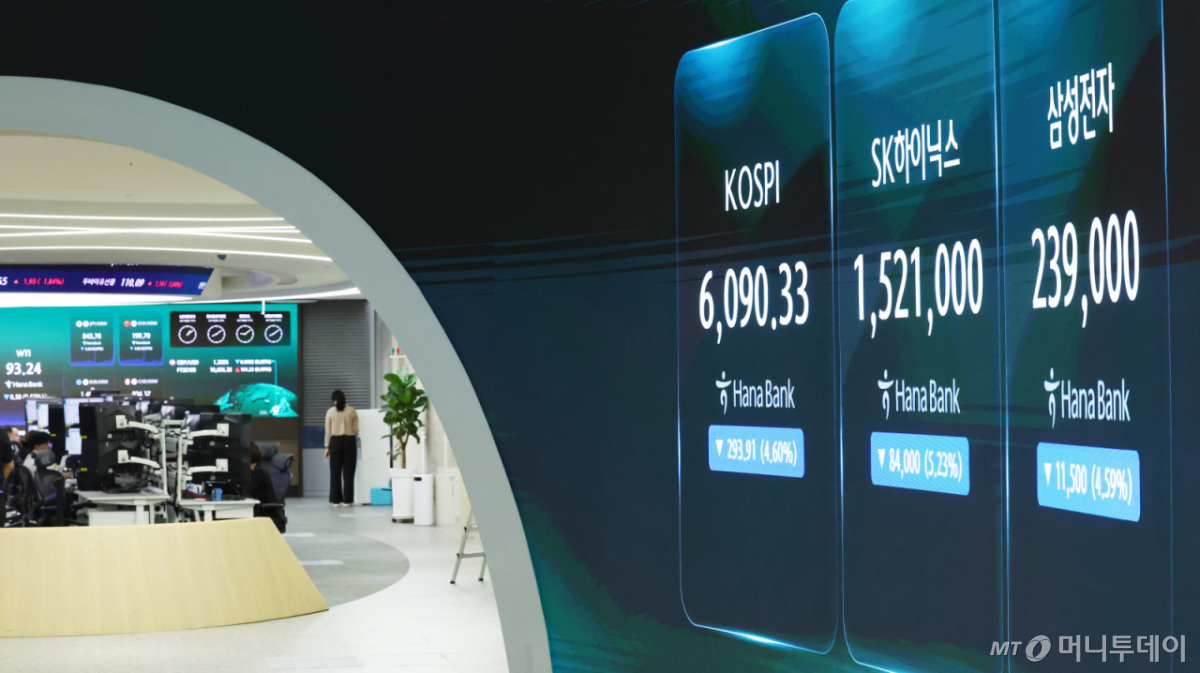
On October 13, 2026, the Korea Composite Stock Price Index opened down 198 points — a 3.1 percent hit — within minutes of Chinese DRAM maker CXMT announcing it would ship its first 4F² server memory before year’s end. By that afternoon, Samsung Electronics had dropped 6 percent and SK Hynix 8 percent. In New York, Micron fell 3.8 percent for a third straight session. The Philadelphia Semiconductor Index gave up 2.7 percent.
The trigger was not a trade war headline or a geopolitical escalation. It was a single slide from a conference in Shanghai: CXMT’s president, Chao Kanyu, stated the company had succeeded with its own VSG (vertical stack gate) transistor architecture and would deliver DDR5 RDIMM modules using 4F² cell geometry by December 2026.
That timing matters more than most readers realize.
What 4F² Actually Changes
To understand why the market reacted this way, you need to understand what 4F² represents — and why it is so much harder to pull off than a marketing claim.
DRAM cells store data as charge in a capacitor. The F² metric measures how much physical area a single memory cell occupies on a silicon wafer, expressed in terms of the transistor’s feature size squared. The industry has been converging on 6F² for years — a point where cells are as compact as conventional pillar-capacitor designs allow.
Moving from 6F² to 4F² is not a matter of shrinking existing features further. It requires switching from horizontal transistor channels to vertical ones — essentially building the memory cell upward instead of outward. That means redesigning the entire process flow: new deposition steps, different etch profiles, revised lithography targets, and a rethinking of how leakage current behaves at scale.
CXMT says it had to remake its core manufacturing processes from scratch because none of its existing equipment could be repurposed for the 4F² layout. The company calls its solution a VSG transistor, which claims to solve the current leakage problem that typically undermines vertically-stacked designs.
If true — and no independent verification exists yet — this is a genuine architecture breakthrough coming from a company that was, just three years ago, primarily a commodity DRAM producer focused on PC and smartphone memory.
The Server Memory Gauntlet
The harder part of CXMT’s announcement is not the cell geometry. It is the product it claims to ship: DDR5 RDIMM — registered dual inline memory modules for servers.
Server memory is the most unforgiving segment of the DRAM market. Modules must run 24 hours a day without error correction failures, tolerate wide voltage fluctuations, and pass compatibility validation against dozens of CPU platforms and motherboard designs from Intel, AMD, and others. Qualification alone can take 12 to 18 months.
Samsung, SK Hynix, and Micron dominate this space precisely because they have spent decades surviving it. A new entrant clearing these hurdles — especially one operating under aggressive US export restrictions — would be historically unusual.
No Chinese memory maker has ever qualified a server DRAM product at volume. That is the unstated implication behind the market selloff: if CXMT delivers on its timeline, it is not just competing with Samsung and SK Hynix on price. It is entering the segment where those companies earn their highest margins.
Samsung and SK Hynix Are Behind — and They Know It
Both Korean firms are developing 4F² technology. Industry analysts at Korea Economic Daily and the Financial Telegraph project Samsung will begin mass production around 2028 — roughly two years after CXMT’s announced launch window. SK Hynix’s timeline is less clear but likely similar.
The gap is stark enough that Korean investors are pricing it in. SK Hynix’s 8 percent drop on October 13 was the sharper decline, reflecting its narrower margin buffer and heavier reliance on high-end memory revenue than Samsung’s more diversified portfolio.
The uncomfortable truth is that CXMT’s head start, even if based on a lab prototype rather than shipping silicon, forces Samsung and SK Hynix into a defensive posture. They can no longer assume they will control the transition to 4F². Any delay in their own qualification schedules becomes a competitive vulnerability in a market where customers lock in supply agreements years in advance.
The US Control Regime Is the Real Question
None of this analysis is complete without addressing the elephant in the semiconductor room: how did CXMT reach this point under existing US export controls?
The United States has restricted China’s access to advanced lithography equipment, particularly EUV tools from ASML and leading-edge DUV from Applied Materials and Lam Research. These controls were designed to slow China’s progress on cutting-edge memory and logic chips. They have slowed it. But they have not stopped it.
CXMT’s VSG architecture appears to be a homegrown solution that may rely less on the most constrained equipment pathways than a traditional 4F² approach would. That is the scenario US policymakers feared most — that Chinese firms would respond to restrictions not by falling behind, but by reinventing the process around the equipment they could still access.
The US-Taiwan-Japan coordination on export controls has held structurally — Japan tightened its rules in 2023, Taiwan has aligned its semiconductor equipment export policies, and the US has expanded its entity list constraints. But coordination is not the same as effectiveness when the target adapts the architecture itself.
Who Wins, Who Loses, What Comes Next
Who wins: CXMT, if it ships qualified server modules on schedule. It would become the first Chinese company to break into the server DRAM supply chain at volume, a market worth tens of billions annually. Chinese cloud providers and AI infrastructure builders — Alibaba, Tencent, Baidu, ByteDance — gain a domestic alternative to Samsung and SK Hynix, reducing their exposure to geopolitical supply disruptions.
Who loses: Samsung and SK Hynix in the short term, as margin pressure and qualification race dynamics intensify. Micron also faces a three-front squeeze: CXMT in server DRAM, ongoing Chinese competition in commodity DRAM, and US policy uncertainty around its own China exposure. Any customer evaluating dual-source strategies now has a second option they did not have twelve months ago.
What comes next: The critical watchpoint is not CXMT’s announcement — it is its qualification results. Server memory customers do not buy on promises. They buy on error rates, on compatibility certificates, on long-term supply commitments. If CXMT modules fail qualification or arrive with yield problems, the market reaction will reverse. If they pass — and that is the scenario that keeps semiconductor executives awake — the memory market’s geography shifts permanently.
Either way, the era of Korean and American dominance in server DRAM without challenge is over. The question now is whether the US control regime can adapt fast enough to matter.