China's CXMT Rattles Memory Chip Giants — And Wall Street Panics
China's CXMT announced it's entering the server DRAM and HBM markets, triggering a sharp selloff in Samsung, SK Hynix, and Micron. But the real story isn't about CXMT's competitiveness — it's about fragile AI investment sentiment.
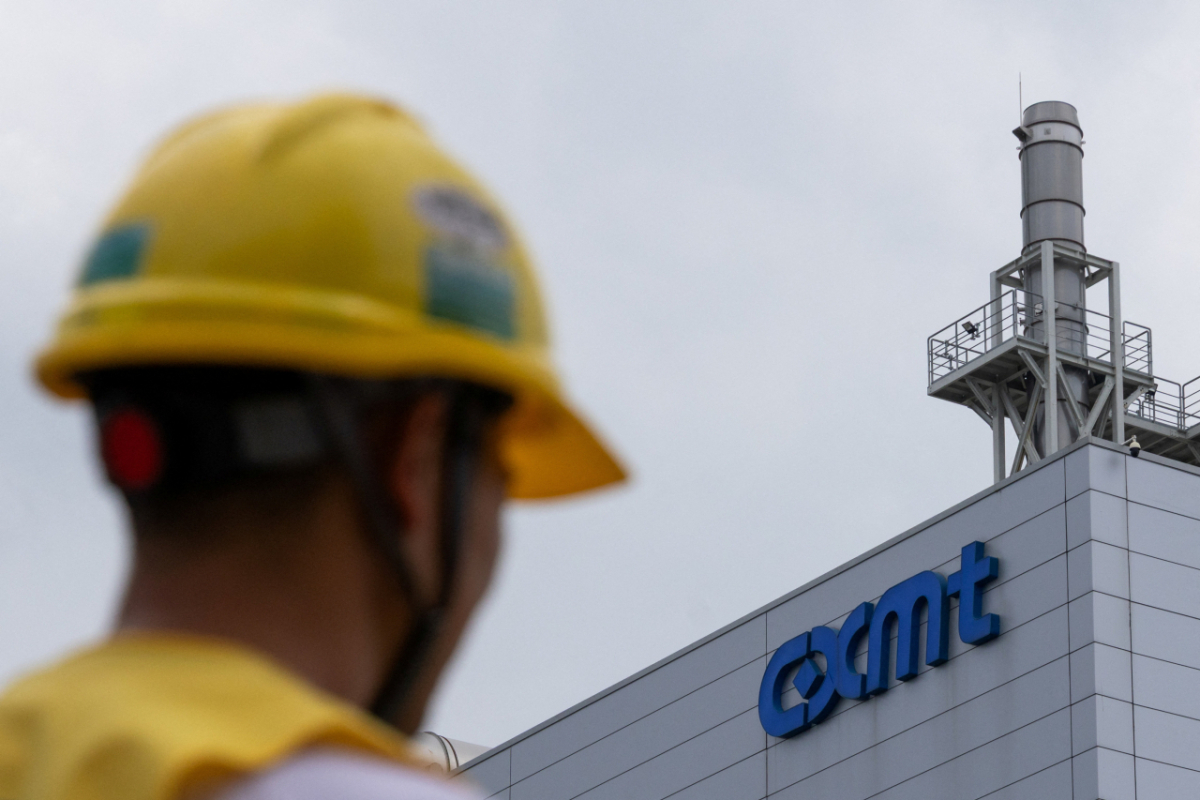
China’s Memory Challenge Isn’t About CXMT
When China’s ChangXin Memory Technologies (CXMT) announced plans to enter server DRAM and high-bandwidth memory production, the stock market didn’t just react — it convulsed. SK Hynix dropped over 10 percent. Samsung Electronics fell nearly 7.3 percent. Micron tumbled 3.6 percent on Wall Street. The Philadelphia Semiconductor Index hit its longest losing streak since July.
But here’s what the sell-off obscures: CXMT’s entry into these markets is, at this stage, mostly theatrical. The company has spent years focused on DRAM for PCs, smartphones, and home appliances — not the ultra-demanding server and AI chip segments where Samsung, SK Hynix, and Micron hold dominant positions. HBM, in particular, represents the crown jewel of the memory industry, and CXMT is not even on analysts’ radars for that product.
“In HBM, CXMT isn’t even mentioned. Korean chipmakers have an overwhelming hold on that field,” said Philip Oh, chief market strategist at Rayliat Global Advisors, who called the market reaction “excessive” relative to any actual competitive threat.
Still, the selloff was real. And it’s worth understanding why.
The Memory Market Is a Delicate Balance
Memory chips — DRAM and NAND flash — are historically brutal commodities. Prices swing wildly based on supply and demand, and the industry operates on thin margins except during boom cycles. Samsung, SK Hynix, and Micron collectively control roughly 90 percent of the global DRAM market and an even larger share of HBM, the specialized memory that powers AI accelerators from Nvidia and others.
CXMT, backed heavily by the Chinese state, is the only significant memory challenger outside that triopoly. It doesn’t have the scale, the fabrication capacity, or the proven track record in advanced nodes to threaten them today. But it has time, capital, and a government that sees semiconductor self-sufficiency as an existential national priority.
The question isn’t whether CXMT can match Korean and American memory makers tomorrow. It’s whether Beijing can sustain the investment long enough to close the gap — and whether that changes the calculus for export controls, alliances, and the broader decoupling framework that the US has been building with Japan and South Korea.
The Real Trigger: AI Anxiety
The most important takeaway from this episode isn’t about memory chips at all. It’s about the fragile psychology surrounding AI investment.
Wall Street is now grappling with a uncomfortable question: trillions in AI capital expenditure are flowing into the sector, but when will that spending translate into profits? Bank of America’s latest fund manager survey found that 45 percent of respondents believe an AI bubble could form as early as next year, while nearly 40 percent agreed that AI-related spending could become the most likely trigger for a credit crisis.
CXMT’s announcement gave investors an excuse to take profits from AI-related holdings that had run hard. The semiconductor complex — which had been one of the strongest themes of the year — suddenly looked overextended. The market wasn’t pricing in a CXMT threat. It was pricing in fear.
“Investors are looking for excuses to take profits from AI-related names that have performed exceptionally well, and memory stocks like these became convenient targets,” said Bei-Xuan Ling, chief equity advisor at UBP.
Anthony Sacconaghi, chief market strategist at AmprePriced, added that analysts will increasingly pressure big tech firms to justify their spending as capital costs rise.
Who Loses If This Spiral Continues
If semiconductor stocks remain vulnerable to geopolitical headlines rather than fundamentals, the consequences extend well beyond market volatility. South Korea’s economy is disproportionately exposed — Samsung and SK Hynix together account for a significant share of the country’s export revenue and industrial output. A sustained selloff doesn’t just hurt portfolio returns; it strains an economy already navigating a delicate transition.
For the United States, the challenge is equally thorny. Export controls on advanced memory technology to China are meant to slow Beijing’s progress, but they also create uncertainty that weighs on the very companies — Micron included — that the US wants to keep competitive globally. Every rumor about Chinese advancement fuels selling pressure that undermines the investment thesis for American memory manufacturers.
Japan, a quiet but critical ally in this framework, faces its own dilemma. Tokyo has moved to restrict semiconductor equipment exports to China but remains reluctant to fully join a US-led containment strategy that could jeopardize its own chip equipment businesses, which depend on Chinese buyers.
What Happens Next
The immediate aftermath of CXMT’s announcement will likely see volatile trading in memory-related stocks, particularly if subsequent commentary from analysts or company guidance reinforces concerns about demand slowdowns. The structural dynamics, however, favor the incumbents for the foreseeable future.
Samsung, SK Hynix, and Micron are investing tens of billions in next-generation memory capacity. Their yield rates, customer relationships, and process expertise are years ahead of any Chinese competitor. CXMT’s path to commercial HBM — a product with some of the tightest specifications in all of semiconductors — remains extraordinarily steep.
But the political trajectory is harder to predict. Every announcement from a Chinese memory maker strengthens the case for tighter export controls, more aggressive subsidies, and deeper alignment between Washington, Seoul, and Tokyo on semiconductor policy. That realignment will shape the technology landscape for decades, regardless of whether CXMT ever produces a single unit of server-grade DRAM at scale.
The market’s reaction this week was excessive on the facts but remarkably honest about the fears. Investors aren’t worried about CXMT. They’re worried about everything else — and they needed a story to tell.