China's CXMT Plunges Despite Record Profits — What It Means for
Chinese memory chipmaker CXMT reported an 8x revenue jump and profit turnaround, yet its stock cratered 9%. The paradox reveals how capital flows and geopolitics are reshaping the global DRAM race — and why Samsung and SK Hynix should be watching closely.
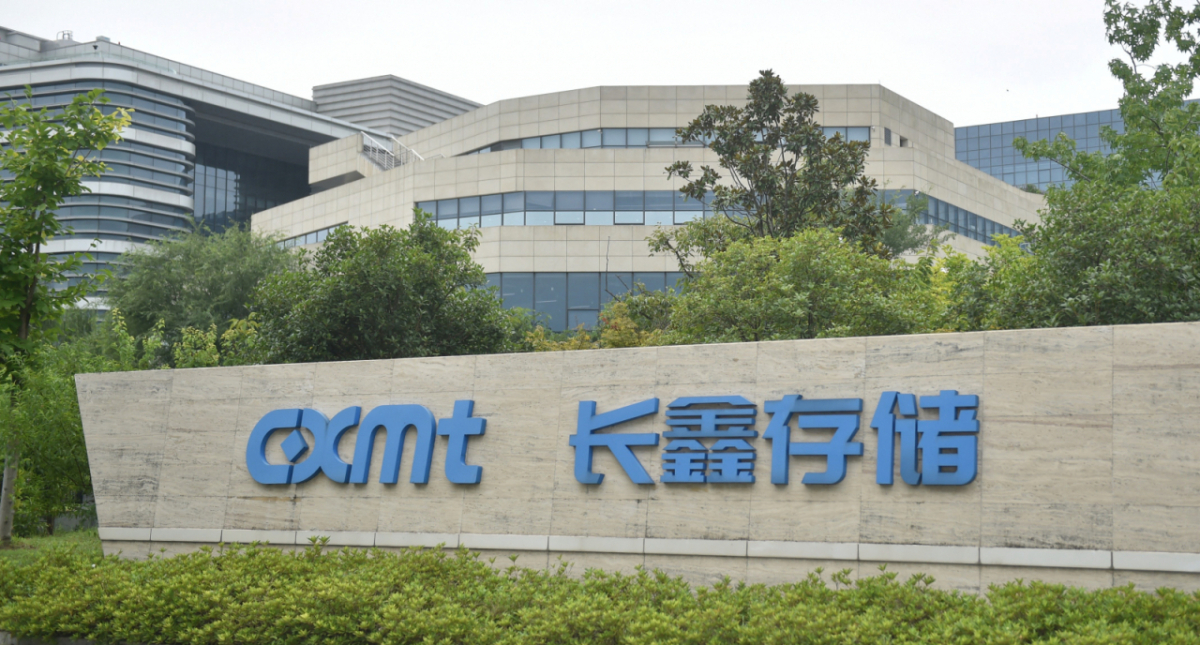
A Paradox on the Shanghai Exchange
CXMT posted what should have been a blockbuster quarter. Revenue for the first nine months of 2026 would hit 265 to 270 billion yuan, roughly eight times the 32 billion yuan it recorded in the same period last year. Net profit was projected to surge from a 5.3 billion yuan loss to 131 billion yuan — a genuine turnaround. The company also committed to buying back 1 to 2 billion yuan in shares. On any normal day, any of those moves alone would lift the stock.
Instead, CXMT’s shares dropped 8.9 percent intraday on October 19, settling at 41.58 yuan. The pattern has repeated: CXMT announced it began mass-producing fifth-generation DRAM in late September, and revealed plans to ship next-generation server memory before year-end. In the two weeks surrounding those announcements, the stock fell roughly 20 percent.
The disconnection between fundamentals and price is not accidental. It is structural.
The Real Drain on CXMT’s Share Price
The culprit is not the quality of CXMT’s chips. It is where the money has gone, and where it is heading.
A Hong Kong-based tech-sector fund manager told the South China Morning Post that capital is rotating out of technology names and into defensive positions — citing moves into banks like Industrial and Commercial Bank of China. The shift is driven by two forces: global long-term interest rates staying elevated, which makes financing expensive for capital-intensive chipmakers, and a broader reassessment of AI investment cycles.
This is not a CXMT problem. Cambricon, China’s flagship AI chip company listed on the A-share market, has dropped 37 percent since its July peak of 1,485.33 yuan. Zhipu AI and MiniMax, two large-model developers listed in Hong Kong, shed 75 percent and 56 percent respectively over the same period. The selloff spans hardware, software, and everything in between.
China Securities’ strategy team framed it bluntly in a recent report: the high-rate environment is no longer a temporary headwind but the new baseline. Until the AI investment cycle shows a clear inflection point, capital will remain cautious about Chinese tech valuations.
The Geopolitical Shadow Over Every Chinese Chip Stock
Here is what the Korean market rarely discusses: CXMT’s problems are not purely financial. They are geopolitical.
Every earnings report, every technology milestone, every share buyback from CXMT carries an implicit discount because the company operates at the intersection of two forces that cannot be reconciled. On one side, Beijing has made semiconductor self-sufficiency a strategic imperative, funneling state-backed capital into memory chip development with a horizon measured in decades, not quarters. On the other side, US export controls and allied coordination continue to restrict access to advanced manufacturing equipment, creating a permanent ceiling on how competitive CXMT can become against Samsung and SK Hynix in the high-density DRAM segment.
The result is a company that can report genuine operational improvements while investors price in the likelihood that those improvements will never translate into market share gains at the top of the DRAM stack. That discount shows up in every valuation model. It shows up in every institutional allocation decision. And it shows up most visibly when the broader tech sector sells off.
Why This Matters for Samsung and SK Hynix
The immediate impact on Samsung and SK Hynix is nuanced. CXMT’s DRAM production remains concentrated in lower-density products. Advanced data-center memory, where the highest margins live, is still overwhelmingly dominated by the Korean pair. In the near term, CXMT’s weakness is not a threat to Samsung or SK Hynix’s market position. It is a reprieve.
But the longer arc is different. China is not funding CXMT because it expects the company to compete on price in commodity DRAM. It is funding CXMT because it needs a domestic memory supply chain that cannot be sanctioned out of existence. That means state capital will continue flowing into the company regardless of quarterly earnings or share price performance. The question is not whether CXMT survives — it is whether it eventually breaks through the equipment restrictions and reaches competitive parity in higher-density products.
Samsung and SK Hynix should treat CXMT as a slow-moving strategic challenge rather than an immediate competitive threat. The Korean companies still hold a commanding lead in process technology and yield rates. But if China achieves meaningful self-sufficiency in DRAM over the next five to seven years, even a partial capture of the domestic market would represent a structural shift in global supply dynamics.
The Investor Lesson
CXMT’s 9 percent drop on the back of strong fundamentals is a useful signal. It tells you that the current market environment is punishing Chinese technology names across the board, regardless of earnings quality. It also tells you that the relationship between China’s semiconductor ambitions and global capital markets is growing more adversarial, not less.
For Korean investors, the takeaway is straightforward: watch CXMT’s technology roadmap, not its share price. The stock will remain volatile, disconnected from fundamentals, and subject to whatever macro sentiment is currently in fashion. But the company’s progress on process nodes, yield rates, and product mix matters far more than any intraday percentage move. When CXMT ships competitive high-density DRAM at scale, the real story begins — and Samsung and SK Hynix will feel it on every balance sheet.