Data Centers Are Breaking Up the GOP Before Midterms
The AI infrastructure boom is pitting Republican candidates against Trump and each other. Communities next door are organizing, and the resulting political pressure could reshape how the party balances tech ambition against local opposition.
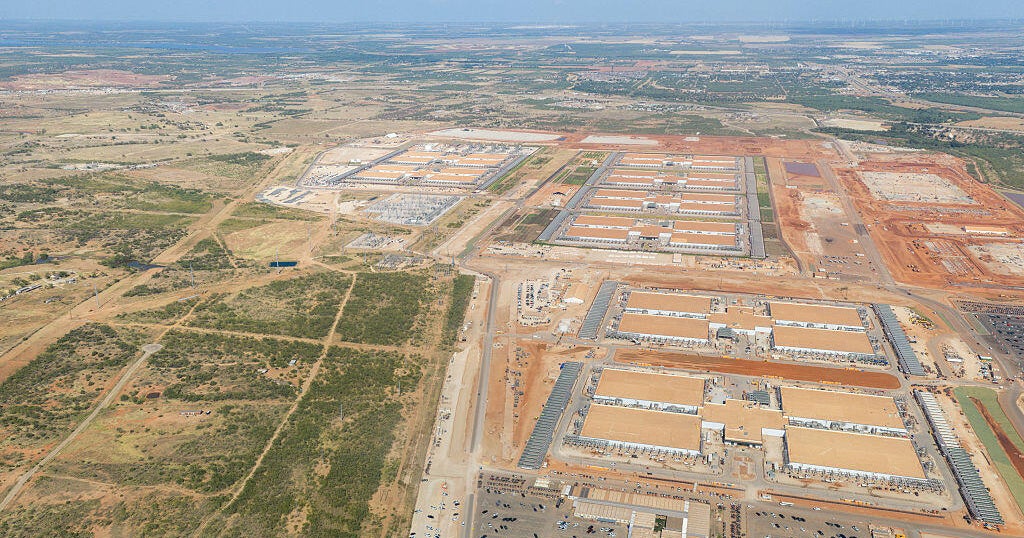
The data center revolt
A year ago, nobody was talking about data centers at the voting booth. Now they are one of the most explosive issues in the 2026 midterms, and the backlash is cutting through the Republican Party in a way that should worry everyone who assumes AI investment is an unalloyed political win.
The numbers tell a vivid story. When ChatGPT launched in late 2022, most new data centers were popping up in blue states. By 2025, the map had flipped: 68 percent of online data centers were in red states. Today, according to data from Cleanview Research, 75 percent of data centers under construction and 80 percent in the planning stage sit in predominantly Republican territory. The boom has been sold as rural development, tax revenue, and national security. The voters living next door have a different take.
Opposition to data centers now outpaces support by 30 points in polling. And here is the part that makes this genuinely consequential for the midterm picture: a majority of Republicans oppose construction near their communities. This is not a partisan wedge issue the way most culture-war flashpoints are. It is a rare, broad-consensus grievance that is forcing candidates on all sides to pick the same lane.
The president vs. his own ticket
Donald Trump is the most powerful advocate for the data center boom. He frames the debate in civilizational terms. At an Ohio rally he told supporters, “We want them … look, there’s so much money to be made for Ohio — you can’t just turn them off. They’ll go to China.” He has posted on Truth Social that the only reason communities should resist data centers is if they “want to end up being backwards and poor.”
Trump also pushes a quid-pro-quo pitch: developers should offset disruption with education funding, tax relief, job creation, and energy-cost protections. He has resisted hard regulation, but he has not answered the question every affected homeowner is asking — why should they absorb the cost while someone else reaps the profit?
The answer, structurally, is that the party of low regulation and unfettered development should agree with Trump. The voters in rural Georgia, rural Texas, and rural Ohio should not. That disconnect is what is driving the revolt.
Chris Millay, a data center analyst at Greenmantle, put it plainly. “It’s such a consensus issue it’s really impossible to take the other side.” Voters see a politician who backs data centers and think, essentially, about who will protect their property and their bills when something shows up on their doorstep. The president’s closest allies are already feeling the current.
What is happening in Texas
Texas has the most data centers under construction in the country, which makes its politics the canary in the coal mine. Governor Greg Abbott, a Republican seeking a fourth term, has paused environmental permits and grid connections for new data centers. He is in a surprisingly close race against Democrat Gina Hinojosa, and the pause reads as political triage — an attempt to defuse a firing range aimed at his flank.
The Senate race tells a similar story. Republican nominee Ken Paxton, the state attorney general, has called for ending the sales-tax break for data centers. He has also suggested developers should face criminal liability if their AI chatbots endanger children. Paxton is not going after the industry to spite it; he is going after it because the alternative is worse.
In both races, the Republican establishment position has migrated sharply toward the Democratic one. That migration is the story.
Ohio is the test case
Ohio offers the clearest map of what happens when the national party line collides with local reality. The Democratic gubernatorial candidate, Amy Acton, called for a conditional moratorium on data centers. Her Republican opponent, Vivek Ramaswamy, did not merely echo her; he tried to leapfrog her. He vowed to sign an executive order on day one halting all new data center project approvals until his “Ohioans-First” law passes, which would require data centers to provide free electricity to surrounding residents.
Ramaswamy is not a fringe figure inside the party. He is a former Trump adviser and a credible candidate. The fact that he is staking his campaign on a full construction freeze — not a moratorium with exceptions, but a pause until developer concessions are locked in legislation — signals how far the Overton window has shifted since Trump was rallying crowds to praise data centers.
The electoral math is unforgiving. A New York Times/Siena poll found that data centers are a structural weakness for Republican Sen. Jon Husted. Voters favor his Democratic opponent by 11 points on the issue. Campaigns have spent $45 million this year on ads mentioning data centers, the vast majority in opposition, according to AdImpact.
The few Republicans holding the line
Not every Republican has defected. In Georgia, where candidates have spent nearly $13 million on data center ads — more than any other state — Republican gubernatorial candidate Rick Jackson is sticking with Trump. He has argued that data centers belong in local decision-making, not state mandates, and pointed to Effingham County, where OpenAI is planning a $20 billion facility. The county has pledged to use projected tax revenue to cut homeowners’ property taxes, which is exactly the kind of developer-community bargain that could quiet opposition — if it actually reaches the people bearing the nuisance.
Jackson’s position is defensible on paper. The problem is scale. One county negotiating with OpenAI is not a template. Most affected communities do not have leverage like that. They have a power plant next door, a grid stressed by new demand, rising electric bills, and no say in whether the facility arrives.
What decides the midterms
The next wave of data center construction is concentrated almost entirely in states Trump won in 2024. That means the midterm outcome for these projects does not depend on Democrats persuading Republicans to switch lanes. It depends on Republican candidates choosing between the party base and the party chairman.
If candidates side with Trump, they lose elections. If they side with their communities, they may keep their seats but weaken the administration’s preferred infrastructure agenda. There is no clean exit.
The policy consequences are already visible. Permit pauses in Texas. Moratorium bids in Ohio. Tax-break rollbacks under discussion in Senate races. The market is watching these signals closely. Every pause raises the cost of capital. Every moratorium adds months. Every condition — free electricity, criminal liability, property tax offsets — rewrites the unit economics of a project that was never going to be cheap.
The longer game
This is not a temporary friction. It is the first sustained collision between the AI capital expenditure cycle and American electoral politics, and it will keep recurring. Data centers are not going away. The computing demand driving them is real. But the communities hosting them are becoming organized, and the political cost of ignoring them is rising fast.
Trump can tweet that data centers are essential to national competitiveness. He can call opponents backward. None of that changes the fact that a majority of Republicans near a proposed site do not want it there. The midterm elections will measure how many Republicans are willing to tell the president no.
The answer to that question will determine whether the AI buildout proceeds with fewer frictions than its investors expect, or whether it becomes the single issue that forces the party to reconcile two incompatible commitments — technological acceleration and local consent.