What 9 Flipped Senate Seats Mean for America's Global Posture
Democrats captured their biggest midterm Senate gain in nearly seven decades. Here's what the new majority shifts on Capitol Hill mean for trade, alliances, and what comes next.
The Number That Changes Everything
Nine Senate seats flipped in a single midterm cycle. That is not a narrow path to power. It is a sweeping transfer, and it has been more than sixty-five years since anything like it happened.
Democrats last approached that kind of gain in 1958, when they took thirteen Republican-held seats during Dwight Eisenhower’s second term. Tonight, they picked up nine — enough to open a 56-44 advantage when the new Congress convenes in January. That is their largest Senate foothold since the days of the Affordable Care Act, back when Harry Reid still wielded the gavel.
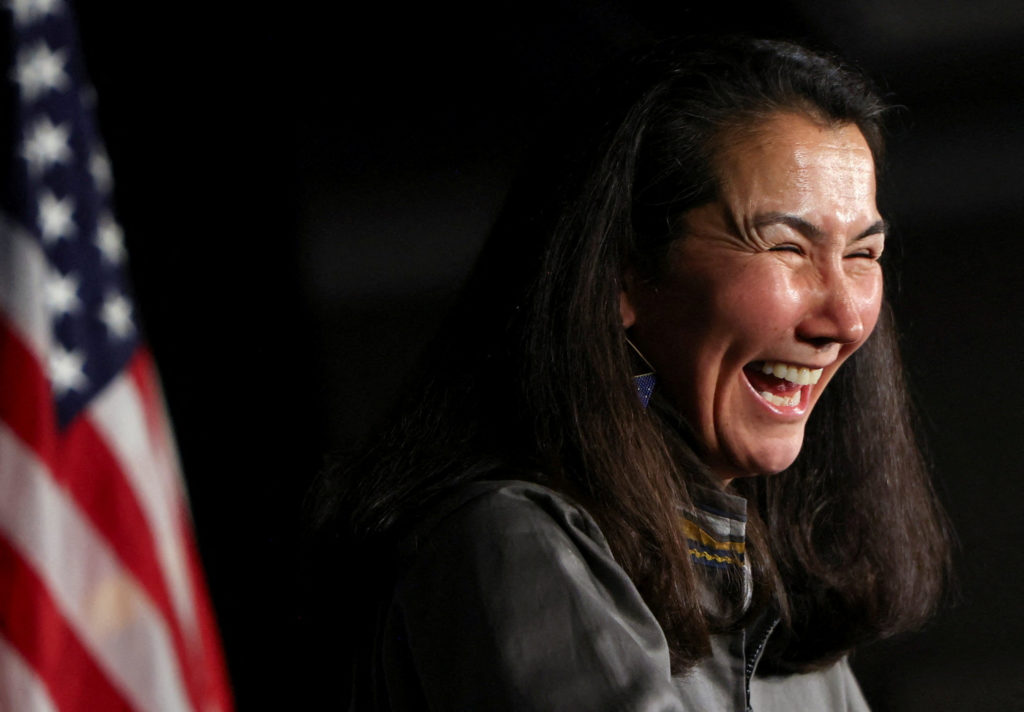
The most vivid image of the night came from Alaska, where former Rep. Mary Peltola knocked off incumbent Sen. Dan Sullivan in a race most analysts had written off as unwinnable. A week earlier, Scott Colom did something similarly unlikely in Mississippi, unseating a Republican who was supposed to be safe. Two longshot wins stacked on top of each other gave Democrats their biggest midterm haul since Ronald Reagan’s presidency.
On the House side, the party added another forty-two seats, reclaiming the chamber entirely. The combined picture — control of both chambers — is rare in an era defined by divided government.
What the Majority Actually Looks Like
A 56-seat majority sounds dominant on paper. It feels different when you walk through it. That margin buys breathing room but not invincibility. Filibuster rules still require sixty votes for most confirmations and legislation unless Democrats invoke the so-called nuclear option — something no Democratic president has done yet. Budget reconciliation opens a narrow door for fiscal measures, but even that threshold needs fifty-one votes, which leaves almost zero room for defections.
The practical implication is immediate: Democrats can push through priorities that were previously dead on arrival. Confirmation battles shrink. The confirmation calendar fills faster. And legislation that requires a simple majority — tax adjustments, spending packages, some regulatory moves — actually clears the finish line.
But here is what nobody is mentioning often enough: this is a Democratic Senate born inside a midterm wave. Midterms punish the president’s party. The historical pattern is brutal, especially in the House, where the incumbent party gains seats only twice since World War II. The Senate resists those tides more stubbornly, yet tonight it buckled anyway.
That tells you something important about the mood. This was not a gentle correction. It was an expression.
Who Wins and Who Loses Right Now
The winners are clear. Democratic leadership will move faster on climate spending, healthcare expansions, voting rights efforts, and labor policy. Corporate lobbying expenses climb. Industries that benefited from Trump-era deregulation face a reckoning. Energy companies that counted on continued fossil fuel tailwinds should start hedging.
The losers are equally predictable. Republicans lose the investigative leverage that comes with committee chairships. They lose the ability to block confirmations en masse. They also lose the comfort of controlling the narrative around the president’s first-term record — because now they have to defend a new one against a Congress that will cut them harder.
Internationally, the signal goes straight to Beijing and Brussels. China gets a clearer read on American resolve. NATO allies get a guarantee — or at least a stronger hedge — that transatlantic commitments stay funded. Trade policy tilts toward coordination rather than chaos. Those are not minor shifts. They are structural ones.
The China Question Comes First
Let us get specific about what changes for Washington’s relationship with Beijing. A unified Democratic government does not mean friendship toward China. It means strategy over shock therapy. Expect tariffs to stay deployed but recalibrated rather than exploded randomly. Expect export controls on semiconductors and advanced computing to harden further, with broader coalition coordination rather than unilateral surprises.
The China policy establishment will likely push for two things simultaneously: stronger alignment with Japan, South Korea, Australia, and the Philippines on security matters, and tighter controls on technology transfer that go beyond existing regimes. Companies caught between compliance deadlines and market access will feel the squeeze immediately.
There is also a quieter question about how aggressively the new majority pushes tariff escalation on goods other than Chinese products. European automakers, Mexican manufacturers, Vietnamese exporters — all of them watch Capitol Hill closely right now. A Democratic Congress tends to favor multilateral frameworks, but it does not shy away from protecting domestic industry. The nuance matters. The direction does not.
NATO Gets a Breath of Air
America’s European alliance partners probably exhaled tonight. Republican leadership has spent years questioning the utility of Article 5 obligations and pushing Europe to carry more defense costs on its own. A Democratic Congress reestablishes institutional support for NATO funding, modernization programs, and joint training exercises. The details get hashed out behind closed doors, but the overall posture stabilizes visibly.
Ukraine aid remains the test case. Even with a friendly Congress, partisan math is never clean. Still, the baseline assumption flips: assistance stops looking fragile and starts looking durable. That changes how European capitals plan their own budgets, and it changes how Moscow calculates risk.
Wave or Realignment?
Here is where honest uncertainty lives.
Midterm surges come and go. In 1998, Bill Clinton’s party gained Senate seats instead of losing them — a stunning exception tied to partisan anger at Republican extremism. In 2002, George W. Bush rode a post-9/11 rally into a stronger majority. Those were anomalies, not blueprints.
Tonight’s results could be another anomaly, driven by local candidates running ahead of national currents. Peltola and Colom were not national figures before Election Day. Their victories grew from District-level dynamics, not ideological earthquakes. Nine seats is enormous, but it is also a snapshot of one night under specific conditions.
There is a counterargument, though. Forty-two House seats plus nine Senate seats suggests something deeper than local fatigue. Combined, that is a coordinated rejection spanning multiple electoral layers. When voters punish the same party across federal offices simultaneously, historians tend to call it a wave — and waves sometimes calcify into realignment.
What makes this cycle particularly tricky to read is timing. If this election occurred in a presidential year, the interpretation would be cleaner. Instead, it arrived midstream, complicating whether we are watching a corrective wave or the opening phase of a longer partisan shift. Only the next cycle answers that definitively.
What Comes Next
Practically speaking, expect a rush to legislate. Democratic leaders will move quickly while the political energy holds. Infrastructure provisions, climate incentives, student loan adjustments, and regulatory rollbacks on financial oversight look likely early. Judicial confirmations fill faster. Ambiguous appointments that stalled under Republican obstructionism advance smoothly.
Governance friction increases. Negotiations between chambers become sharper. Internal party disagreements surface publicly — moderates versus progressives, rural Democrats versus urban ones — and the majority will spend part of its first year managing itself rather than attacking opponents.
Internationally, allies adjust. Trading partners prepare for steadier policy but potentially tougher enforcement. Adversaries recalibrate toward a Washington that looks less unpredictable and more methodical.
Nine seats is historic. Whether history repeats or diverges depends on what happens in the months after January. For now, the map changed. Who draws the lines next matters most.