How Deux’s AI Album Changes Everything About Musical Legacies
DUWS released a 31-year-awaited fourth studio album built around AI-reconstructed vocals of late member Kim Sung-jae — but this isn’t just a reunion. It’s a precedent that could reshape every surviving estate in K‑pop and beyond.
A 31-Year Pause Ends With a Ghost in the Machine
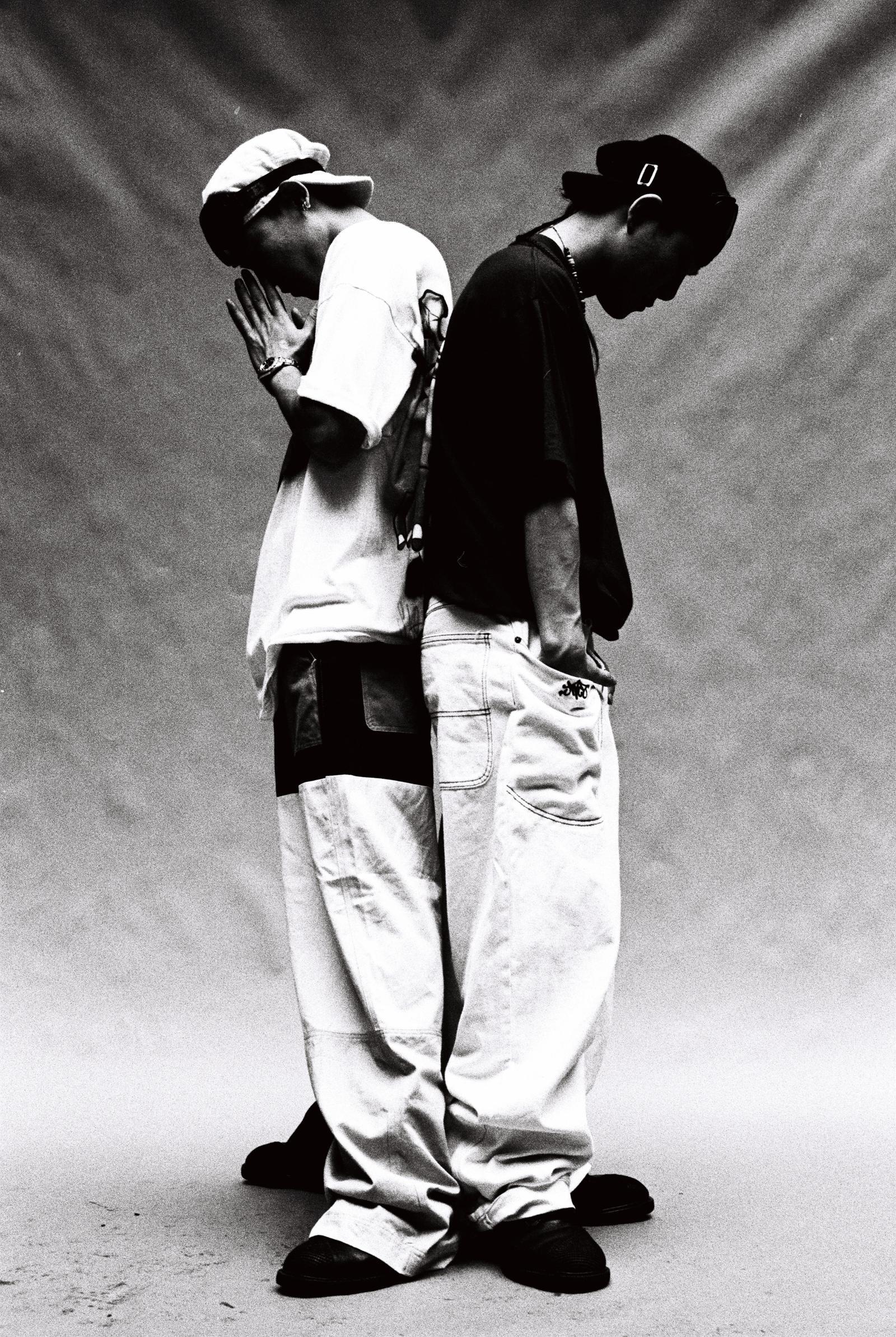
DUWS — the hip-hop duo that defined an era of Korean popular music — is finally dropping its fourth studio album on the 21st. Thirty-one years have passed since the last one. And half the voice on it belongs to someone who died.
Kim Sung-jae, DUWS’s rapper and co-founder, passed away in November 1995 from a subdural hematoma after a car accident. He was 28. The duo had disbanded earlier that year following the release of their third album, Force Deux, and Lee Hyung-do has carried the group’s name forward as a solo artist for three decades.
This new album merges Lee’s fresh compositions with an AI vocal filter developed jointly by Lee and Soorisoori AI (소리소리AI), a Korean voice-AI specialist company. The result is a Kim Sung-jae whose cadence, timbre, and flow feel unnervingly present — even though he cannot consent, cannot approve, and cannot object.
The album includes Rise, released last November; Another Day, from April; and The Future, dropped on the 7th — a track whose lyrical message is about moving forward rather than dwelling in the past. Two collaborators appear: French electronic pair Braxe + Falcon remix Rise (out on the 14th), and Dynamic Duo feature on the second title track, I Want You.
A pre-listening party was held on the 7th at Bolero in Itaewon, Seoul. Lee attended. Dynamic Duo performed. Unreleased tracks were heard for the first time publicly.
The project also received backing from Korea’s Ministry of Culture, Sports and Tourism and the Korea Creative Content Agency under a 2026 new-technology-integration support program.
That last detail matters more than it might at first glance.
The Precedent Is Already Written
The compensation arrangement here is the most legally significant element — and it has not received nearly enough attention outside Korean-language reporting.
Lee Hyung-do has committed to directing a portion of his neighboring-rights income from Rise toward Kim Sung-jae’s surviving family. The Korea Musicians’ Rights Association formalized a distribution structure for this in December last year.
This is notable because it establishes an early model for how revenue from AI-generated performances of deceased artists can be allocated — something no major market has yet codified into clear policy.
But notice what is absent: there is no public record of Kim Sung-jae having given prior consent for his voice to be used this way. There is no indication the AI model was trained on commercially cleared recordings with explicit permission from either the performer or his estate. The distribution mechanism exists, but the foundational question of authorship and consent does not.
For an industry still grappling with what counts as a “performance” when the performer never entered a studio, this gap is enormous.
Who Wins, Who Loses
Who wins: Lee Hyung-do gains access to a complete duo discography — something fans have demanded since 1995. He also anchors himself as a producer who can steward a legacy rather than merely preserve it. WIDE Company, the label behind the release, positions itself at the forefront of Korea’s converging music-and-tech ecosystem. The Korea Creative Content Agency gets a flagship case study for its new-technology program. Dynamic Duo and Braxe + Falcon add international credibility to the project.
Who loses: No one is losing money directly in this transaction. But Kim Sung-jae — or rather, his posthumous persona — loses something intangible. His voice is being repurposed without evidence of his knowing or approving the terms. If this album succeeds, every record label with access to deceased artists’ catalogs will see a blueprint for monetizing absence.
The broader loser, if this model normalizes, is the concept of artistic finality itself. When a performer dies, their body of work ends. That boundary is what gives legacy value its scarcity. Remove it, and you turn every archived vocal into a potentially infinite resource.
There is also a less discussed casualty: the living artists who follow. If a 1990s Korean hip-hop duo can use AI to “complete” an album, what stops any surviving member of any group from doing the same? The pressure on estates to license dead voices will grow with each successful release.
Why K-Pop’s Trauma Around Idol Death Makes This Especially Loaded
K-pop has a long, complicated history with artist mortality. The community knows exactly what happens when a beloved performer dies young: grief becomes content. Fanbases fracture. Memorials generate streams. Nostalgia drives reissues.
What makes the current moment different is that the technology now allows the dead to sing again — not as samples chopped and looped, not as archival footage played at concerts, but as a continuous, indistinguishable vocal performance.
This shifts the emotional contract between fan and artist in ways no one has publicly reckoned with. Fans may feel closure. They may also feel manipulated. Both reactions are valid and likely simultaneous.
There is no existing regulatory framework in South Korea governing AI voice replication for commercial music releases. The distribution arrangement Lee put in place is voluntary, not mandated. That means future cases will depend entirely on individual producers choosing to compensate estates — not on law.
What Happens Next
If DUWS 4 performs well commercially — and early indicators from the pre-listening event suggest strong industry interest — expect similar projects within 12 to 18 months. Surviving members of disbanded groups, solo artists with deceased collaborators, even posthumous duets between artists who never recorded together — all become plausible.
The regulatory landscape will lag. Expect copyright disputes before legislation catches up. The question of whether an AI-generated vocal infringes on a performer’s right of publicity is unresolved in Korean law and unlikely to be clarified soon.
Internationally, the implications are wider still. Western markets face the same scenario with artists like Whitney Houston, Prince, and Michael Jackson — whose estates already generate billions from catalog exploitation. AI voice synthesis could multiply those revenues exponentially, with minimal additional cost and no additional risk to the performer’s reputation (since the performer cannot enforce it).
One protective development to watch: the neighboring-rights distribution model Lee established. If it proves durable and attracts industry adoption, it could become a de facto standard — the “Kim Sung-jae protocol,” as it were. But protocols without legal force are just suggestions dressed in bureaucracy.
The Real Story Isn’t the Album
DUWS’s fourth album is real music. It has real collaborators. It reflects genuine artistic decisions by Lee Hyung-do. Fans will respond to it for those reasons alone.
But the album’s lasting significance won’t be musical. It will be structural.
It marks the first high-profile Korean music release where a deceased artist’s voice functions as a primary performative element rather than a sample, interpolation, or memorial gesture. It demonstrates that the technical barrier to generating convincing posthumous vocals has effectively dissolved. And it shows that a voluntary compensation framework can exist without government mandate — for now.
Every surviving artist reading this should understand what they are looking at: a proof of concept that turns their own future silence into someone else’s revenue stream. The only question is whether they’ll be compensated fairly when it happens — or whether the precedent set today will leave their estates to negotiate from weakness.
The music arrives on the 21st. The consequences arrive immediately after.