Doosan's Bet on America's Nuclear Rebirth
As Seoul backs US gas and nuclear power projects, Doosan Enerbility stands to supply core equipment for both — a rare dual-positioning that could reshape Korea's industrial export story.
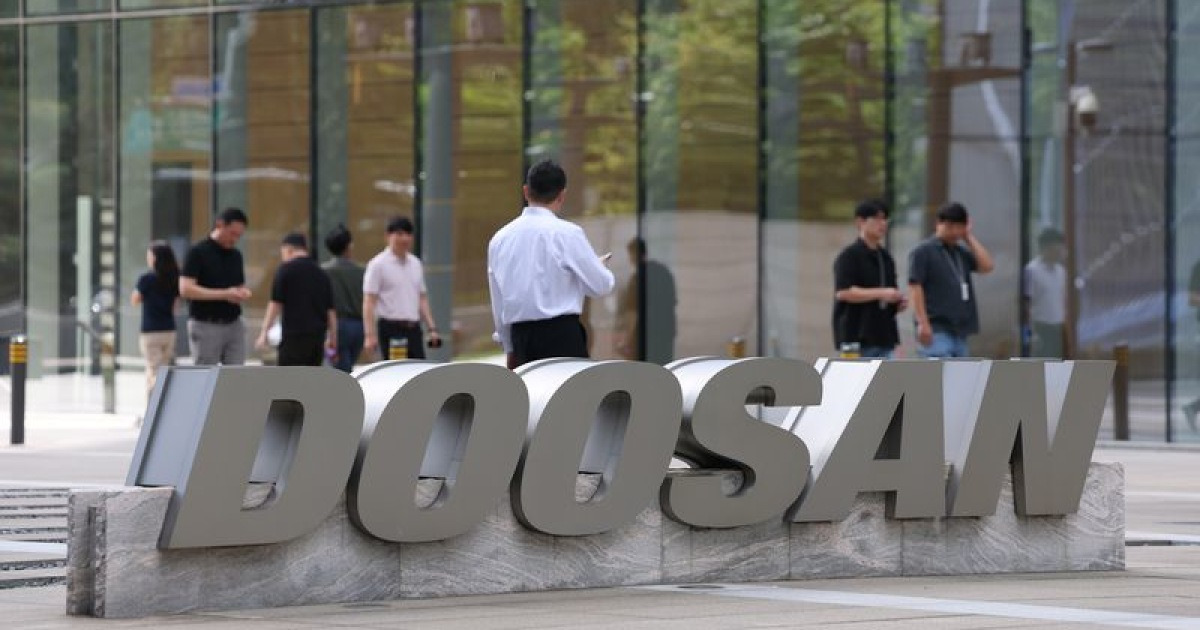
Korea’s Next Big Export Story May Not Come from Chips or Cars
It is not the headline you will see on Western financial desks. But it matters more than most stories do.
The Korean government has now identified two major investment projects targeting the United States: first, a gas combined-cycle power plant in Texas, and second, a potential candidate — the construction of large-scale nuclear reactors. For Doosan Enerbility, a company many outside Korea have barely heard of, this sequence spells something unusually favorable. It can supply the core equipment for both.
That dual capability is what makes this story worth tracking now, before Wall Street catches up.
The Gas Project Is Already Locked In
On September 23, the Korean government confirmed that the Ensinol gas combined-cycle power project in Texas would be its flagship US investment. What followed was no surprise to those who understand Doosan’s manufacturing footprint — the company produces both gas turbines and steam turbines, the two machines that make a combined-cycle plant work. First, the gas turbine generates electricity; then waste heat creates steam that spins a second turbine for additional output. Doosan can supply both.
This is not theoretical. The company already has contracts on the ground in North America. In March 2026, it signed an agreement to supply two 370-megawatt steam turbines and generators to a US company for data center power — the first time Doosan had ever won a steam turbine order in North America. By May, it added four more units of the same class, scheduled for delivery to Texas by 2029. On the gas side, a separate March order brought seven additional 380-megawatt heavy-duty gas turbines to its US portfolio, pushing total American supply contracts to twelve units.
The pattern is clear. Doosan is building a track record in the very market that Korea’s government now wants to expand. And it is doing so at a moment when North American utilities are under acute pressure to secure generation capacity for data centers powered by AI workloads. The timing is almost too convenient to ignore.
The Nuclear Bet Is Bigger
If the gas project is a near-term certainty, the nuclear side is the longer play — and potentially the more consequential one. Reports suggest the Korean government is pushing for two of eight new US reactors to be built using Korea’s APR1400 design, with Doosan supplying the reactor vessels, steam generators, and turbine generators. Doosan already has production experience with these components from the Shin Hanul 3 and 4 units in South Korea and the Barakah plant in the UAE.
What makes this angle particularly significant is that it arrives at a moment when the US nuclear industry is struggling to rebuild its supply chain from scratch. Westinghouse’s AP1000 design has faced repeated delays and cost overruns at Vogtle. New entrants like NuScale’s small modular reactor are still awaiting full commercial deployment at scale. An established Korean design with a proven export record offers a pragmatic alternative, one that American operators may find far more reliable than betting on unproven domestic vendors.
Industry sources believe US new nuclear construction could begin in earnest as early as the first half of next year. The key barrier — financing and risk allocation — may soften if the Korean government structures the deal with public backing, something that has haunted new nuclear projects in the United States for decades. Korean development banks have demonstrated willingness to absorb political risk in ways that private US lenders have not.
Why This Matters Beyond the Trade Numbers
For Western readers, the significance lies in what this signals about the trajectory of US energy policy and where the equipment pipeline is heading. The American push to build new nuclear capacity alongside gas plants to power AI data centers is creating a demand profile that favors suppliers who can deliver across both tracks. Doosan is one of the few companies globally that sits at that intersection.
For Korea, this represents a potential pivot in its export identity. The country has spent decades building its industrial reputation on semiconductors, ships, and automobiles. Energy equipment — and particularly nuclear — is a different tier of export, one that carries geopolitical weight and longer project cycles. A successful entry into the US nuclear market would elevate Doosan from a regional supplier to a global competitor alongside Framatome, Mitsubishi Heavy Industries, and Westinghouse.
There are second-order effects here that few analysts are accounting for. If Korea establishes a foothold in American nuclear construction, it gains leverage in the broader energy-security architecture of the Indo-Pacific. The same supply chains that feed US reactors can also serve allied nations in Japan, the Philippines, and Vietnam — countries actively exploring nuclear options to diversify away from fossil fuels. Korea’s export model in this sector would not be confined to a single market.
What Could Go Wrong
Nothing is confirmed yet. The Korean government has not finalized the structure of either project, and Doosan’s participation in the nuclear component remains speculative. US regulatory timelines for new nuclear designs are long and uncertain, and the APR1400 has never been licensed in America. The Nuclear Regulatory Commission process alone could take three to five years, assuming it proceeds smoothly — and nothing about new nuclear licensing in the US has proceeded smoothly in recent memory.
The gas project faces its own headwinds. Environmental opposition in Texas is intensifying as communities push back against the water consumption and land use required for large combined-cycle plants. Electricity demand patterns are also shifting; some data center developers are exploring alternative power sources, including dedicated natural-gas microgrids and renewable-plus-storage combinations, which could reduce the need for the centralized generation that Doosan supplies.
There is also the question of US protectionism. Washington has signaled repeatedly that critical energy infrastructure should be built with domestic equipment. The Korean government’s attempt to package its investment as a joint venture rather than a pure export play is a direct response to that pressure, but political winds can shift quickly regardless of the framing.
The Close
What is unfolding here is a quiet realignment. East Asian industrial players are moving into markets that Washington once assumed were reserved for domestic firms. Korea’s government is using sovereign investment as a lever to open doors. And Doosan, built on decades of engineering credibility, is positioned to walk through them.
The gas orders already on paper give this story a concrete foundation. The nuclear bet is still aspirational, but it is anchored in real capability and real geopolitical intent. Together, they form a trajectory that Western analysts will likely write about only after the contracts are signed and the revenue is recorded.
Those who watch now will understand the shape of the next cycle before the headlines arrive. The real question is whether they will take it seriously enough to act on that understanding while the window remains open.