One Downed Pilot Exposed the Strait of Hormuz's Most Dangerous Vulnerability
A wounded U.S. officer surviving 50 hours behind Iranian lines reveals how close America came to a POW catastrophe in its opening days with Iran — and why the Strait of Hormuz remains a strategic fault line.
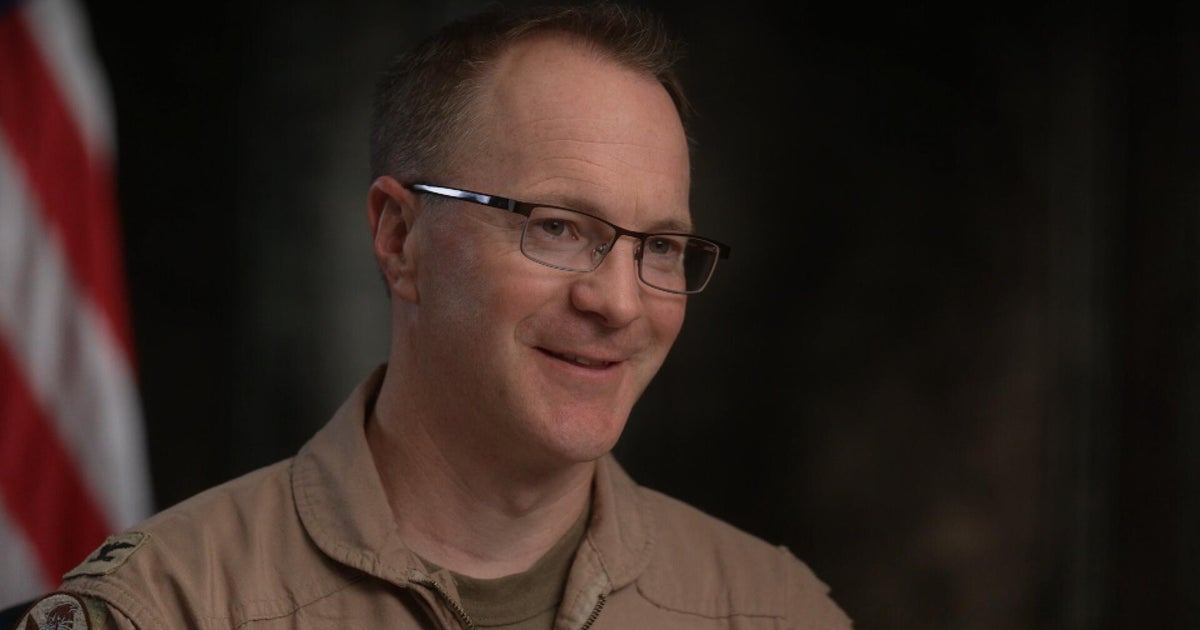
What Bravo Knew Would Happen If He Was Caught
When a wounded U.S. Air Force weapons officer hit the ground in Iran on April 2 with a broken back, a shattered shoulder, and no parachute to name, he made one calculation that would define his next 50 hours: capture was not survivable.
Not because Iran would kill him outright. Because it would parade him. General Dan Caine, chairman of the Joint Chiefs, said it plainly in a declassified interview — the thought of American service members “trotted through someplace downtown in Tehran on TV” is “not a fun thing for anybody.” The imagery alone would have rewritten the war’s trajectory before day two.
What emerged from CBS’s 60 Minutes report is a story that goes far beyond individual heroism. It is a forensic account of how one downed F-15E crew — call sign DUDE 44 — nearly became the opening catastrophe of a broader U.S.-Iran conflict, and how the military’s Combat Search and Rescue infrastructure nearly buckled under the strain of pulling two men out of the Iranian high desert with 1,500 hostile forces tracked within a 10-mile radius.
The Mission That Brought Them There
The F-15E was a $30 million platform conducting a strike on industrial facilities tied to Iran’s drone and missile program — not the nuclear site at Isfahan itself. The mission was routine in a war where Adm. Brad Cooper had flown roughly 13,000 sorties up to that point. But routine does not mean safe. A shoulder-fired missile, estimated at around $100,000, brought the jet down over rugged terrain south of Isfahan.
The pilot, known only as Alpha, ejected first. The weapons officer, designated Bravo, had a different experience. His parachute was damaged during the initial strike. He fell free — estimates place his impact velocity between 70 and 100 mph — and survived, against medical odds, with survivable but severe fractures. The kind of injuries that leave you mobile, bleeding, and miles from extraction in a country that wanted him alive.
The Climb
Bravo told O’Donnell he made the decision almost instantly: go up. In Iran, the size of Alaska, in dark high-desert valleys with craggy cliffs on either side, the safest place was elevation. Despite a broken spine and dislocated shoulder, he began climbing a 7,000-foot ridgeline.
“Never let a lack of motivation put you on Iranian TV,” he said. It was a moment of grim humor from a man who knew exactly what was at stake. Within hours, Iranian news anchors had announced a bounty. Armed groups were already hunting. Bravo confirmed: they were looking for him.
The significance of that choice — to climb rather than hide, to move rather than stay still —折射了 what every downed airman is trained to understand: in hostile territory, movement is survival. But it also exposed something more systemic. Iran’s ability to track and close on a single wounded individual within meters, despite the vastness of the terrain, is a capability that should unsettle any planner who assumes air superiority guarantees personnel recovery.
The Rescue That Almost Wasn’t
Here is where the operation teetered. Six hours after the shoot-down, U.S. forces located and extracted Alpha in a daytime raid involving two helicopters and 21 aircraft. It was violent — Secretary of Defense Pete Hegseth described it as a “gun fight all the way in and all the way out.” Alpha was rescued.
Then the second mission failed. Bravo’s rescue force attempted to locate him and was unsuccessful. They withdrew. That meant Bravo would have to survive another 24 hours in the mountains — no water, no food, in wind and cold — while 1,500 Iranian forces continued to track movements within a 10-mile radius.
The decision to delay was painful but calculated. Hegseth recalled being in the situation room weighing a Friday night insertion against the risk of sending people into a confirmed hostile environment without adequate intelligence. He chose patience. Bravo chose survival.
The CIA’s Role
What ultimately enabled Bravo’s rescue was not just military muscle but deception. According to declassified accounts, the CIA launched a multipronged campaign that included operational deception to confuse Iranian forces and top-secret technology to pinpoint Bravo’s exact location on the ridgeline. American bombers and drones struck Revolutionary Guard positions nearby, clearing a window for the final operation.
On the second day, a force of roughly 92 special operators landed on a makeshift desert airstrip — the first U.S. boots on Iranian ground in 46 years. Two Little Bird helicopters lifted off to extract Bravo. The video, now declassified, shows the moment: two pararescue operators closing on a figure silhouetted against the ridgeline.
The Extraction and the Cover-Up
The rescue itself carried a final risk. The landing gear of the extraction plane became stuck in desert sand. The aircraft could not take off. Bravo and the 90-plus operators on the ground were now the ones in danger.
A clandestine Air Force unit extracted them. Then, to prevent technology from falling into Iranian hands, the Americans bombed their own stranded aircraft. Fifty hours after being shot down, Bravo was safe — rescued at sunrise on Easter Sunday.
The episode reveals something remarkable about the architecture of modern combat recovery: for every person pulled from hostile ground, there are thousands more working in supporting roles. Adm. Cooper estimated 3,000 to 5,000 personnel in the overall operation. The rescuer who reached Bravo on that ridgeline represented a chain of command, training, and technology stretching across the entire U.S. national security apparatus.
What This Means for the Strait of Hormuz
The DUDE 44 incident is not an isolated footnote. It is a case study in the fragility of U.S. personnel recovery in contested airspace over Iran — and by extension, over the Strait of Hormuz, the world’s most critical energy chokepoint.
Five weeks into the conflict, 18 U.S. service members had already been killed. The war had been fought largely from the air, with the Navy and Air Force claiming superiority. But the shot-down F-15E and its near-capture demonstrate that air superiority does not equal personnel security. A $100,000 missile cost the U.S. a $30 million jet, two highly trained officers, and a rescue operation that required 5,000 supporting personnel and two days of continuous risk.
The broader implication is stark. If Iran can track, close, and nearly capture a single wounded operator in mountainous terrain, the calculus for every future sortie over the Strait of Hormuz changes. Every pilot, every mission, every recovery plan must now account for the possibility that downed airmen will face a determined, numerically superior ground force — not just air defenses.
The Cost of One Man’s Survival
Bravo’s account is spare. He did not romanticize the fall, the climb, or the wait. He described hitting the ground at an estimated 70 to 100 mph and credited survival to what he called a “modern-day miracle” — a framing that echoed through the declassified military commentary as well.
But the numbers behind that survival are the real story. 1,500 Iranian forces tracked within 10 miles. 21 aircraft in the first rescue attempt. 92 special operators on the second. 3,000 to 5,000 in total support. Two bombed-out aircraft. One 7,000-foot climb. One message sent through hostile terrain: “God is good.”
The incident reframes the military risk calculus of the Strait of Hormuz crisis in ways that will matter for months. It proves that Iran retains the capability to contest U.S. personnel recovery even after losing air superiority. It proves that the cost of a single shoot-down extends far beyond the aircraft — into human lives, operational tempo, and strategic patience. And it proves that in the opening weeks of a war, the difference between capture and freedom can be a broken man climbing a mountain he has no right to survive.
Alpha, already back flying for the Air Force, declined to appear on camera. In a statement, he called the rescue a testament to “the professionalism and tactical prowess” of the Joint Force. Bravo’s words were simpler. When asked what he wanted the American people to understand, he pointed away from himself — to teamwork, to training, to the leadership decisions that kept 92 operators in the air and on the ground for two days straight.
It is a story of what America is willing to do to leave no man behind. But it is also a warning: the cost of that promise is higher than most planners want to admit.