Dr. Dre's AI Confession Is the Cultural Signal We Shouldn't Miss
Dr. Dre's public embrace of AI in music production marks a turning point — when hip-hop's most iconic producer says the only people threatened by AI are those who struggle to create, he's reframing the entire debate. The real story isn't Dre himself; it's the army of closet AI producers he just exposed.
The Studio Secret Is Out
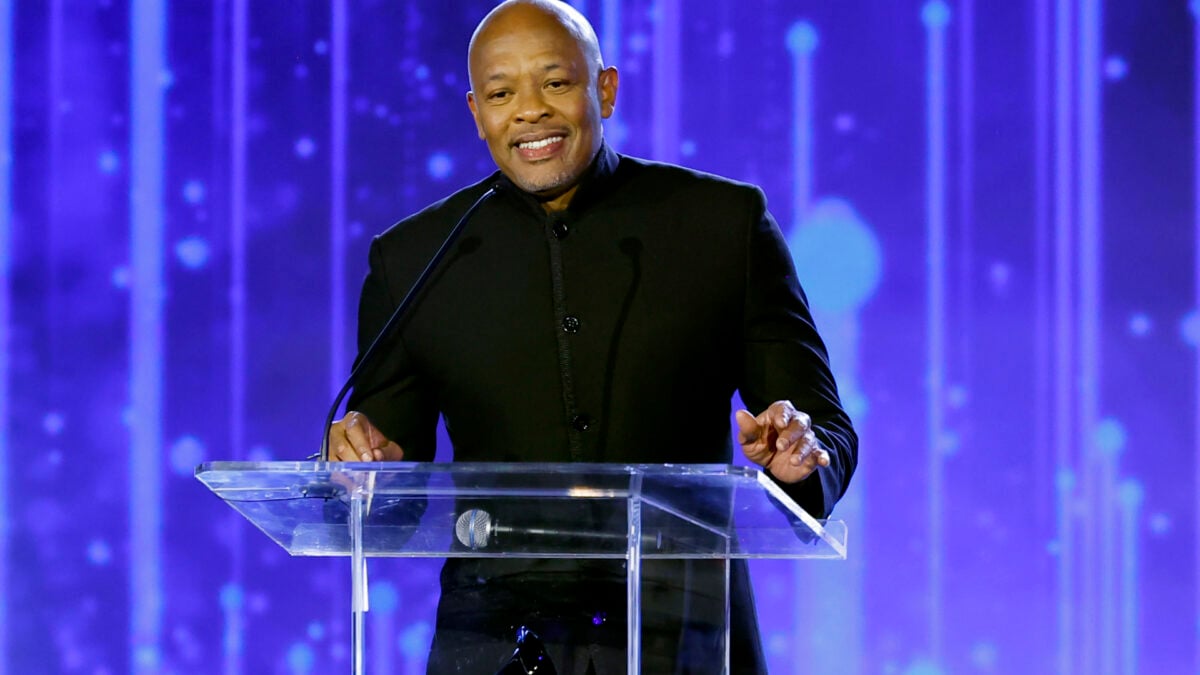
Dr. Dre just admitted to the New York Times that he uses AI in his production process. That’s the headline. But the real story is quieter and far more consequential: he also said most of his peers do the same thing but refuse to talk about it.
Iovine — the Interscope co-founder, Beats by Dre partner, and Dre’s longtime collaborator — called them “closet AI producers.” He named Timbaland as one. The implication is blunt. While the public argues about whether AI belongs in art, the people actually making the music moved on months ago.
This isn’t a threat to culture. It’s a revelation about who was already practicing it.
The Drum Machine Argument
Dre’s defense of AI follows a familiar arc. He compared the backlash against generative tools to the resistance that greeted drum machines and synthesizers when they first entered hip-hop production. The logic is clean: every time new technology arrived, someone called it cheating, soulless, or the end of something real. The music survived and evolved anyway.
But this comparison deserves scrutiny. Drum machines and synthesizers were physical instruments that changed how sounds were made. They required skill to program and shape. AI song generation tools operate on a different axis — they don’t extend a producer’s hands so much as they attempt to replace the decision-making layer altogether. That’s a meaningful distinction, even if Dre doesn’t seem to draw it.
What Dre is really arguing, though, is about identity. The people who oppose AI, he said, are the ones who have trouble creating. In other words: if you’re a real producer, AI won’t replace you — it’ll just make you faster.
The Labeling Shift
The industry is already moving to codify this new reality. Both Spotify and Apple Music will begin labeling AI-generated content in the coming weeks. That’s a significant acknowledgment — not endorsement, but recognition. The platforms are saying: this exists, it’s growing, and we’re going to make it visible rather than pretending it isn’t there.
Spotify is going further. It’s partnering with Universal Music Group to build a feature that lets users create AI-generated song covers, then pay for the privilege. That’s not a cautious experiment. That’s a revenue model being built on the assumption that AI music consumption will be normalized within months, not years.
The labeling move cuts both ways. It signals acceptance, but it also creates a permanent mark — a digital caste system that separates AI-assisted or AI-generated tracks from human-made ones. Whether that stigma fades or hardens into lasting inequality is an open question.
The Creative Class Split
Dre and Iovine are not alone among the elite, but their public stance carries weight that most other adopters don’t enjoy. In film, the division is sharper and more visible. Martin Scorsese and Steven Soderbergh have expressed support for AI in filmmaking. Guillermo del Toro said he would rather die than use generative AI. Seth Rogen called AI-assisted writing a reason to leave the profession entirely.
The music industry’s early adopters have avoided that kind of theatrical split. That may be because music production has always been more collaborative and tool-dependent than any other creative field. A DAW, plugins, sampling — producers have spent decades surrounded by technology that mediates their creativity. AI feels less like a rupture and more like the next plugin in a long line.
Writers, filmmakers, and visual artists face a different calculus. Their tools traditionally required direct, unmediated output from their own hands. A script is your words. A painting is your mark. Music has always been assembled.
Who Wins, Who Loses
The winners are already winning. Producers with access to capital and technical fluency will use AI to compress timelines, reduce costs, and explore sonic territories that would have been impractical before. Dre’s description of using AI to test what a tool would do with his own work is essentially a rapid prototyping loop — a way to iterate faster without surrendering creative authority.
The losers are harder to name precisely because the harm is diffuse. Entry-level producers who once learned their craft throughgrunt work — riding faders, tuning drums, spending hours on a single track — may find that training ground vanished. The job pipeline that fed new talent into the industry runs on apprenticeship, and AI short-circuits apprenticeship by automating the very tasks that taught people how to think like producers.
There’s also the copyright question that hangs over everything. Iovine dismissed it, saying crappy music always existed alongside good music. But the deeper issue isn’t quality — it’s ownership. Training data for most generative AI models remains opaque, and several lawsuits are already wending their way through courts. When a tool learns from copyrighted recordings without compensation, the legal architecture hasn’t caught up to the economic reality.
The Real Story Isn’t Dre
Dr. Dre using AI is notable because he’s Dr. Dre — but the story matters more than the person. The cultural inflection point here is that a figure of his stature is speaking openly about something his peers are doing secretly. That means the taboo is breaking at the top, and the rest of the industry will follow the path he clears.
The drum machine argument will play out again. Critics will sound nostalgic. The music will change. And three years from now, people will look back at this moment the way we now look at the introduction of Auto-Tune — not as the beginning of the end, but as the moment everyone stopped pretending the future wasn’t already here.
The closet producers are no longer in the closet.