How Dragon Ball Is Betting Everything on Franchise Longevity
Toei's new Dragon Ball Super anime signals a shift in how the franchise is packaged for a post-Toriyama era. The strategy isn't storytelling — it's keeping an IP alive.
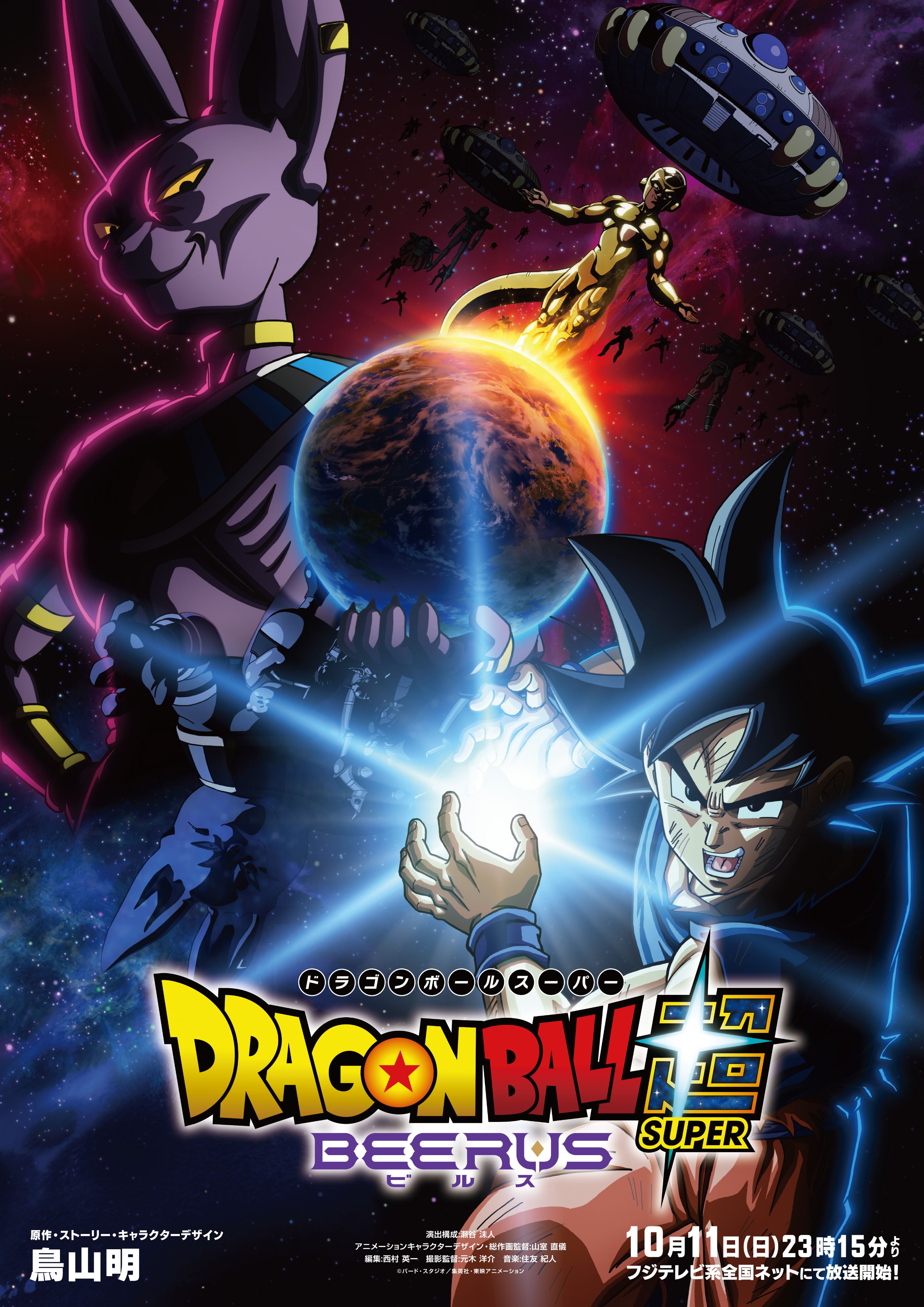
The Beerus Rebrand That Isn’t About Beerus
Toei Animation announced a new anime series on September 3, and the name on the poster does the heavy lifting.
Dragon Ball Super: Broly.
Not the 2018 film. A television series — premiering October 11 at 11:15 p.m. on Fuji TV’s nationwide network — that repackages material from the Beerus saga into a form designed to ride the coattails of the Broly movie’s global commercial success. The trailer released that same day shows Beerus, Frieza, Jaco, Goku, and Vegeta. The story is set a few years after the Buu arc when Beerus wakes from his long sleep. That is the Beerus canon. The title is a marketing decision, not a creative one.
Akira Toriyama, who died in March 2024, is still credited with original character designs and story supervision. The series adds new animation cuts, redrawn sequences, and a reconstructed narrative arc. This is the third or fourth time Toei has offered a “remastered” Dragon Ball Super run, each iteration polished to fill the gap between major theatrical releases.
What the promotional material downplays is the scale of the re-editing involved. Episode structures are being rearranged so that Broly-adjacent story beats surface earlier, creating a through-line that the original Beerus run never emphasized. New insert songs replace portions of the source material’s score. Scene transitions are redrawn to match the visual language of the Broly film rather than the 2015–2016 TV original. The effect is a version of the Beerus saga that feels like it grew out of the movie’s aesthetic rather than the other way around.
The formula is familiar. The question worth asking is why the formula hasn’t broken down yet.
Who This Targets (And Who It Ignores)
Dragon Ball remains one of the few Japanese entertainment IPs with genuine global ubiquity. The Broly film grossed approximately $167 million worldwide on a $20 million budget. The subsequent Super Hero film reached similar numbers. But those figures sit alongside an uncomfortable reality: Dragon Ball Z, the show that built the franchise’s Western fanbase, premiered in American syndication in 1996. The original manga ended in 1997. A significant portion of the core English-speaking audience aged out of weekly anime consumption two decades ago.
The October 11 series is clearly aimed at the streaming generation. It will air simultaneously on Prime Video and U-NEXT in Japan. The press materials emphasize global streaming performance — Vicke Blanka’s “Perfect No Peke” (完璧のペキ), the confirmed ending theme, has surpassed 800 million total streams across platforms. Blanka, a German-Japanese artist, has headlined Anime Friends in Brazil (100,000 attendees) and AnimagiC in Germany. The franchise is no longer just exporting Japanese animation; it is building around artists who already operate in those circuits.
This is a franchise optimizing for the distribution landscape, not the fan base that discovered it on Cartoon Network at 4 p.m. The strategic consequence is that content decisions are increasingly made with international streaming metrics in mind rather than domestic broadcast ratings. Toei’s programming schedule reflects this: late-night slots in Japan align with afternoon viewing windows in North America and evening slots in Europe. The same episode reaches three continents in real time, which means the creative team is implicitly designing for a global first-week conversation rather than a Japanese Tuesday night ritual.
The secondary effect is cultural flattening. When a franchise builds around artists like Blanka — whose brand is crossover-friendly and algorithmically legible — the resulting soundtrack leans toward accessibility over genre specificity. The music works everywhere but excels nowhere in particular. This is not a criticism of Blanka’s talent but an observation about what the economics of global IP demand. The franchise cannot afford musical identity anymore; it can only afford musical utility.
The Economics of a Revival Without End
Toei’s Dragon Ball revenue model has always been layered: manga sales, anime licensing, merchandise, films, video games, theme parks. Each new entry in the television lineup extends the merchandising window. Bandai Namco’s Dragon Ball product lines — figurines, cards, apparel — depend on new visual assets and renewed visibility. A remastered series with redrawn battle sequences gives merchandise teams fresh imagery and resets the novelty clock on existing character designs.
The Broly movie introduced a canonical version of the character in 2018. The new series name leverages that recognition while circling back to Beerus-era content. This isn’t laziness; it’s risk management. The Broly film was a commercial hit because it revisited a fan-favorite villain with modern animation budgets and Toriyama’s direct involvement. Repeating that formula — anchoring new TV content to a proven theatrical property — minimizes the chance of alienating the audience that funds the merchandise pipeline.
But the risk is not merely fatigue; it is the slow erosion of narrative credibility. Each recalibration pushes the franchise further from the idea that Dragon Ball Super is a story with a direction and closer to the idea that it is a format with perpetual entries. When viewers understand that a new series title signals a repackaging exercise rather than a creative gamble, the incentive to invest emotionally in any single iteration diminishes. The audience rewards familiarity and punishes novelty — which is precisely the behavior the current model exploits, and precisely the behavior that makes the model fragile over time.
The risk, of course, is audience fatigue. But Dragon Ball has survived three decades of iteration. The fandom is deeply segmented: purists who treat the original run as scripture, casual viewers who consume anything with the DB logo, and newcomers discovering the property through streaming algorithms. Each segment requires a different entry point. The Broly-anchored series targets the middle group — people who know the name but may not have watched the full Super canon.
There is a second-order consequence to this segmentation strategy. By designing different entry points for different audiences, the franchise effectively admits that there is no single canon anymore. The Beerus manga, the Super anime, the Broly film, and this new series all occupy the same continuity by administrative decree rather than creative consensus. Fans who care about internal consistency now navigate a labyrinth of competing versions. Those who do not care simply consume what is most visible. The franchise benefits from this ambiguity, but the cost is a weakened relationship with the audience members who once treated Dragon Ball as a coherent work.
What Happens Next
The end of the Broly theatrical campaign is visible. There are no announced plans for a sequel film. The October series may serve as a bridge — a way to maintain visibility while Toei and Bandai evaluate the next major Dragon Ball project. That project could be a new film, a new game, or another streaming-original series. Whatever it is, it will arrive in a market where Netflix, Crunchyroll, and Prime Video are all bidding for anime content, and where Dragon Ball’s IP value is amortized across more revenue streams than any other Japanese property outside of Sailor Moon or Gundam.
The franchise is not declining. It is being systematically maintained, the way a heritage brand is maintained — not by reinvention, but by constant, calibrated repetition. Each new series, each re-release, each tie-in with a musician like Blanka extends the commercial lifecycle.
The question for the industry is not whether this strategy works — it clearly does — but what it means for original Japanese storytelling. Dragon Ball is not an original property anymore. It is a managed asset. And managed assets require managers, not auteurs. The post-Toriyama Dragon Ball is proof that a Japanese IP can outlive its creator without losing commercial force, but it also raises an uncomfortable precedent: if the most valuable strategy is repetition dressed as renewal, why invest in projects that might fail? The answer, so far, is that Toei and Bandai are not answering that question. They are answering a simpler one — how to keep Dragon Ball relevant until the next decision arrives. That is not a creative strategy. It is an operational one. And it may be the only kind left for a franchise this large.