Why Nigeria's Ebola Case Without Congo Travel Changes Everything
A Swiss diplomat's wife contracted Ebola in Nigeria without ever visiting DR Congo—the largest outbreak in history just got a wildcard. Health officials scramble as surveillance gaps and unanswered questions spread across Africa.
The Case That Rewrites the Rules
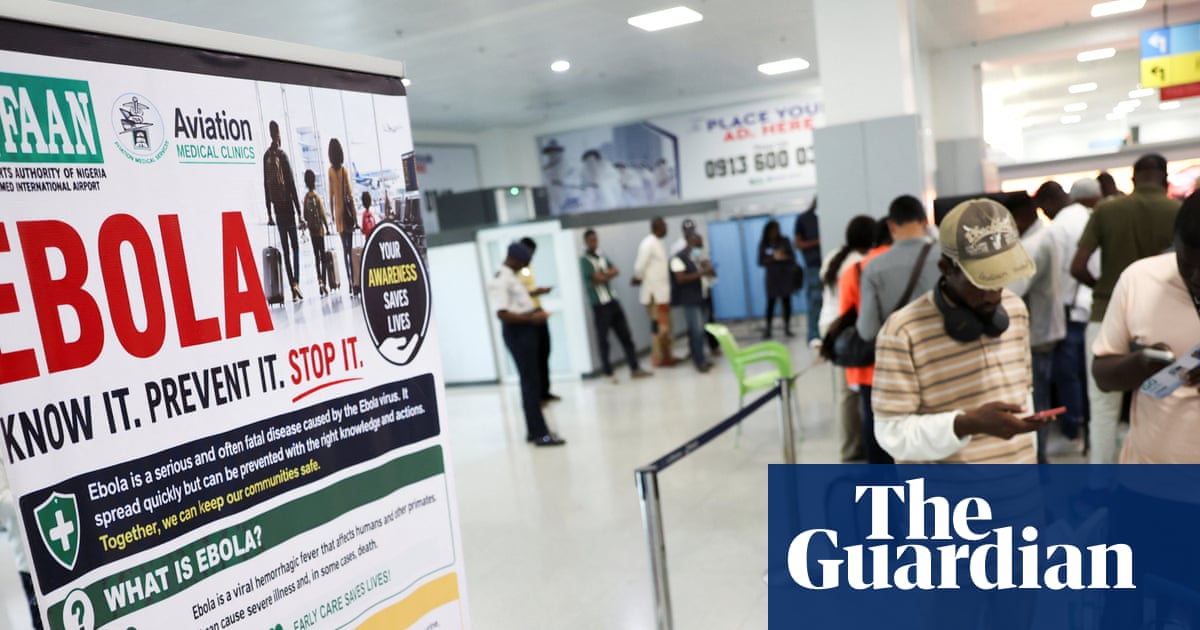
Nigeria has recorded its first Ebola case in more than a decade, and the patient did not visit the Democratic Republic of Congo—the place where this outbreak began, where more than 9,500 people have already been infected and nearly half killed. That fact alone should trigger alarm bells louder than the case count itself.
The patient is a Ugandan-born woman married to a Swiss diplomat stationed in Abuja. The Swiss foreign ministry confirmed Friday she had not travelled to eastern DR Congo, contradicting earlier accounts from Uganda. She was believed to have contracted the virus while travelling with her husband through Uganda. But where exactly? How? The questions are multiplying faster than the contact-tracing teams can follow them.
This matters because every assumption built around the current outbreak—the Bundibugyo virus strain first announced on 15 May—assumed a geography of transmission rooted in eastern DRC, spilling into Uganda and Kenya. Now that geography is blurry. And blur is where outbreaks thrive.
The Containment Problem Is Already Here
Nigeria’s health minister, Muhammad Ali Pate, said contact tracing is continuing and the case remains contained. He expressed hope it would not reach communities. Hope is not a strategy. Nigeria’s population exceeds 220 million. Abuja is a capital city with domestic and international air connections. A single breach in containment does not create a hypothetical risk—it creates a cascade.
The WHO’s Ebola incident manager in DR Congo, Catherine Smallwood, told a UN briefing in Geneva that staff on the ground had no information showing the patient had travelled to Congo. She said a link to the Kenya case was possible. Both the Nigerian patient and a separate case in Kenya travelled from Uganda’s Entebbe airport on 3 October.
That date—3 October—is critical. It puts the patient’s exposure window squarely in late September or early October, during a period when Uganda had officially declared itself Ebola-free after recording cases in May and June and receiving a clean bill of health in August. The contradiction is stark: a country declared free of Ebola becomes the suspected exposure site for a case in Nigeria, two months after the declaration.
Who Can You Trust When the Data Shifts?
Uganda’s government initially said the woman had travelled to eastern DRC. The Swiss ministry said she had not. WHO staff in DRC have no record of her being there. A Dutch virologist on WHO’s Ebola emergency committee, Marion Koopmans, called the Kenya-link theory speculative unless there is evidence the patients shared space in a manner that explains transmission.
“Random presence at the same location, a large airport, is not a supported epidemiological link by any standard,” Koopmans said.
This is not semantics. It is the difference between a contained cluster and a continent-wide panic. If the two cases share a confirmed exposure, surveillance must pivot to Entebbe airport and the transport corridors connecting Kampala, Nairobi, and Abuja. If they do not, the Nigerian case may represent a completely independent exposure—possibly in an area not yet mapped as a transmission zone.
Either way, the Ugandan government told Reuters it had no Ebola cases and would make that information public if it did. It had none to declare after August. But the woman in Nigeria clearly did get infected somewhere. Where remains the central unresolved question.
The Real Danger: A Virus With No Vaccine
The current outbreak is caused by the Bundibugyo strain of Ebola. There is no approved treatment. There is no approved vaccine. The viral haemorrhagic fever has killed nearly 50 per cent of those infected since May. This is not a situation where you can roll out a proven countermeasure and buy time. Every missed case buys the virus more time.
The Africa Centres for Disease Control and Prevention is investigating whether the Nigerian patient came into contact with a patient in Kenya. Dr Wessam Mankoula, head of emergency preparedness and response at Africa CDC, confirmed the cross-border inquiry is active. But confirmation and containment are different things.
Melaku Yirga, vice-president for Africa at Prosper Global, put it plainly: speed and information-sharing across borders are what matter now. Frontline health workers and local organisations need resources, not rhetoric.
What Happens Next
If the Nigerian case is linked to the Kenya cluster through a shared exposure in Uganda, the outbreak has moved beyond the eastern DRC–Uganda–Kenya triangle into West Africa. That is a geographic leap with no precedent in this outbreak.
If the case is independent—if the woman picked up the virus somewhere else in Uganda or during transit—then the map of transmission is even wider than anyone thought. There could be undetected cases in areas not currently under active surveillance.
Neither scenario is good. The first suggests the virus is spreading further, faster. The second suggests the surveillance net is too coarse to catch where it is actually moving.
The 2014–16 West Africa outbreak infected more than 28,600 people and killed over 11,000. The current DRC outbreak is already the deadliest in that country’s history and the second-largest globally. Nigeria’s case does not change the numbers yet. But it changes the assumptions that go into every model, every forecast, and every policy decision. And in an outbreak this size, assumptions are the first thing the virus exploits.