The ECB Is Buying Itself a Recession With One Hand and Denying It With the Other
The ECB just raised rates again because Middle East energy shocks are keeping inflation alive. Lagarde says the economy is resilient enough to tolerate it — but resilience has a limit, and European manufacturing is about to find out where.
The ECB Just Told You It’s Strong Enough to Handle This
Then it raised rates again.
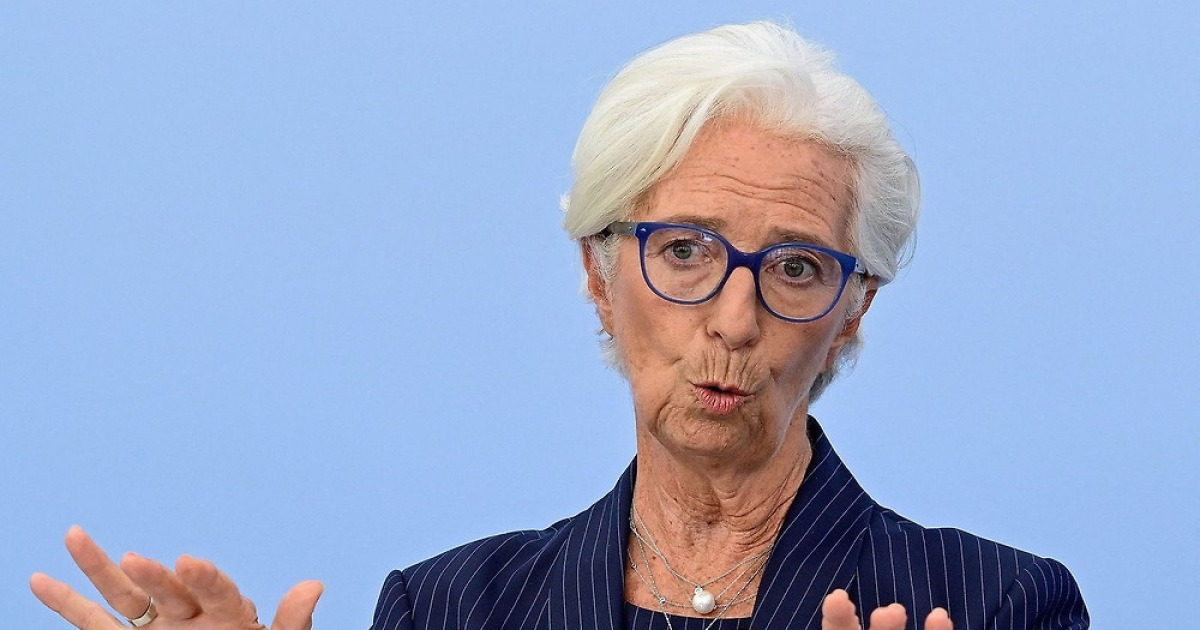
On September 10, the European Central Bank lifted its deposit facility rate by another 25 basis points to 2.50% — the second tightening move of 2026 and the one that should have made everyone pay attention. Christine Lagarde, speaking from Berlin, said the eurozone economy had shown “resilient” performance despite the energy shock. She also said the central bank would not pre-commit to any rate path and would decide meeting by meeting on the data coming in.
That is the ECB’s way of saying it will keep raising until the inflation number moves — even if the real economy starts breaking beneath it.
The decision matched market expectations. By August, international oil and natural gas prices had already re-rated higher on renewed Middle East conflict. Financial markets had been pricing in another hike since late August. What matters now is not that the ECB acted — it is what it is telling you it can keep doing.
The Energy Number That Changed Everything
Eurozone August consumer price inflation came in at 3.3%, up sharply from 2.9% in July. That reversal was driven almost entirely by energy. The energy sub-index surged from 10.3% in July to 14.3% in August — a jump so large that it single-handedly rewrote the ECB’s inflation trajectory for the next two years.
The central bank immediately revised its medium-term inflation outlook upward. Its new projections show headline inflation at 3.0% in 2026, 2.5% in 2027, and 2.1% in 2028. Core inflation, which strips out energy and food, is expected to remain stubbornly above the 2% target at 2.5% in 2026, 2.6% in 2027, and 2.3% in 2028.
This means the ECB’s 2% target is not coming back within the forecast window. The convergence date has slipped further out. Lagarde warned that headline inflation will likely stay well above target through the first half of 2027 and that high energy costs will continue to spill over into core prices and food inflation.
The mechanism is straightforward: when energy is 14% and rising, everything that moves using energy — transportation, manufacturing, heating, fertiliser for food — gets more expensive. The ECB knows this. It is choosing to tighten anyway.
The Growth Lie
Here is the part that should worry you most.
The ECB raised its 2026 eurozone GDP growth forecast to 0.9%, up from 0.8%. It lifted its 2027 forecast to 1.4%, up from 1.3%. It kept 2028 at 1.5%. These are small increments, but they carry enormous implications for policy credibility.
The logic Lagarde presented was this: the second quarter showed better-than-expected resilience across countries and sectors, the trend is continuing into Q3, government defence and infrastructure spending is propping up manufacturing, AI-related investment is supporting digital services and corporate capex, and the labour market remains tight with unemployment at 6.4%.
All of that is factually true. The question is whether it is durable.
Resilience in economic data is not the same as structural strength. A 0.9% growth forecast alongside a 3.3% inflation rate and a central bank that is still net tightening is a recipe for a slow suffocation, not a recovery. The ECB is essentially betting that European industry can absorb higher energy costs and higher borrowing costs simultaneously — and that this absorption will not translate into production cuts, layoffs, or offshoring.
That is a bet. It is not a guarantee.
Who Gets Hurt First
The ECB’s own pressure on financial conditions has been accumulating since June. Corporate bank lending rates rose from 3.6% in May to 3.8% in June and July. Market-based corporate bond financing costs are holding at 4.0%. The three-policy-rate hike on September 10 takes the marginal lending rate to 2.90% and the main refinancing rate to 2.65%.
European manufacturing does not borrow at policy rates. It borrows at the rates banks charge, which have already risen. The tightening is not future-looking — it is already priced into the credit environment for real-economy borrowers.
The sectors most exposed are autos and chemicals. Both are energy-intensive. Both depend on global supply chains that run through the Bab-el-Mandeb strait, which is already under Houthi threat. Both face Chinese competition that exploits lower-cost energy bases in Asia. Both are headquartered in Germany, where energy prices have been structurally higher than in the United States or China for three years.
An auto company that cannot pass on 14% energy cost increases to price-sensitive consumers will cut production. A chemical company that cannot secure affordable feedstock will shut crackers. The ECB’s rate path does not distinguish between these sectors. It treats all borrowing costs as equivalent levers.
The Second-Order Consequence No One Is Naming
The link between the Middle East conflict and European industrial policy is direct, but the mechanism is being understated.
The Houthi campaign against Red Sea shipping has disrupted Bab-el-Mandeb transit for months. This is not a speculative risk — it is an ongoing physical constraint on energy and goods flows. When that constraint intersects with an already-tight European gas storage cycle heading into winter, the price elasticity of demand becomes the binding variable.
European industry does not have the elasticity to absorb another energy shock. It absorbed the first one — the post-Ukraine war spike — by cutting output and moving some production offshore. It has little left to cut. The ECB is now forcing it to absorb a second shock while simultaneously raising the cost of working capital.
This is the collision: the central bank sees inflation data and raises rates. The industry sees energy invoices and cuts production. The two decisions are happening in parallel and neither side is accounting for the other.
What Comes Next
Lagarde repeated that the ECB will not pre-commit to any rate path and will decide on the data. She listed upside risks: a prolonged Middle East conflict, winter gas supply disruptions, El Niño-driven food price volatility, and renewed trade friction.
She did not list downside risks to growth.
That omission is the story. The ECB has concluded that the eurozone economy can sustain net tightening through 2027 even as inflation remains above target. If it is wrong — and the history of energy-driven rate cycles suggests it often is — the adjustment will come not through gradual deceleration but through a sudden discontinuity in industrial output.
The rate path the ECB is signaling — higher for longer, with more hikes possible — is not a policy description. It is a forecast that European industry will not flinch. That is the assumption everyone should be testing.