Eisenkot’s Gaza bid could redefine Israel’s war strategy
Israel's president has asked former military chief Gadi Eisenkot to try forming a government after a deadlocked election. His path to power hinges on whether he can govern with Arab lawmakers — and what that means for Israel's war in Gaza.
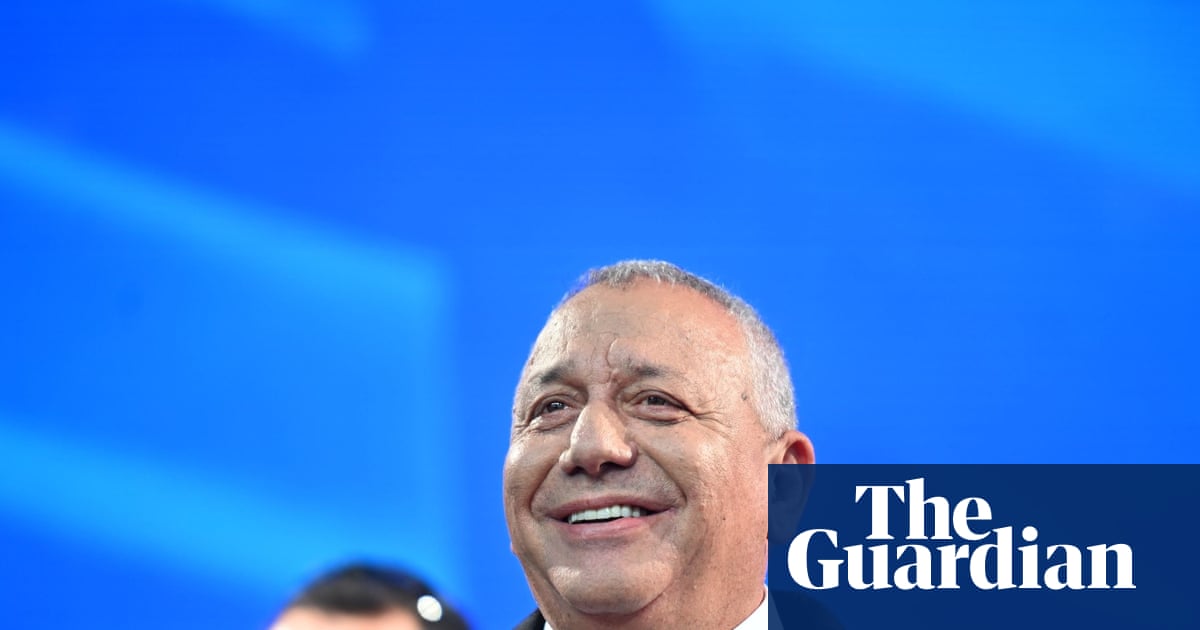
The unlikely architect of a new Israeli government
Israel’s president did something unusual on Saturday night. Rather than offering the mandate to form a government to Benjamin Netanyahu — whose bloc won the most seats but not a majority — Isaac Herzog turned to his strongest rival. Gadi Eisenkot, the 66-year-old former army chief of staff who runs the modest Yashar party, was told to attempt the impossible: build a coalition in a parliament where no one sits comfortably.
Eisenkot’s opposition bloc took 48 of the 120 Knesset seats in the October 27 election. Netanyahu’s camp holds 53. The arithmetic does not lie. But arithmetic also does not account for the Arab lists — three parties representing roughly a fifth of Israel’s population — who have thrown their support behind Eisenkot in post-election consultations. If those votes count toward his coalition math, the former general has a narrow window into the prime minister’s office.
What Eisenkot actually stands for
Eisenkot is neither a dovish idealist nor a straightforward right-winger. His political profile cuts across familiar categories, which makes him difficult to pigeonhole — and dangerous to simplify for foreign audiences used to clear ideological line-drawing.
He has publicly described the violence by extremist West Bank settlers against Palestinians as “Jewish terror” and blamed Netanyahu’s government for enabling it. That language is striking coming from someone who, as IDF chief between 2015 and 2019, oversaw some of the military’s most aggressive operations in the occupied territories. It is also a significant break from the consensus of recent Israeli governments, which have largely turned a blind eye or offered weak rebukes to settler violence.
On Gaza, however, Eisenkot is uncompromising. He opposes a Palestinian state. He has vowed to end Hamas’s rule and destroy its military wing. There is no ambiguity there. What remains unclear — and what will be decisive if he becomes prime minister — is how he intends to achieve that second goal after the shooting stops.
The Dahiya Doctrine legacy
To understand Eisenkot’s likely approach to regional conflict, you need to understand the Dahiya Doctrine. Named after a Beirut suburb flattened during the 2006 war with Hezbollah, the strategy calls for concentrating disproportionate force against civilian infrastructure in areas controlled by adversarial militant groups. It is designed not merely to degrade enemy capabilities but to impose such severe costs on supporting populations that they pressure their own leaders to change behavior.
Critics call it collective punishment. Proponents argue it is deterrence refined. Eisenkot helped formulate it while commanding northern forces before becoming chief of staff. The doctrine has informed much of Israel’s military thinking ever since — including aspects of its current campaign in Gaza and Lebanon.
If Eisenkot returns to the premiership, expect the doctrine to remain influential. Expect sharper targeting of infrastructure in Lebanon and possibly renewed escalation risks. The difference may not be in the scale of force but in its framing: Eisenkot tends to dress military actions in legalistic language and international-law arguments in ways that previous Netanyahu governments did not always bother to do.
The Arab-party question
Here is the part that will determine everything: whether Eisenkot accepts continued formal backing from the Arab parties once he enters office. Their support got him through the initial parliamentary consultations. But governing with them day to day — especially on issues like Gaza, settlement policy, and security coordination — will test his ability to hold together a coalition that spans Israel’s deepest ethnic and religious divides.
Netanyahu’s base will not forgive Eisenkot for relying on Arab lawmakers. Some within his own Yashar party may resist the arrangement as well. And American diplomats watching from Washington will be weighing how an Israeli government partially sustained by Arab votes will handle the war, recognizing that any deal struck with Congressional aid conditionalities in mind must also survive domestic Israeli politics.
What changes for the war — and for America
Should Eisenkot succeed, the immediate implication is not necessarily a ceasefire. He has ruled out a two-state framework and insists on destroying Hamas militarily. Those positions align uncomfortably close to parts of Netanyahu’s platform even as they sit inside a broad opposition coalition. Where Eisenkot would diverge meaningfully is in his willingness to rein in settler violence and to present Israeli military operations with tighter legal and diplomatic cover.
For Washington, the calculus shifts. An Eisenkot government that leans on Arab support may prove more attentive to international criticism of civilian harm in Gaza. That could mean fewer unilateral strikes on Iranian-linked targets without prior consultation and more care around reconstruction planning — because a coalition partly held together by Arab lawmakers cannot afford to alienate those partners entirely. At the same time, Eisenkot’s hawkish record on Lebanon and his doctrinal commitments suggest he will not pull back from coercive military strategies when he believes they serve Israeli interests.
Who wins, who loses
Netanyahu loses first among his allies. Any attempt to block Eisenkot from taking office will look less like democratic defense and more like survival instinct — which is precisely how critics are already framing it. Among ordinary Israeli voters, those frustrated by the war’s open-ended nature and by the social fractures caused by far-right policymaking gain a voice. The Arab-Israeli community gains leverage it has rarely exercised in coalition formation; that leverage comes with risk, because it invites backlash from right-wing factions who view cross-community governance as illegitimate.
Hamas loses either way. A change in Israeli leadership does not erase the group’s military infrastructure or its refusal to accept Israeli sovereignty. But Eisenkot’s emphasis on legal justification for force could complicate Hamas’s narrative of fighting a purely repressive occupation — even if the bombs fall just as hard.
The broader region loses predictability. An Israeli government still negotiating its own internal balance while managing active conflicts on two fronts creates uncertainty for Jordan, Egypt, Saudi Arabia, and the Gulf states that have been quietly coordinating on postwar arrangements. None of those conversations disappear because Eisenkot has been invited to form a government. But the timing of any agreements shifts, and the set of Israeli negotiators changes mid-campaign.
What happens next
Eisenkot has until early December to report back to the president with either a coalition agreement or a mandate returned. If he fails, the president may task Netanyahu with trying again. If that also fails, Israel faces fresh elections — a prospect that would further destabilize an economy already strained by prolonged mobilization and deepen diplomatic fatigue among American and European partners.
The odds of success remain uncertain. Forty-eight seats plus three Arab lists is plausible on paper but fragile in practice. Whether Eisenkot can keep his coalition intact while pursuing an assertive military strategy that avoids diplomatic isolation will define not only his tenure but Israel’s trajectory through one of its most volatile periods in decades.
One thing is clear: the man the president chose to try building a government is not the politician many assumed he would pick. Eisenkot brings neither the populism of Netanyahu nor the bureaucratic caution of technocrats. He brings a military worldview sharpened by combat experience and refined by institutional knowledge of how Israel fights its wars. Whatever government emerges from this negotiation will carry that imprint.