Eisenkot's Emergency Government Upends Israel's Postwar Playbook
Gadi Eisenkot has been tasked with forming Israel's next government after securing Arab party backing — a historic crossover that could redefine Gaza policy, Iran strategy, and Washington's calculus.
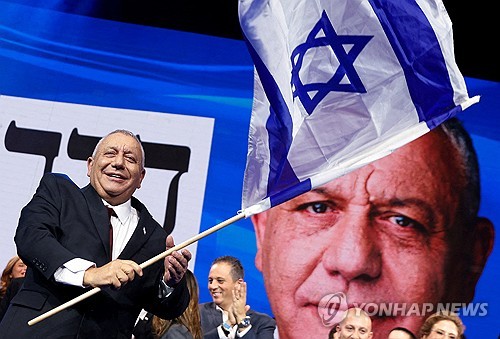
A Former General Becomes Israel’s Gamble
Gadi Eisenkot stood in President Isaac Herzog’s Jerusalem office on November 8 and accepted the most dangerous portfolio in Israeli politics — not as a career politician, but as a man who spent decades wearing the uniform.
The former IDF chief of staff was handed the formal mandate to explore coalition formation after the October 27 election produced a fractured Knesset. His Yashir party won 48 of 120 seats. By any conventional arithmetic, that falls 13 short of a majority. But the math that matters in Israeli governance is messier than textbook coalitions, and Eisenkot found his path through an unlikely corridor: 19 seats held by Arab parties.
That arrangement alone is historically significant. It marks the first time since the state’s founding that a serious bid to form government depends on sustained Arab-Knesset cooperation — a signal that the post-October 7 political realignment runs deeper than anyone predicted.
The Emergency Framing
Eisenkot did not mince words. He described Israel as sitting “in the midst of a critical diplomatic crisis” with “the battlefield still open.” He called for “creative and extraordinary political moves” and argued plainly that Israel no longer has the luxury of endless election cycles.
The word he chose was telling: an emergency government. That phrase carries constitutional weight in Israel. It signals that normal partisan bargaining is suspended, that decisions will be made on urgency rather than electoral calculation, and that the window for grand Bargains — on Gaza’s future governance, on Lebanon’s southern border, on the Iran question — has narrowed dramatically.
Who Wins and Who Loses
Netanyahu loses the most. After 19 years spanning multiple stints as prime minister, his Likud-led右翼 bloc finished behind Eisenkot’s grouping in the seat race, a stunning reversal. Whether he can reconstruct a right-wing coalition from the remaining bloc remains uncertain, but the political narrative has already shifted: the man who defined Israeli security policy for nearly two decades exited the election cycle without the first claim to govern.
Eisenkot wins leverage, but not stability. Fourty-eight seats give him agenda control; they do not give him insulation from collapse. If his 14-day extension expires without a viable coalition, Herzog can dissolve the Knesset and call a third election in under a year — a outcome that would delegitimize whatever compact Eisenkot managed to assemble.
The Arab parties win something rare: a direct pathway to influence national security policy. Their support is not free. Expect demands on settlement policy, Palestinian civil rights, and resource allocation to Gaza’s reconstruction. That pressure will test whether Eisenkot can govern as a nationalist former general while depending on parties many of his base voters view with deep suspicion.
Washington wins ambiguity, which is both a relief and a risk. The Trump administration has long treated Israeli right-wing governments as ideologically aligned but operationally unpredictable. An Eisenkot government brings a different profile — more institutionally cautious, more attentive to international law, likely more sympathetic to a two-state horizon — but also more fragile. American diplomats will want concrete commitments, not just generational shifts.
Gaza Policy: From Annihilation to Administration
The single biggest policy divergence between Eisenkot and Netanyahu centers on Gaza after the shooting stops. Netanyahu has repeatedly refused to articulate a day-after plan, framing the war’s objective as destruction of Hamas rather than occupation or governance. Eisenkot, by contrast, has spoken publicly about the need for an administrative framework — language that implies Israel must eventually delegate civilian governance, even if indirectly.
This is not softness. Eisenkot served as defense minister during the 2021 Gaza conflict and as chief of staff throughout the early years of the current war. His instinct is operational, not ideological. He is more likely to favor precise, internationally legible mechanisms — temporary trusteeship, regional peace partners, UN-backed corridors — over the open-ended military rule that characterizes the current approach.
The constraint is timing. Any government formation deal will require compromises that pull toward the center-right. Eisenkot cannot simply executive-order a Gaza strategy. He will need to broker it inside a cabinet that includes parties hostile to Palestinian statehood and skeptical of international involvement.
Iran: Deterrence Over Escalation
On Iran, Eisenkot’s record suggests preference for calibrated deterrence over the kind of escalatory strikes that characterized parts of the current conflict’s later phases. As defense minister, he authorized measured responses to Iranian proxy activity rather than sweeping retaliations. That posture aligns with his broader instinct: preserve Israeli strategic depth without triggering wars on multiple fronts simultaneously.
But the region does not cooperate with instincts. Hezbollah remains armed along the Lebanon border. Houthi attacks on Red Sea shipping continue. Iranian enrichment has advanced to weapons-grade thresholds. An emergency government facing these threats simultaneously will be tested on whether theoretical restraint translates into operational courage when attacked.
The Coalition Clock
Eisenkot has 28 days to seal a coalition, with a possible 14-day extension. If he fails, President Herzog faces three options: hand the mandate to a right-wing counterpart, dissolve parliament, or attempt a last-ditch power-sharing arrangement. Each path leads to a different Israel.
The right-wing route restores Netanyahu-style governance but deepens international isolation. Dissolution risks another election that produces the same fragmentation — or worse, legitimizes far-right parties that currently sit on the outside. A power-sharing experiment could stabilize the center but would make Eisenkot dependent on politicians he has openly criticized.
No matter which path emerges, the next three weeks will define whether Israel’s postwar orientation drifts toward institutional pragmatism or spirals back into the politics of permanent crisis.
Eisenkot entered this process as a soldier entrusted with a political mission he never sought. The battlefield he now faces is not in Gaza or Lebanon but inside the Knesset — where the arithmetic of survival is less forgiving than any combat zone.