Why Elden Ring on Switch 2 Changes Everything About Console Competition
FromSoftware's Switch 2-exclusive Elden Ring Tarnished Edition isn't just a port — it's the biggest signal yet that Nintendo's new console commands AAA first-party attention, and that could redraw the competitive landscape for Sony and Microsoft.
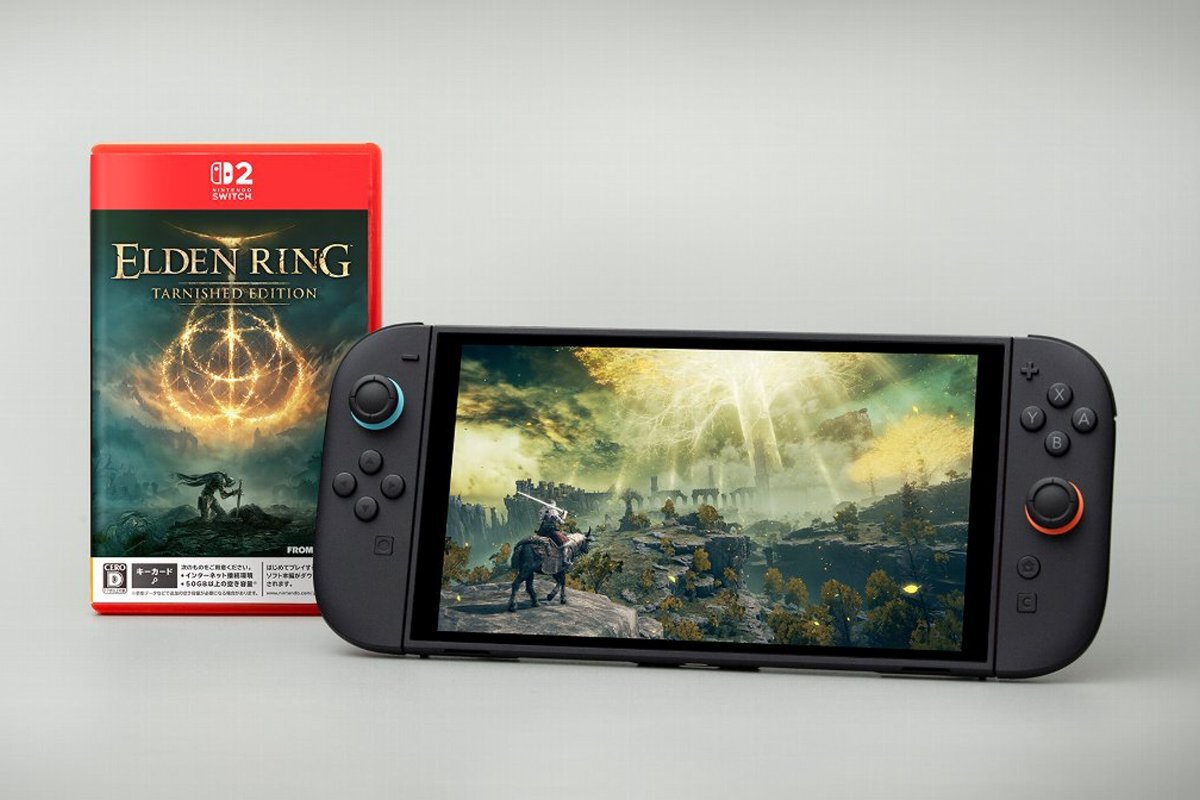
The Switch 2 just got its first real AAA statement.
FromSoftware’s Elden Ring Tarnished Edition drops on Nintendo Switch 2 simultaneously worldwide, priced at 9,020 yen for both physical and digital copies. That single fact — a Game of the Year winner arriving on Nintendo hardware at full price on day one — is the most important data point about the Switch 2’s market position in 2026.
This is not a delayed port. This is not a budget reissue. This is a brand-new, all-in version of one of the most successful games of the last decade, developed in direct partnership with FromSoftware, and it launches on the same day as every other platform. The message from Miyazaki’s studio is unambiguous: Nintendo’s hardware is a priority platform now, not a secondary market.
What makes this edition different
The Tarnished Edition bundles the base game, the Shadow of the Erdtree expansion, four new armor sets, two new character starts, and three horse customization options. On PlayStation, Xbox, and Steam, those additions arrive separately as the 550-yen Tarnished Pack — meaning Switch 2 owners get everything at once for roughly the cost of just the DLC on other platforms.
That pricing asymmetry matters. It signals a platform strategy that rewards early adopters rather than fragmenting content across tiers. Sony and Microsoft are still structuring their stores around à la carte DLC; Nintendo is bundling at launch.
Shadow of the Erdtree, released in June 2024, was itself a massive commercial success — a standalone expansion that sold millions and won multiple awards. Including it in a single package on Switch 2 compresses months of release cadence into one product window. For a platform trying to prove it can handle AAA games, that compression is a strategic advantage: you generate more engagement, more press coverage, and more word-of-mouth in a shorter period.
The 30 million elephant in the room
Elden Ring has moved over 30 million units globally as of March 2025, spanning PS5, Xbox Series X|S, and Steam. That number is not theoretical — it represents a massive existing audience that owns the game but may not have experienced the full package including Shadow of the Erdtree, or who played on hardware that struggled with the original’s technical demands.
Switch 2’s improved specs remove that barrier. The question is not whether the game runs — it’s whether 30 million players will pay 9,020 yen for a version that includes everything. If even a fraction of that audience converts, Switch 2 gets one of the strongest launch windows in its history, arguably stronger than any launch title Sony or Microsoft has offered in 2026.
What Sony and Microsoft are missing
The Tarnished Pack structure reveals something important about Sony and Microsoft’s positioning. They’re receiving the DLC content separately — a paid add-on on top of a game most of their players already own. There is no Switch 2-style bundle incentive. There is no reason for a new platform holder to invest aggressively in a port when the existing ecosystem is already profitable without one.
This is the tension at the heart of 2026 console competition: Sony and Microsoft have built their strategies around third-party exclusivity deals and timed launches. But third-party developers like FromSoftware are increasingly treating Nintendo as a first-party-level partner instead. The Metroid Prime 4 deal, the Zelda titles, and now Elden Ring form a pattern that suggests Nintendo’s shift away from first-party-only development is working — and working faster than anyone outside Nintendo expected.
For Sony particularly, this is a wake-up call. The PlayStation brand has long defined itself through narrative-driven, cinematic exclusives. Elden Ring represents something different: a gameplay-first, community-driven experience that dominates through sheer depth rather than marketing spend. If FromSoftware continues prioritizing Nintendo hardware, Sony loses not just a game but a whole category of titles that resonate differently with audiences.
The broader implication for platform strategy
The simultaneous release date removes the old exclusivity playbook. This is not a timed exclusive that rewards one platform and penalizes others. It is a coordinated launch that treats Switch 2 as equal to PlayStation and Xbox from day one. That parity is itself a competitive signal — it tells developers that Nintendo will negotiate on equal footing, not as the underdog platform asking for favors.
The 550-yen Tarnished Pack on other platforms is modest — it’s a DLC upsell, not a competitive move. The real question is whether Sony or Microsoft will respond with their own Switch 2-aligned strategies, or whether they continue optimizing for hardware sales while Nintendo captures the high-margin, bundled-first software revenue.
By Q4 2026, the industry will have concrete data: how many Switch 2 units shipped with Elden Ring, how much revenue FromSoftware generated from this specific deal, and whether other AAA developers followed Nintendo’s lead. If the pattern holds, 2027 could look very different for the entire console market.
What happens next
Nintendo has proven it can attract a top-tier developer willing to ship a complete, day-one package on its hardware. The next test is whether that relationship extends beyond FromSoftware — whether Resident Evil, Final Fantasy, or other major franchises treat Switch 2 as a primary development target rather than an afterthought.
Sony and Microsoft’s response will likely come in two forms: either they offer more aggressive financial terms to lock in similar deals, or they double down on first-party production to compensate for lost third-party access. Both paths are expensive. The first path requires restructuring multi-platform negotiations. The second path requires finding enough talent to fill a pipeline that FromSoftware’s success has just exposed as vulnerable.
The Elden Ring launch is not the end of the story. It is the opening frame. The question for the rest of 2026 is whether Nintendo can frame a sequence that changes the entire picture.