Elden Ring on Switch 2 Is a Litmus Test for Nintendo's New Hardware
FromSoftware's punishing RPG arrives on Switch 2 this August in a bundled edition that includes the Shadow of the Erdtree DLC. For Nintendo, landing a title this demanding on portable hardware says something vital about what the Switch 2 can actually do.
The Port That Says Everything
Nintendo doesn’t need another Mario or Zelda to prove the Switch 2 can handle serious games. It needs Elden Ring.
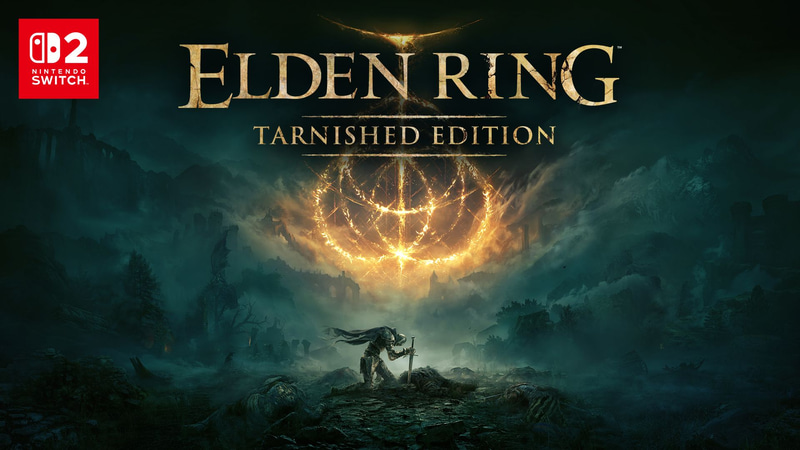
FromSoftware’s 2022 open-world masterpiece — and its sprawling Shadow of the Erdtree DLC — lands on August 28 as the Tarnished Edition, priced at 9,020 yen. The bundle includes the base game, all DLC content, four new armor sets, two new character classes, and the ability to customize the appearance of your spectral steed Torrent across three options.
That last detail might sound trivial. It isn’t. The fact that a game this visually dense, this mechanically complex, can run on a handheld console with optional battery-sapping performance modes is what should make developers across the industry sit up and take notice. More importantly, it tells players something they haven’t always been willing to accept: that portable gaming has genuinely crossed a threshold.
Why the Performance Claim Matters
Elden Ring has never been an easy game to port. The base game alone pushes hardware in ways most consoles struggle with — massive open zones, dense NPC crowds, and a combat system that demands consistent frame rates during boss encounters. The Shadow of the Erdtree expansion adds even more to process: larger enemy counts, more elaborate visual effects, and environments designed to disorient rather than comfort. Running both on Switch 2 in handheld mode requires a different kind of optimization than running it docked. Every resolution trade-off is more visible. Every frame dip is more disruptive when you’re playing on a train rather than sitting at a TV.
Nintendo announced the port during its April 2, 2025 Nintendo Direct. The timing wasn’t accidental — it positioned the Switch 2 alongside a game that commands serious cultural weight, not just a party title or a casual hit. Bandai Namco and FromSoftware are behind this release, and their involvement signals that this isn’t a rushed third-party afterthought. It’s a deliberate partnership aimed at lending the new hardware immediate credibility in a segment where Nintendo has historically relied on first-party support alone.
What’s notable is the broader implication: if Switch 2 can sustain Elden Ring’s demands through a hybrid architecture that shifts between handheld and docked play, the engineering challenges facing other studios attempting similar ports diminish considerably. Publishers who hesitated to invest in Nintendo hardware for AAA titles may reconsider. The signal from this announcement is calibrated to reach exactly those decision-makers.
Who Actually Wins Here
For Nintendo, the win is in the message. A Switch 2 that can handle Elden Ring — not as a compromised demo, but as a complete experience including DLC — undercuts the long-standing criticism that portable consoles can’t run AAA games properly. It’s a concrete demonstration, not a promise. The second-order effect extends beyond marketing copy. Developers building tools and engines for next-generation hardware will now factor Nintendo’s platform into their optimization priorities earlier in the pipeline, which means future ports arrive with higher baseline quality rather than retrofitted compromises.
For FromSoftware, the win is wider. Elden Ring already has one of the largest player bases in recent RPG history. Adding the Switch 2 doubles down on accessibility without cannibalizing sales on other platforms — most people who wanted to play this on console already bought it for PlayStation, Xbox, or PC. This is incremental reach, which is exactly the kind of expansion a mature title needs. The Tarnished Edition also reintroduces the game to a market — Japan — where portable play is the dominant mode and where Elden Ring’s cultural footprint is particularly strong. Bandai Namco’s distribution machinery in that region ensures the port reaches an audience that may not have encountered the title yet.
For players, the win is simpler. The Switch 2’s handheld mode means Elden Ring can be played during a commute, on a plane, or in bed — situations where sitting down at a TV is impossible. That doesn’t diminish the experience. It changes when and where you choose to suffer through Malenia.
The Real Question: Will It Hold Up?
The announcements have been measured. There’s no word yet on whether the Switch 2 version runs at a consistent target resolution in handheld mode, or what the frame pacing looks like during heavy boss fights. Those details will determine whether this port is merely functional or genuinely competitive with the versions gamers already own.
If the performance targets are solid — and nothing in the current announcement suggests they won’t be — then Elden Ring becomes one of the defining early titles for Switch 2, the kind of game that tells prospective buyers this console isn’t just a backward-compatible upgrade but a genuinely different piece of hardware. The reverse scenario carries equal weight. A stumble wouldn’t just disappoint fans of the port; it would reinforce a narrative that Nintendo struggles to attract third-party support for demanding titles, a pattern that has followed the company since the original Switch launched in 2017.
There is also the question of thermal management under sustained load. Handheld play compresses cooling capacity, and Elden Ring’s traversal-heavy design means the CPU and GPU rarely idle. How Nintendo and the porting team handle heat dissipation during extended sessions could become a talking point that shapes player expectations going forward.
What Comes Next
The Tarnished Edition ships August 28. By that point, the Switch 2 will already have some time in the market. Reviews of the hardware itself should be circulating. Elden Ring’s arrival will serve as one of the first major real-world stress tests for the platform — not just technically, but culturally.
Games define consoles as much as exclusives do. Minecraft. Tetris. Super Mario. Elden Ring on Switch 2 could join that lineage in Japan, where the game already enjoys enormous popularity and where the portable market remains the most active in the world. The port also arrives as part of a broader shift in how Nintendo positions its hardware: no longer confined to family-friendly franchises but capable of running the kind of mature, technically ambitious experiences that compete for attention on PlayStation and PC.
There are additional pressures ahead. The third-party publishing cycle tends to stretch between announcement and release, and any further delays or reassurances from Bandai Namco or FromSoftware will shape expectations. Conversely, if the port launches cleanly and the community response is positive, Nintendo gains momentum heading into what will likely be its most critical holiday season since the original Switch launch. Success here opens doors; failure closes them.
Nintendo has spent decades proving that its hardware can run games people didn’t expect them to run. The Switch 2 is just the latest chapter. Elden Ring is the proof. The question now is whether the hardware can deliver on the promise.
The margin between ambition and execution on this release is narrow. But if Nintendo clears it, the implications extend far beyond a single port. They reshape what the next generation of portable consoles can claim to do.