Europe's Bomb Threats Are a Coordinated Hybrid War Test
A wave of bomb threats across European flights this week has grounded hundreds of flights and scrambled fighter jets. The targets, signatures, and timing all point to a deliberate test of how Europe's skies react — not a random panic campaign.
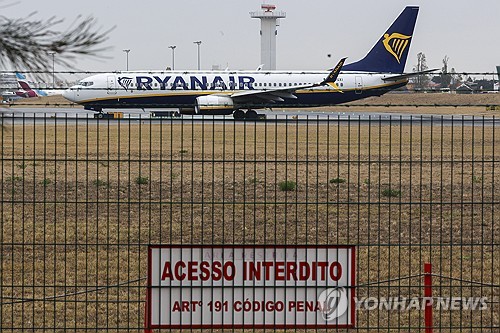
Europe’s skies are under a coordinated siege — and the weapons are emails.
Thirty-five commercial flights across Europe have received bomb threats this week alone. Twenty-three incidents were logged on a single day by the dpa. Fighter jets scrambled to escort aircraft in Hungarian airspace. Airports in Prague, Lisbon, Copenhagen, and Paris ran full security sweeps. No explosives were found on any plane.
That gap between perceived threat and actual danger is precisely the point. This is not a series of coincidence. The scale, the speed, and the signature trail all converge on one conclusion: European aviation infrastructure is being stress-tested by a methodical campaign that sits somewhere between sabotage and psychological operations.
The logistics of panic
The operational timeline tells its own story. The first visible incident hit on November 2 — a Wizz Air flight from London to Sofia, which forced emergency diversions and grounded follow-up flights. Within four days, the attacks spread across at least six countries on two continents of European airspace. The dpa recorded twenty-three separate incidents in one day alone. That is not organic spread; it is deliberate geographic saturation designed to make every major European airport feel exposed simultaneously.
The cost structure is revealing. Each threat triggers a chain of expensive responses: security team mobilization, flight diversions, passenger rebooking, fighter jet scrambles. None of the threats involved actual bombs or even the delivery of devices into aircraft holds. The disruptions — canceled flights, delayed connections, grounded fleets — are the payload. Airlines and airports absorb the financial damage. Travelers absorb the frustration. The public absorbs the fear.
Why this matters strategically
The pattern mirrors a playbook Russia has been refining against Western infrastructure for months. In July 2024, European authorities linked coordinated parcel bomb incidents across multiple cities to Russian actors. In August 2025, a drone carrying explosives struck Leipzig airport — another attack on critical civilian infrastructure that Western intelligence attributed to Russian operatives. The airline threat campaign appears to be the next iteration: a cheaper, deniable, and more scalable version of the same strategy.
The advantages for the attacker are asymmetric. A phishing email or a tip line call costs nearly nothing to originate and replicate. A fighter jet scramble and a full airport lockdown costs millions. The threat-to-response ratio is deliberately stacked in favor of the instigator.
What the campaign also tests is something more subtle than economic cost: it probes the reflex speed of European security institutions. When threats hit twenty-three airports in a single day, institutional response becomes mechanical — standard protocols activate, procedures repeat, attention fractures across dozens of jurisdictions. The very breadth of the campaign dilutes the capacity for deep investigation into any single incident. That fragmentation is a strategic outcome, not an accident.
The attribution puzzle
One of the most intriguing details emerged through AFP and other outlets: many of the threat emails bore the signature of Male State, a Russian far-right group that has positioned itself online as anti-Ukrainian and pro-Russian. The name carried weight precisely because it was already embedded in the ecosystem of Russian-aligned disinformation — recognizable enough to trigger institutional suspicion, ambiguous enough to deny meaningfully.
Then the picture complicated. Vladislav Pozdnyakov, who founded Male State, posted on Telegram that the group no longer existed and that the threat emails were fabricated. That contradiction does not resolve the question of origin. It reframes it. Whether the threats came from an active Male State cell, from someone using the name as a mask, or from a Russian intelligence apparatus that deliberately seeded the attribution to create confusion — the net effect is the same. Doubt multiplies.
The Russian state’s response followed the standard template. Deputy Kremlin spokesperson Dmitry Peskov dismissed the allegations as baseless accusations lacking evidence. That denial is predictable and performs its intended function: it keeps the attribution question open, making any consensus on responsibility harder to achieve and easier to delay.
The broader infrastructure campaign
The airline threats did not arrive in isolation. Over recent weeks, European media reported on coordinated hacking incidents targeting refrigeration systems and blood bank networks — infrastructure that, if disrupted, would create visible humanitarian consequences rather than mere travel chaos. Hacktivist groups linked to Russian networks, including NoName057(16) and Z-Pentest Alliance, claimed responsibility for those attacks on Telegram before deleting their posts. That pattern of claiming, then retracting, is consistent with an information strategy designed to maximize visibility while minimizing accountability.
Taken together, the incidents paint a picture of a adversary probing multiple veins of European civilian infrastructure simultaneously. Aviation disruptions test institutional response speed and economic resilience. Cyberattacks on cold chain and medical logistics test societal fragility and humanitarian tolerance. Each domain reinforces the others by creating a general atmosphere of institutional unreliability.
Who wins, who loses
The winners in this dynamic are the actors behind the threats: they incur minimal cost, generate maximum disruption, and maintain plausible deniability at every turn. They gain intelligence on European response protocols, they erode public confidence in institutional competence, and they create political friction between EU member states that must coordinate emergency responses across different legal and operational frameworks.
The losers are European travelers and the institutions responsible for their protection. Commercial airlines face mounting costs for security procedures that can never fully neutralize a threat that exists primarily as information. Airport operators manage cascading delays that damage their reputation even when no physical danger materializes. Air traffic control systems absorb repeated stressful interrupts that degrade efficiency across the network.
What happens next
European security services will likely increase monitoring of threat communication channels and tighten coordination protocols between member states. But the fundamental asymmetry remains unresolved. As long as a single phishing email can ground a fleet of aircraft and scramble fighter jets, the cost equation favors the attacker.
The more urgent challenge is informational. Institutions need a credible, rapid attribution mechanism that can distinguish between independent bad actors and coordinated campaigns — because treating every threat as potentially connected spreads resources thin, while dismissing them as isolated incidents leaves Europe vulnerable to escalation.
The airline bomb threat campaign this week may look like a panic stunt to casual observers. But the sequencing, the geographic spread, the attribution signatures, and the parallel cyber incidents form a coherent picture. Europe is watching its skies being disrupted by ghosts — threats that vanish on inspection but leave real damage in their wake. That is not a weakness in the campaign. It is the entire point.