Fate/EXTRA Record Finally Gets a 2027 Date — And One Frame Changes Everything
After a years-long limbo, Fate/EXTRA Record lands January 28, 2027. But the real story isn't the launch date — it's the half-second cameo of a character fans have waited 15 years to see in the Moon Cell.
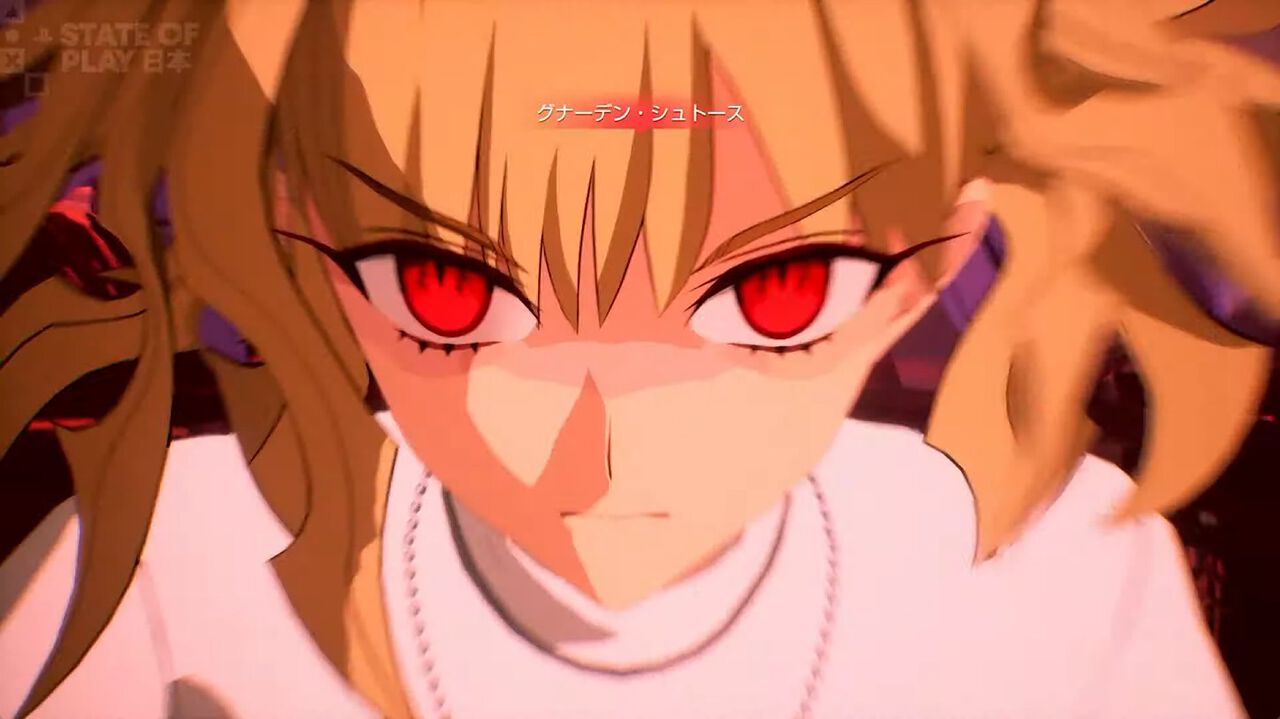
The Wait Is Over, But the Question Remains
Sony’s State of Play on September 3, 2026 delivered a date most fans weren’t expecting to hear so soon: Fate/EXTRA Record launches January 28, 2027, simultaneously worldwide across PS5, PS4, Nintendo Switch 2, Nintendo Switch, and Steam. The news confirmed what the community had suspected for nearly two years — the remake was real, and it was close. The presentation itself ran lean, dedicating roughly ninety seconds to Record out of a longer lineup, which told you something about where Type-MOON sits within Sony’s broader priority hierarchy. It was featured, but not headlined. That positioning matters.
That date matters. But the moment worth analyzing isn’t the calendar slot. It’s the trailer’s brief appearance of a character whose design bears an unmistakable resemblance to Shiki Tohno, the protagonist of Tsukihime, Type-MOON’s other foundational franchise that launched in 2000. No official confirmation of a crossover exists. Yet the visual language is deliberate enough that omitting it would be negligence — the silhouette, the coat, the asymmetrical hair pattern. In the hands of a less careful studio, this would read as accidental genericism. In the hands of Type-MOON, it reads as a message in a bottle.
Why the Moon Cell Was the Right Bridge
The premise makes the cameo plausible on paper. EXTRA Record takes place inside SE.RA.PH — the Moon Cell Automaton’s simulation engine — a digital realm that stores and renders all possible worlds. In Type-MOON’s shared cosmology, the Moon Cell is not a Fate-exclusive invention; it is a cosmic archive. Characters, memories, and even alternate realities can theoretically surface within it. That design philosophy is exactly what allowed Kinoko Nasu to seed cross-franchise cameos in Fate/stay night and later titles without breaking internal logic.
The question becomes whether Record treats the Moon Cell as an Easter egg drawer or as a structural engine for worldbuilding. A cameo that functions as decoration is fine for a first visit. A cameo that recontextualizes the narrative — suggesting that SE.RA.PH has absorbed material beyond its original parameters — would be something far rarer in Japanese gaming. It would also raise the stakes for anyone who played the 2010 original and remembers how isolated and self-contained that world felt. If Record opens the walls, the entire tonal architecture shifts.
Who Wins, Who Loses
The winners are straightforward: players who have followed Type-MOON since the PS2 era, collectors of physical editions across four SKUs (ranging from 8,910 yen to 39,380 yen depending on inclusion of soundtrack boxes, acrylic blocks, and Varano-sourced fine artwork), and Steam users who finally get a legitimate Type-MOON RPG on PC with English, French, German, Italian, Spanish, Korean, and both simplified and traditional Chinese subtitle support.
The loser is momentum. January 28 lands in a crowded window. Record will share shelf space with AAA releases and major indie launches. A franchise with this level of built-in demand does not need perfect timing, but it benefits enormously from having nothing fight it for attention. The simultaneous global release helps — no more staggered localization delays that fracture community conversation — but it also means the game must survive its first two weeks on raw merit, not nostalgia alone. There is no regional advantage to fall back on. No soft launch to fix broken systems. What ships is what ships.
The deeper risk is audience segmentation. EXTRA is a different beast from Fate/stay night. It is slower, more claustrophobic, and structurally closer to a survival RPG than a tactical card battler. Players arriving expecting servant-vs-servant spectacle will find a game where AP management, deck construction, and arena exploration drive combat. The remake adds enhanced scenarios and refreshed character graphics, but the core loop remains unchanged. Anyone who played the 2010 original knows this. Anyone who does not should be warned: this is not a gateway title.
The Crossover Signal
If Type-MOON confirms the Shiki resemblance — and there is no reason to think they won’t, given how carefully they have curated this franchise’s visual identity — the implications extend beyond fan service. The Tsukihime remake, released in 2021, reintroduced Tohno’s story to a modern audience. Since then, Type-MOON has maintained a quiet policy of treating its franchises as distinct but adjacent: Fate explores one corner of the Moon Cell, Tsukihime another. They share mechanics, shared mythological references, and a handful of recurring characters, but they do not intersect narratively.
A confirmed crossover in Record would mark the first time those parallel streams explicitly merge within a mainline release. It would also signal that the company sees its audience as capable of holding multiple timelines in mind simultaneously — a bet that has paid off consistently across the Fate franchise’s twelve-year run. The secondary effect is harder to quantify but potentially more consequential: it gives Tsukihime a second promotional lifecycle in a market where the 2021 remake found a passionate but niche audience. Cross-pollination like this does not happen by accident at Type-MOON.
The alternative — a deliberate denial or vague description — would not kill interest. But it would confirm that Type-MOON prefers containment over escalation, a strategy that has kept the brand safe while slowly exhausting its most dedicated fans. The community has spent years building speculative frameworks around what the Moon Cell could contain. To dismiss the signal now would feel less like creative discipline and more like fear.
What Comes Next
The limited editions provide a clue about where Type-MOON thinks the demand lies. The standard package version sits at 8,910 yen. The limited edition jumps to 16,830 yen. The Type-MOON store’s special edition reaches 27,830 yen, and the super-deluxe edition tops out at 39,380 yen. Those tiers exist because the same audience that buys physical Soundtrack boxes and acrylic blocks will buy them again. The company knows its customers. It also knows that physical ownership carries cultural weight in a genre where digital copies disappear from storefronts and pricing becomes opaque within months.
For English-language coverage, the story is ready. Record arrives with a fully localized audio-visual presentation, simultaneous global availability, and a visual tease that international fans will dissect frame by frame. Whether Type-MOON delivers on the crossover implication remains the only unresolved question — and the one that will determine whether Record becomes a milestone or a memory.
The date is set. The question is what happens inside it.