Fate/EXTRA Record Remake Shows Why IP Is Console Strategy Now
Aniplex taking over the Fate/EXTRA Record remake from Bandai Namco is not just a publishing shuffle — it is a signal about how anime-gaming IP is reshaping console-market competition in Japan and beyond.
The Announcement That Was Not About a Game
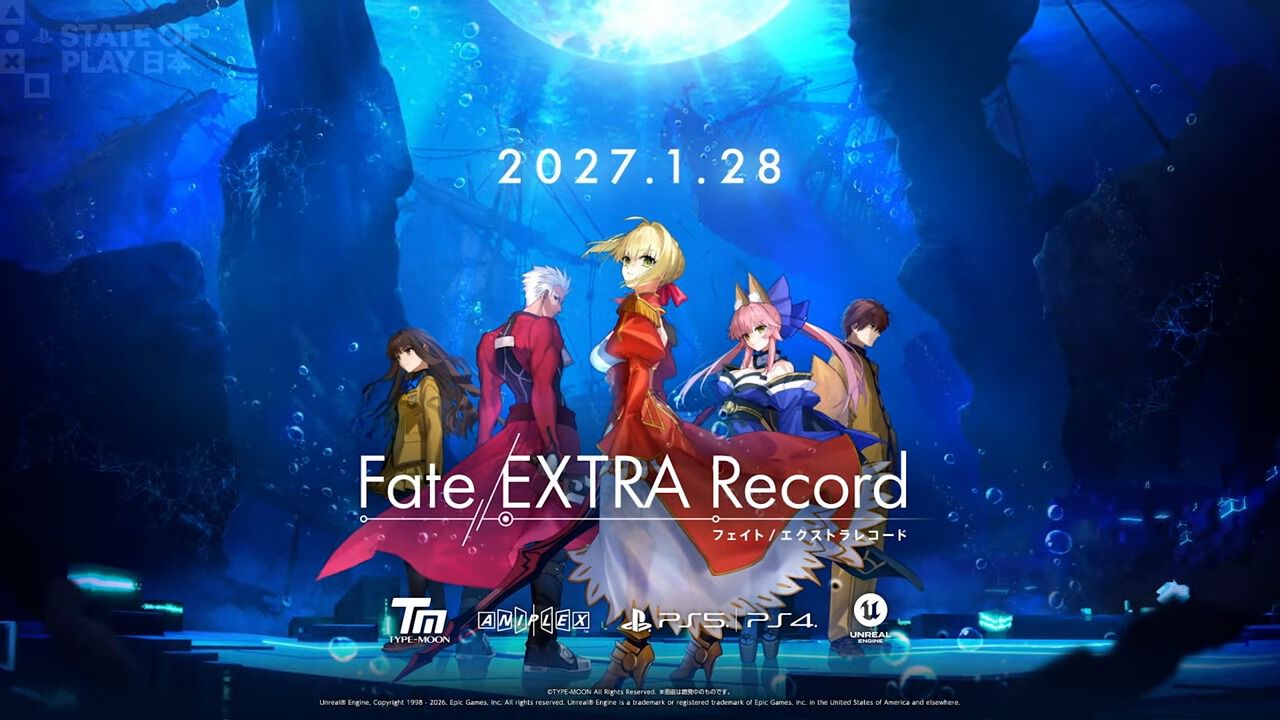
Sony used its State of Play slot on Wednesday to do something surprising for a studio that had spent months quietly absorbing the fallout of its own development scandals: it announced a Fate/EXTRA remake with a January 28, 2027 release date, and it did so in a way that made clear this was never really about whether Bandai Namco could deliver it.
The truth is messier and more revealing. Bandai Namco Entertainment officially withdrew as publisher after a restructured development review led by Type-Moon and Bandai Namco in March 2026. Aniplex stepped in. The project moved. The timeline slipped again. The PlayStation stage remained.
What this looks like on the surface is a publishing reshuffle. What it actually is is proof that the franchise lifecycle of a major anime-gaming IP has become a strategic asset longer than any single publisher owns it. Sony, through Aniplex, retained the rights to the Stage of Play moment — and that moment is now worth more than any single release quarter.
Why Aniplex Matters More Than Bandai Namco Did
Aniplex is not a game publisher in the traditional sense. It is the anime division of Sony Music Entertainment Japan, with deep roots in film distribution, music rights, and franchise management across the Sony ecosystem. When Aniplex took over distribution for Fate/EXTRA Record, the decision sent a signal through an industry that has spent the last three years watching anime IP outperform game-native launches on revenue charts.
Type-Moon’s Fate franchise already generates more revenue from mobile applications (particularly Fate/Grand Order, developed by Delightworks and published by Aniplex) than from console releases. The Fate/EXTRA line exists in a strange middle ground: a core PlayStation audience, a devoted manga and anime fanbase, and a global community that tracks every delay on social media with the urgency of people who treat franchise continuity as a sport.
When Bandai Namco stepped aside, it was not because the game was failing. It was because the game needed time, and Aniplex was willing to give it that time without the quarterly earnings pressure that defines Bandai Namco’s game division. Aniplex does not report game sales the same way. Its profit center is broader: streaming rights, merchandise, music, and licensing.
That structural difference is exactly why the announcement landed the way it did.
The Delay That Proves the Strategy
The timeline reads like a case study in how major anime-gaming IP is managed when the owner understands long-term value better than short-term release windows.
August 2024: Fate/EXTRA Record announced at FGO Fes. by Bandai Namco. Pre-orders implied.
July 2025: Delayed to spring 2026. Reason cited: quality and depth.
March 2026: Development review initiated. Bandai Namco exits as publisher. Aniplex takes over. Release pushed again.
September 2026: Release date confirmed for January 28, 2027. State of Play slot secured. Pre-orders open via Ebiten with bundled exclusive goods.
Each delay was a loss in the short term. Each delay was also an investment in the perception that the product would not ship until it met a standard higher than the competitive landscape. That is a calculation only possible when the publisher is also a franchise steward.
Bandai Namco had already published Fate/Extra Neo, Fate/Extra Last Encore, and several mobile entries in the lineage. Its brand was attached to the franchise, but its incentives were misaligned with the kind of patient, cross-media strategy that a Type-Moon flagship deserves.
Aniplex understood what Sony understood: that a Fate/EXTRA remake arriving in January 2027, on PlayStation, backed by State of Play marketing and Aniplex’s anime ecosystem, is not a single-game launch. It is a franchise event designed to anchor PlayStation’s identity in a market where anime IP drives subscriber engagement more reliably than any original IP ever has.
What This Means for the Japanese Console Market
The Japanese console market has been shrinking for a decade. What keeps it alive is not Western-style AAA releases — it is domestic IP that crosses between anime, games, and merchandise. The last time Sony staged a State of Play with this kind of anime-gaming concentration was during the Final Fantasy VII Remake cycle. The cycle before that was Persona 5 Royal. Both were moments that reinforced PlayStation’s relevance in Japan at a time when the domestic market was under pressure from Nintendo’s hybrid strategy and mobile-first competition.
Fate/EXTRA Record occupies the same conceptual space today. January 2027 places it squarely in the holiday window, but not in direct conflict with the biggest Western releases — it lands in a gap where anime-gaming fans congregate and where pre-order velocity can be measured in weeks rather than months.
The Ebiten bundle is telling. A B3 tapestry and a 3D crystal figure (Saber, Archer, or Caster) are not game accessories. They are collector merchandise designed to convert casual interest into committed purchase behavior. This is the same merchandising logic that drives Demon Slayer and Jujutsu Kaisen physical releases, applied to a game that was originally a 2010 PSP title with a cult following far larger than its initial sales suggested.
The implication is straightforward: Sony is betting that the cultural weight of a Type-Moon remake, managed by Aniplex and timed for a PlayStation exclusive announcement, will generate more engagement value than any single third-party Western blockbuster could produce in the Japanese market during Q1 2027.
Who Wins, Who Loses, Who Is Left Waiting
Aniplex wins by retaining franchise control and gaining a high-profile January 2027 release that reinforces its position as Sony’s anime-gaming operator.
Type-Moon wins by ensuring its flagship interactive IP receives a development timeline that prioritizes quality over quarterly targets.
PlayStation wins by securing a State of Play moment that ties the platform to a franchise with a global fanbase extending far beyond Japan.
Bandai Namco Entertainment loses a publishing contract but not the franchise — it will likely remain involved in some capacity given its history with Fate mobile titles, but the console premiere rights now belong to the Sony ecosystem.
Nintendo loses by default. The game is a PlayStation exclusive by timing and platform strategy. There is no Switch version mentioned in the source material, and given the remake’s scope, a multi-platform approach is unlikely.
Western retailers and wire desks lose by being second. The announcement broke in Japanese media through Dengeki Online, was amplified through State of Play, and will take days or weeks to filter through to English-language coverage. In a franchise ecosystem where pre-order momentum is everything, that delay has real commercial consequences.
What Happens Next
The release date of January 28, 2027 is fixed. Whether Aniplex can deliver on the quality promise remains to be seen, but the structural shift in publishing suggests the game will arrive with more cross-media support than a Bandai Namco-led release would have provided. Expect anime tie-ins, promotional collaborations, and likely a soundtrack release through Sony Music’s distribution network — all elements that widen the commercial impact beyond game sales alone.
For Sony, the deeper implication is that anime-gaming IP is no longer a supporting act on PlayStation’s roadmap. It is becoming a headline strategy, one that leverages the company’s existing ownership of the source material to create releases that function as both games and cultural events.
The Fate/EXTRA Record remake is not just a game. It is proof that in the current console landscape, intellectual property is the platform.