First Orbital Starship Changes Everything — Including China's Space Calculations
SpaceX just sent Starship into orbit for the first time, completing a milestone that reshapes launch pricing, NASA's Artemis timeline, and the geopolitical math of space competition. The real story is what happens next.
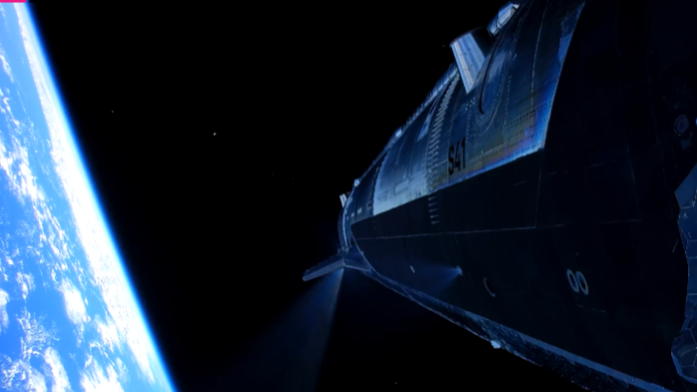
The moment SpaceX waited a decade for
At 1:17 p.m. EDT on September 28, 2026, SpaceX confirmed what engineers had been chasing since 2019: Starship is in orbit. Ship 41, riding atop Booster 21, circularized at approximately 170 miles (275 kilometers) after a single Raptor 3 engine burn completed at T+25 minutes, 17 seconds into flight. The question that now hangs over every space agency, defense contractor, and rival launcher is simple — and it changes everything.
This was not a graceful arrival. One of Ship 41’s Raptor 3 engines shut down early during the ascent phase. SpaceX technicians assessed the anomaly in real time and chose to proceed anyway. That decision itself is telling. It reveals a company that has moved past the paralysis that once defined NASA-era launch programs, where a single sensor glitch could ground a mission for months. Instead, SpaceX is treating orbital insertion as a problem to be solved mid-flight, not a barrier to hope.
The vehicle then deployed its payload — 26 Starlink V3 satellites — over roughly 30 minutes. Three of those satellites carried cameras pointed back at Ship 41, collecting data on heat shield tile performance during re-entry heating. This is operational intelligence gathering dressed as a commercial payload deployment, which is exactly how SpaceX wants it: dual-use data flowing from missions that also happen to make money.
The operational tempo nobody predicted
Before Flight 14, no rocket in history had combined this size, this thrust, and this frequency of testing. Starship has now flown 14 test launches since 2023. Most reached space. None achieved orbit — until now. What makes Flight 14 different is not just the altitude record. It is the duration.
Previous Starship flights lasted about one hour, suborbital hops that touched the edge of space and fell back. Flight 14, SpaceX had planned for nearly 10 hours in orbit, completing up to six full revolutions around Earth before deorbit. That kind of orbital time is the difference between a splash-and-goes and a spacecraft that actually lives in space long enough to prove it can work there.
SpaceX did cut that short. At 2:29 p.m., the company announced it was returning Ship 41 early, performing a deorbit burn at approximately 11 a.m. EDT the following day instead of waiting out the full coast phase. The reasoning was internal — an assessment of the upper stage’s status after the earlier engine shutdown — but the outcome was clean. The deorbit burn using a single Raptor 3 engine completed successfully, and Starship splashed down in the Northern Pacific.
That the return was equally controlled, equally data-rich, is perhaps more important than the orbit achievement itself. Re-entry is where heat shields are proven or fails. The V3 Starlink cameras pointed at Ship 41’s tiles will provide that answer in coming weeks.
Who wins and who loses
The winner is SpaceX, obviously, but the margins matter more than the headline. The company now holds a monopoly on orbital-class heavy lift at a price point no competitor can match. NASA’s own cost estimates for the Space Launch System — the rocket Artemis depends on — sit at over $2 billion per launch. Starship’s target is a fraction of that, and Flight 14 just proved the vehicle can reach orbit and return. The economics of space are about to compress violently.
NASA is the second winner, and its Artemis program is the obvious beneficiary. The lunar lander variant of Starship is central to humanity’s return to the Moon. Before Flight 14, Artemis timelines were already slipping — the Moon landing is now targeted for 2027 or later. An orbital-capable Starship removes the single biggest technical risk from that equation. If Boeing and Lockheed Martin are watching from their SLS programs, they should feel a chill. Congress funds SLS because it distributes contracts across districts. But when a single SpaceX launch can replace multiple SLS flights, political economics shift faster than bureaucratic ones.
China is the loser here, and the damage is strategic, not just commercial. Beijing’s space program has always measured itself against the United States. The arrival of an operational Starship changes the calculus. China’s heavy-lift ambitions — the Long March 9, still years from its first flight — cannot compete with a vehicle that is already flying operationally. The gap widens from technological to generational.
ULA, Arianespace, and every other launcher operator outside China faces the same problem: they are selling yesterday’s pricing for today’s payload capacity. A Falcon 9 cannot carry what Starship carries. A Vulcan will never match Starship’s economics. The market for heavy lift does not expand when Starship arrives — it consolidates around SpaceX.
What happens next
Flight 14 was a test. The satellites it delivered are operational. The data from the heat shield cameras will arrive in coming days. SpaceX is already moving toward Flight 15, and the cadence will accelerate. Each successful orbital flight reduces the insurance premium on every customer contract, which accelerates revenue, which funds faster iteration.
The most immediate consequence is commercial. SpaceX has said it wants to deploy 100,000 Starlink V3 satellites over time. Previous launches carried test payloads that re-entered quickly. Now those satellites stay. The constellation’s bandwidth, coverage, and resilience improve with every orbital flight, creating a flywheel that competitors cannot enter because they cannot match the launch cost curve.
For NASA, the next checkpoint is a Starship integrated flight test carrying the human-rated lunar lander. If Flight 14’s orbit achievement translates into landing system qualification, the Artemis III crewed lunar landing moves from uncertain to likely within the current administration’s timeframe. That would be the single largest strategic shift in U.S. space policy since Apollo.
And for everyone else — governments, competitors, investors — Flight 14 marks the point where space ceases to be an industry of scarcity and becomes an industry of abundance. The physics have not changed. The economics have.
Starship reached orbit. The rest is just paperwork.