FromSoft’s Server Crash Is a Signal — Not a Bug
FromSoftware’s closed test for The Duskbloods crashed on day one. The real story isn’t the server failure — it’s what the login stampede reveals about Japanese AAA’s new global gravity.
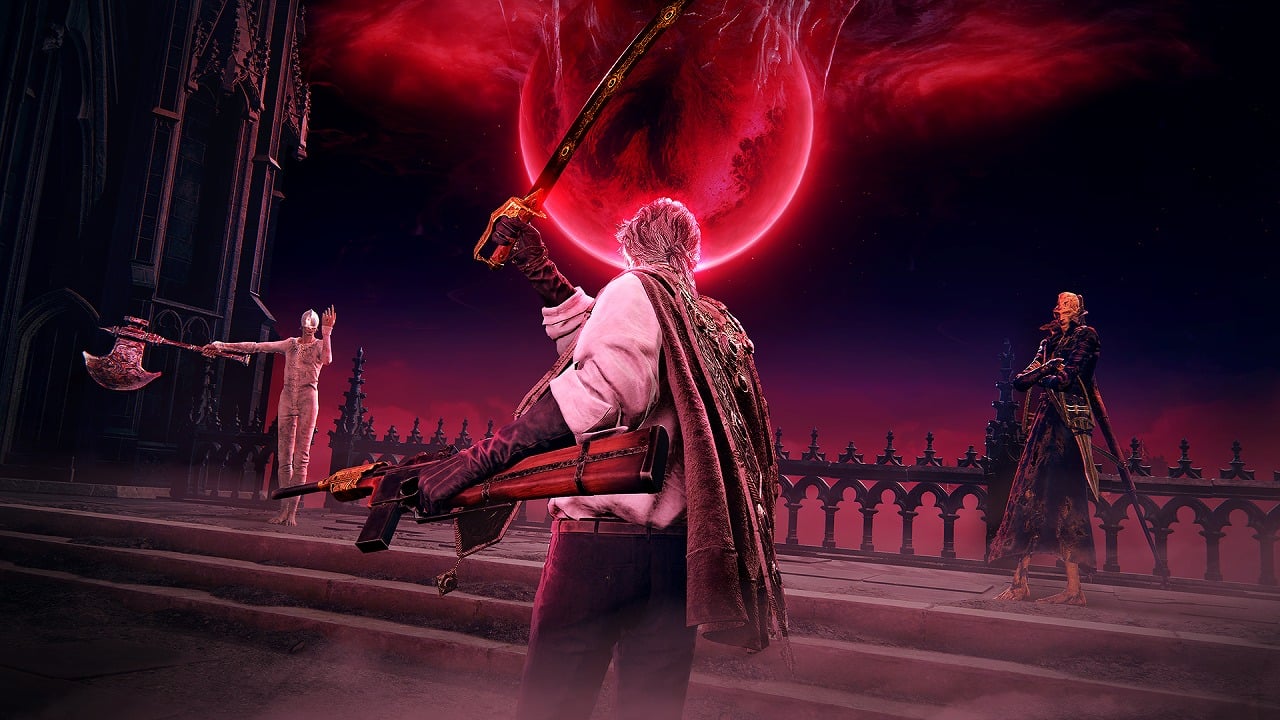
The Crash That Speaks Louder Than a Launch Day
FromSoftware shut down its closed network test for The Duskbloods on August 21 after just over an hour. Servers buckled under login demand at 19:26 Japan time. By 20:47, the company posted a formal apology and declared the day’s testing session terminated. No one who drew a test invitation got more than twenty minutes of play, if that.
Discord channels that should have been buzzing with build feedback instead filled with spectators — players who hadn’t been invited watching streams of people getting kicked from queues, reading error code screenshots, piecing together what happened from fragmented tweets. One user posted a clip of their connection resetting twelve times in under four minutes. Another described a loading screen that persisted for seventeen minutes before the client gave up entirely. These weren’t edge cases. These were the experiences of thousands simultaneously hitting the same bottleneck.
Most studios would treat this as a technical embarrassment. FromSoftware, perhaps uniquely, is handling it with the quiet pragmatism that has come to define the studio since Sekiro: Winds of Ashes. No blame-shifting. No vague promises about future patches. A simple message: we are improving the servers, and we will announce next steps when ready.
The real story here is not the infrastructure failure. It is what caused it.
Japan’s AAA Studio Is No Longer a Niche
Elden Ring sold over 25 million copies. Its sequel is reportedly in development. Miyazaki’s name now opens doors that once belonged only to western franchises like Call of Duty or FIFA. But the cultural shift is often understated in English-language coverage. Let me be blunt: FromSoftware has become the most reliable AAA game studio on Earth, and this test crash is economic proof.
Consider the framing. A western publisher would see this scene and think about PR spin — influencer outreach, staged streams, controlled drops. FromSoftware thinks about whether the server code can handle simultaneous logins at scale. The order of operations is reversed, and that reversal is the signal.
The Duskbloods is described as an 8-player PvPvE experience for Nintendo Switch 2, released on a schedule that already seems aggressive given the current state of testing. It is not a Soulslike. It is something new, built by the same team that treats player retention, build longevity, and systemic depth as non-negotiable. If the test had run smoothly, the backlash from a rushed launch would have been swift and justified.
Why This Matters Outside Japan
English-language gaming media has a habit of treating Japanese studios as curiosities until they prove otherwise. Resident Evil Village arrived and the world recalibrated. Now Elden Ring dominates year-end lists and FromSoftware’s name carries weight in boardrooms that previously only tracked Ubisoft and Activision figures.
This test crash is a data point in that recalibration. The global player base — not just Japanese fans, not just hardcore Souls veterans — mobilized in numbers large enough to bring down servers on day one. That is not a regional phenomenon. That is a global one.
The economics are clear: anticipation for a single Japanese-developed title now matches, and likely exceeds, what western franchises generate at similar developmental stages. The Duskbloods has not shipped. It is in closed test. And it already triggered a logistical crisis that some mid-tier western live-service titles would struggle to replicate after a full marketing campaign.
There is a second-order effect worth noting. Western publishers watching this may be forced to reconsider their own infrastructure timelines. For years, the assumption was that Japanese studios prioritized design fidelity over online scalability. That assumption no longer holds. FromSoftware’s decision to cancel rather than push through a broken test sends a message to the entire industry: player trust is the scarcest resource, and it cannot be faked with a patch note.
Who Wins, Who Loses, What Happens Next
Who wins: Players who waited. The fact that FromSoftware chose to cancel rather than force a broken test through tells you something about the studio’s risk calculus. They are willing to absorb short-term frustration to protect long-term credibility. That is the same logic that kept StarCraft II’s matchmaking stable for years, that refused to ship Dark Souls 2 before it was ready, that made Elden Ring the most polished open-world experience of its generation despite its complexity.
Test participants are frustrated, but the backlash is notably measured compared to what western titles face after premature demos. On Reddit, the top threads are less “this is unacceptable” and more “at least they didn’t pretend it worked.” That tone difference is significant. It reflects a player base that has been burned by western live-service promises and is responding to the restraint it sees here.
Who loses: No one in any meaningful sense. The inconvenience is real — test participants missed out, forums are filling with speculation — but the alternative would have been a publicly flawed demo that hardcodes negative first impressions. FromSoftware is avoiding that trap.
The real loss is speculative: every day of delay is a day of lost visibility in a media cycle that moves fast. Competitors will fill the vacuum. Coverage will shift. The longer the announcement window stretches, the more FromSoftware cedes narrative control to rumors and speculation.
What happens next: The test was scheduled to run through August 24, with sessions on August 22 and beyond. As of now, the company has not confirmed whether those dates will proceed as planned. The studio’s pattern suggests a revised announcement is coming — likely with adjusted capacity, staggered login windows, or a shortened testing window. This is standard practice for studios that prioritize stability over momentum.
What makes FromSoftware different is that when they do announce next steps, they tend to deliver on the timeline they set. The question is whether they will restore confidence before the broader community’s patience erodes — or whether the silence itself becomes part of the story.
The Bigger Picture
The gaming industry is undergoing a quiet consolidation of trust. Western AAA has spent the last five years delivering incomplete products at full price, relying on post-launch patches and battle passes to fill gaps. Japanese studios, led by FromSoftware, are doing the opposite: shipping fewer, tighter experiences that demand attention precisely because they do not overpromise.
This test crash is a reminder that the demand for that model is real and global. The servers could not handle it — yet. But the fact that they were tested at all, by a player base willing to queue for an hour and lose patience instantly, is evidence of a market that has largely abandoned the western AAA playbook.
There is a third layer here that gets overlooked. The Duskbloods is built for Nintendo Switch 2 — a platform still establishing its identity in a market dominated by PC and PlayStation exclusives. That FromSoftware chose this platform, and that players responded with this volume of demand, suggests that the studio’s creative authority now transcends hardware loyalty. People are not buying Switch 2 for The Duskbloods yet — but they may be the ones proving it can sell itself.
The Duskbloods launches in 2026. If FromSoftware applies the same discipline to multiplayer infrastructure that it has brought to single-player design, this incident will be remembered as a growing pain, not a warning sign.
Until then, the servers are being patched. And the players are waiting.