Families split by Fukushima — now the courts must decide
A landmark lawsuit challenges how Japan compensated families torn apart by the Fukushima evacuation — especially those who chose to leave voluntarily. Today's judgment could reshape nuclear accountability in Japan.
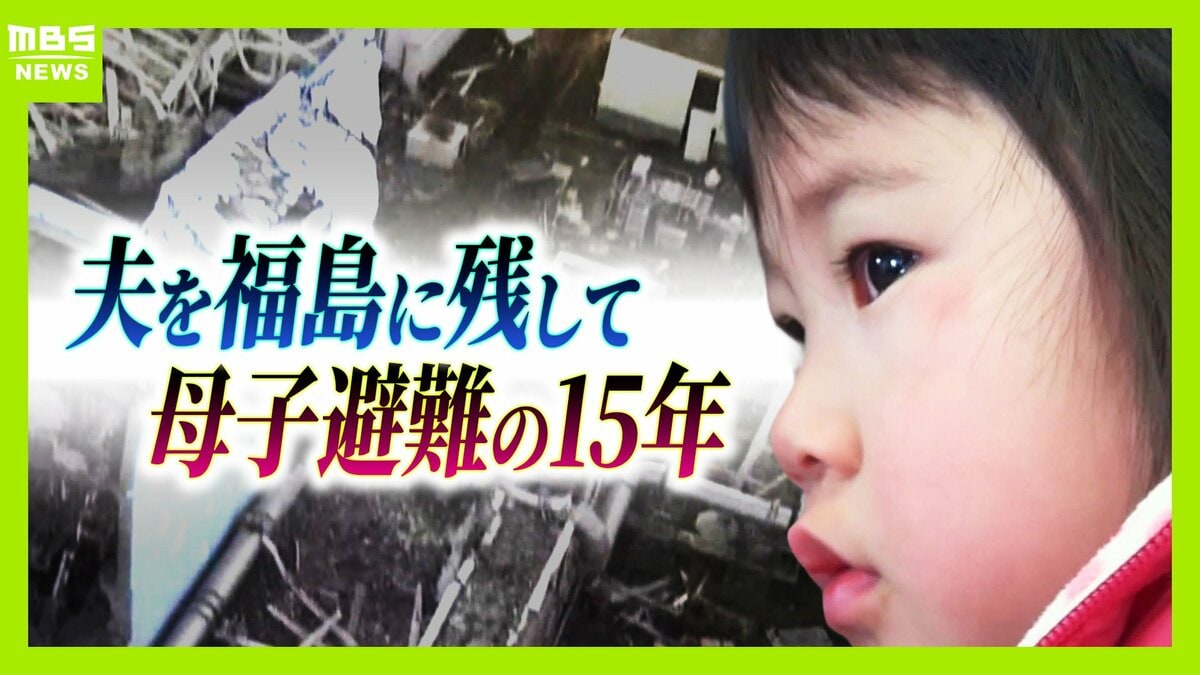
The family that radiation separated
Akiko Morimatsu remembers the moment her children’s ordinary life ended. It came through a kindergarten notice: masks were distributed for little faces, outdoor play was banned, and all activities moved indoors to a gymnasium. The message, unwritten but unmistakable, was that her children would not live like other children.
So she made a choice that would split her family for 15 years. She took her children and moved to Osaka, where extended family could support them. Her husband, a practicing physician, stayed in Fukushima to continue serving the community’s medical needs. They lived apart across a landscape measured in sieverts.
The radiation readings in Koriyama, roughly 60 kilometers from the stricken Fukushima Daiichi plant, peaked at more than 100 times pre-accident levels. For Morimatsu, that number was not abstract. It was the reason she could not send her children to the park.
What began as a protective decision became an administrative puzzle. Under Japan’s post-accident compensation framework, Morimatsu’s family fell into a gap so vast it has only recently drawn judicial scrutiny. Her husband, remaining in the prefecture, qualified for certain support measures as a resident of an evacuated area. She and the children, having crossed prefectural lines without a government mandate, qualified for almost nothing.
A legal fault line no one discussed
Today, a Japanese court is set to deliver a judgment that cuts through one of the quietest injustices of the Fukushima disaster: the fate of voluntary evacuees.
Japan’s official evacuation framework drew a sharp line between those ordered to leave and those who left on their own. Mandatory evacuees received comprehensive compensation and support. Voluntary evacuees — like Morimatsu — were largely excluded from the same benefits, despite living under identical radiation conditions.
This distinction has held for 15 years. It is the difference between a government that acknowledges responsibility for what it commanded and one that acknowledges only what it forced you to endure.
Morimatsu and other plaintiffs are suing the national government and Tokyo Electric Power Company, arguing that the state had a duty to protect all residents exposed to danger, regardless of whether an official order preceded their flight. Their claim is not merely about money. It is about whether the government admitted its obligation to people it never formally told to leave.
The lawsuit, filed in 2022, names over 300 plaintiffs who relocated to at least 25 prefectures. Legal documents estimate the total financial exposure could exceed 10 billion yen if the court finds the government negligent in its duty of care.
Why this matters beyond Japan
Western coverage of Fukushima has fixated on the physical disaster — the meltdowns, the containment failures, the tsunami. Far less attention has gone to the administrative aftermath: the bureaucracy of who counts as a victim and who does not.
The voluntary evacuee gap is not unique to Fukushima. It appears wherever governments respond to radiological or environmental catastrophes with partial protections. After the 2011 disaster, approximately 154,000 people were subjected to mandatory evacuation orders. But an estimated additional 50,000 to 100,000 residents fled areas that remained under less restrictive guidance. These voluntary evacuees became invisible in official statistics — present in the communities that received them, absent from the frameworks designed to support them.
Japan’s case is distinctive because the legal system is now being asked to close that gap retroactively. No other nuclear incident in modern history has produced a litigation wave targeting the boundary between compulsory and voluntary displacement.
The judgment will set a precedent for how Japan treats citizens who fled danger that the state created but never officially acknowledged. If the court sides with the plaintiffs, it could unlock compensation for thousands of families similarly divided. If it sides with the government, it entrenches a two-tier system of victimhood — one based on official orders, another based on personal risk assessment.
Second-order consequences
The implications extend well beyond compensation checks. A plaintiff victory would recalibrate the relationship between nuclear regulators and the public. Currently, evacuation orders serve as the legal trigger for state responsibility. Removing that trigger — or broadening its scope — would require regulators to justify every level of guidance they issue, knowing that weak guidance could create liability.
For Tokyo Electric Power Company, the financial exposure would be significant. TEPCO already faces billions in claims from mandatory evacuees. Expanding liability to voluntary evacuees would deepen a debt burden that has constrained the company’s restructuring and delayed decommissioning efforts at Daiichi.
On an international level, the case signals a shift in how nuclear liability is understood. The Vienna Convention and Paris Convention on civil liability for nuclear damage leave room for member states to define evacuation-related compensation. Japan’s approach — tying compensation to government orders — has been cited by other nations as a model for limiting utility exposure. A different ruling could prompt other nuclear-powered countries to reconsider how they compensate displaced populations.
Who wins, who loses
The stakes are concrete. Morimatsu’s family has lived 15 years in administrative limbo. Her children missed formative years under restrictions that other Japanese children did not face. Her husband remained in a zone that the government itself admitted was dangerous. None of this was resolved by policy.
If the plaintiffs win, the government and TEPCO face financial liability extending beyond the mandatory evacuation zone. That changes the calculus for every future nuclear incident in Japan — and potentially worldwide. Insurers, utilities, and regulators will note whether voluntary exposure carries legal consequence.
If the plaintiffs lose, the message is clear: the state’s responsibility ends where its orders end. Residents who acted on their own judgment — who read the radiation data, who feared for their children, who made the hard choice to leave — receive nothing additional from the entities responsible for the disaster.
What happens next
The judgment will likely arrive within days. Legal scholars expect it to address whether the government knew or should have known that radiation levels made voluntary evacuation reasonable. They also expect it to consider whether TEPCO’s liability extends to those who fled without a formal directive.
Beyond the courtroom, the human story continues. Morimatsu’s children are now teenagers who grew up split between Osaka and Fukushima. Her husband still practices medicine in a region the government continues to rehabilitate. The family’s separation is not a legal abstraction — it is the daily reality of a disaster whose administrative consequences outlast its physical ones.
For the millions of residents who made similar choices in 2011, the outcome will determine whether their fear was recognized as legitimate by the institutions they trusted to protect them. Fifteen years later, that recognition remains unfinished business — and the court’s decision will either close that chapter or extend it further.