GM's One-Computer Bet Could Redefine Autonomous Driving
General Motors is betting everything on a single central computer for its next-generation vehicles. If execution holds, the move could upend the entire autonomous driving ecosystem — and force every competitor to rethink their architecture.
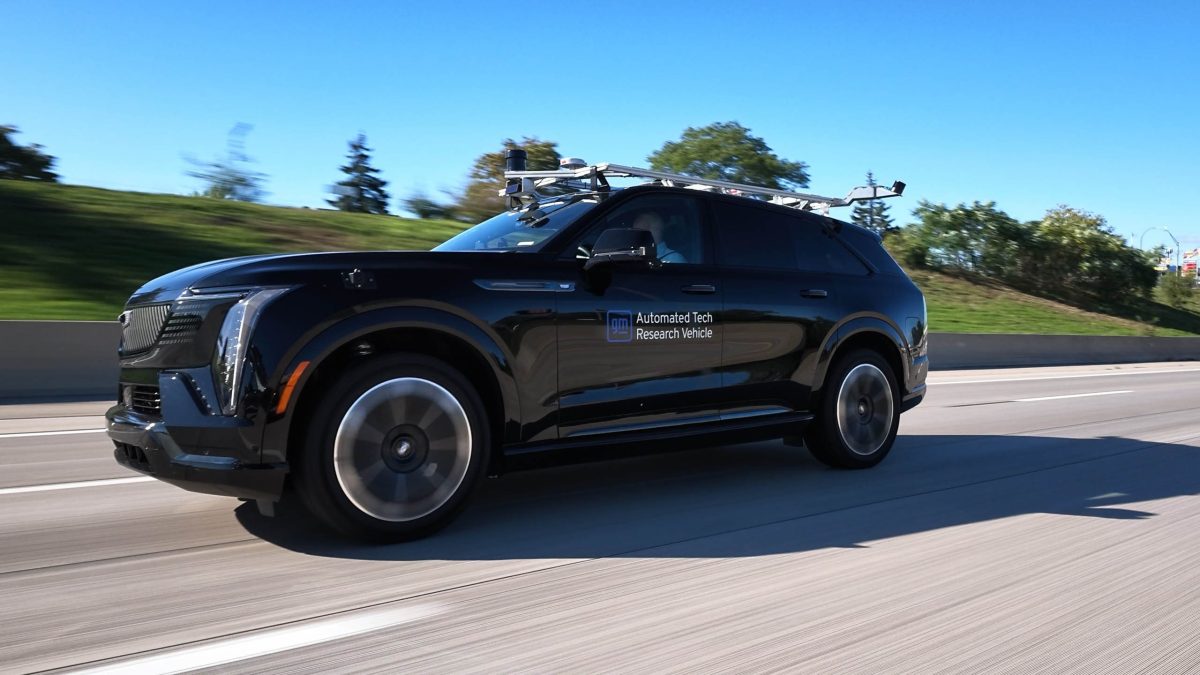
The Single Point of Failure That Could Be GM’s Greatest Advantage
General Motors stood in front of New York City and told the automotive world something quietly radical: the future of your car runs on one computer. Not seven. Not seventeen. One. The kind of central compute unit that packs the power of 40 laptops into a single box beneath the chassis of a 2028 Cadillac Escalade IQ.
On the surface, this is a familiar story — every major automaker is racing toward software-defined vehicles, over-the-air updates, and autonomous capability. But the architecture choice GM is making here cuts against the grain of everything the industry has been building toward, and if it works, it changes the competitive math for everyone else.
The Architecture Bet That Divides the Industry
Rivian made headlines twice in recent years for doing the opposite of what legacy automakers expected. Its first-generation vehicles ran on 17 electronic control units — already a dramatic simplification compared to the 80 to 100+ ECUs that populate most modern cars. Then came the second-generation R1 models, which slashed that number to just seven. The industry applauded. Modular architecture, distributed intelligence, redundancy — these are the buzzwords that define the current conversation about vehicle design.
GM is walking away from that narrative entirely.
The company’s new centralized electrical architecture consolidates everything into a single compute unit. That means less wiring — a claimed 30% reduction — and 40 times more processing power than today’s systems. More importantly, it creates a platform where new features can be developed, tested, and deployed without the integration nightmares that come from coordinating dozens of separate ECUs across a vehicle.
This is not a small engineering decision. It is a bet that the centralized approach scales, that safety can be guaranteed through a single control surface rather than distributed redundancy, and that the cost savings from simplification will be substantial enough to fund the AI and autonomy work that surrounds it.
Paul Waatti, director of industry analysis at AutoPacific, put it bluntly when speaking to The Drive: the tech shown and discussed impressed, but the devil is in the details, or, historically at GM, execution.
That history matters. GM has a track record of announcing ambitious technological visions and then struggling to deliver them at scale. The OnStar system, once a genuine innovation, became a cautionary tale about feature bloat and customer experience degradation. The company’s earlier electric vehicle efforts were repeatedly delayed, restructured, and in some cases quietly abandoned. Execution has been the consistent gap between GM’s announcements and its reality.
The Data moat no startup Can Match
What GM does have that no startup can replicate is data. Sterling Anderson, the company’s chief product officer, framed this directly during the presentation: the size and scale of GM’s data isn’t an anchor, it’s an advantage.
Decades of vehicle telemetry, driver behavior patterns, structural analysis results, aerodynamic testing data — all of it feeds into the machine learning systems that are now accelerating GM’s development pipeline. Anderson noted that aerodynamics testing which once took 60 hours can now be completed in 60 seconds. Structural analysis that used to take months now runs in hours. The overall vehicle development cycle, currently four to five years, is being targeted for a 50% reduction.
That second number — cutting development time nearly in half — is the one that should keep every autonomous driving startup awake at night. Company like Waymo and Cruise have spent billions building their systems from scratch. GM is applying its historical data troves to compress the same learning curve into a fraction of the time.
And GM isn’t starting from zero on autonomy either. Super Cruise, the company’s hands-free driver assistance system currently available on select Chevrolet, GMC, and Cadillac models, provides a foundation of real-world highway autonomy data that most competitors are still trying to match.
Eyes-Off: The Real Product
The 2028 Cadillac Escalade IQ will debut GM’s eyes-off autonomous driving system, an expansion of Super Cruise that removes the requirement for drivers to watch the road. This is the feature that separates automotive-grade autonomy from the experimental systems being tested by companies like Waymo. Eyes-off driving on existing road infrastructure, for consumers who buy a vehicle and drive it themselves, represents a market far larger than robotaxi fleets.
The implications go beyond convenience. If GM can deliver reliable eyes-off autonomy across its full-size truck and SUV lineup — vehicles that represent some of the highest-margin products in the automotive industry — the economic case for autonomy becomes dramatically stronger than the robotaxi model alone would suggest. A fleet of Escalades operating with reduced driver oversight in specific use cases generates revenue without requiring the regulatory and infrastructure investments that fully driverless systems demand.
GM was deliberately vague about the timeline for next-generation electric vehicles powered by the new architecture. A spokesperson indicated that development is expected to start in 2028, and given the accelerated development cycle of two to two-and-a-half years, the first vehicles could appear around 2030. That’s a long horizon for an industry that has learned to treat every announced timeline as a maximum estimate.
What This Means for Everyone Else
The centralized architecture bet has industry-wide implications. Every competitor choosing a distributed ECU approach is now operating on a platform that GM considers inherently inferior — at least according to the company’s public stance. If GM’s single-computer system delivers the reliability, safety, and feature update speed it promises, the distributed approach looks like the legacy architecture that it essentially is.
The autonomy ecosystem faces a similar reckoning. Companies building autonomy stacks for vehicles with 17 or 7 ECUs will need to adapt to a platform where all processing converges on one unit. That creates both opportunities and risks: partnerships with GM could be lucrative, but dependency on a single architecture introduces vulnerability that many companies would rather avoid.
OnStar’s transformation into an AI assistant — both in-vehicle and on the phone — adds another layer. The unified app replacing individual Chevrolet, Cadillac, Buick, and GMC mobile applications next year signals GM’s intention to treat the ownership experience as a single product rather than a collection of badge-specific services. The AI assistant embedded in the vehicle will understand warnings, alerts, and noises in natural language, which is a capability that goes well beyond the voice command systems currently available in most cars.
The Execution Question
Mary Barra avoided a direct question about whether cost savings from these efficiencies would translate to lower prices for consumers, noting only that GM already sells a vast lineup of vehicles at $30,000 or less profitably. That non-answer is telling. The automotive industry’s history is filled with cases where engineering efficiencies benefited shareholders rather than buyers.
The central question remains the one Waatti raised: can GM execute? The vision is coherent, the data advantage is real, and the timing aligns with a market increasingly ready for eyes-off driving. But GM has announced impressive technological roadmaps before and fallen short of delivery. The centralized architecture is a bold simplification that concentrates risk as much as it concentrates capability.
One computer. One platform. One chance to get it right.