Goldman's Kospi Target Cut Hides a Bigger Contradiction
Goldman Sachs slashed its Kospi forecast by a third while still predicting 60% upside. The contradiction exposes institutional confusion over whether South Korea's AI-driven market surge is a durable growth story or a speculative bubble about to pop.
The Paradox of a Plunging Target
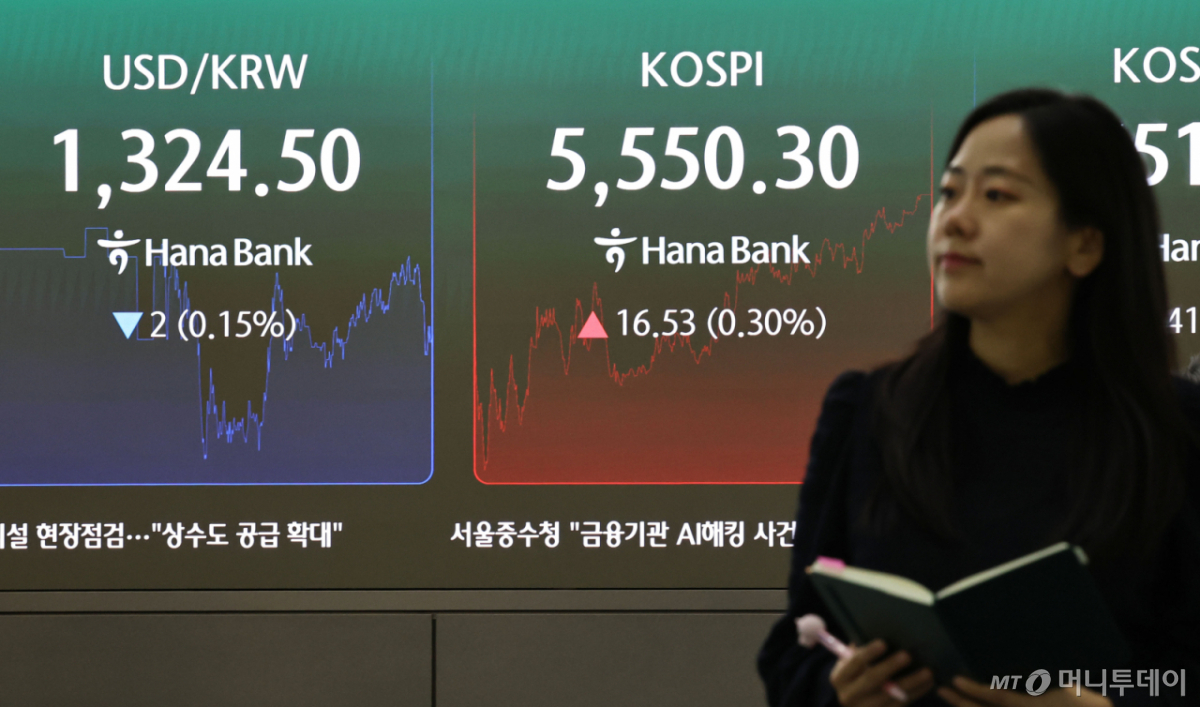
Goldman Sachs dropped its 12‑month Kospi target from 12,000 to 9,000 in October 2026—a 25% cut that sounds like a retreat. But the firm then added that the index still had room to run 60% higher from its then‑current level of roughly 5,550. The math is awkward: 9,000 is only about 62% above 5,550, meaning the revised target and the upside call are nearly identical. More importantly, the two statements are logically at odds. If the base case were truly a 9,000 destination, why flag 60% upside? If the upside were robust, why lower the absolute target by a third?
The contradiction is not a clerical error. It is a symptom of an institution struggling to reconcile what it sees on the ground with what the numbers demand. Goldman’s strategists admitted that the Kospi’s post‑June decline of more than 35% forced a “conservative” re‑assessment of valuation assumptions. Yet they also insisted the market had “overdone” its pessimism on fundamentals. That dual reading—that the market is both too gloomy and too expensive—is the hallmark of a research team caught between conflicting signals.
The Numbers That Don’t Align
The forward price‑to‑earnings ratio on the Kospi has compressed to roughly four times, according to Bloomberg data. That is half the eight‑times multiple of Indonesia’s JCI, a market that Goldman’s own team recently flagged for a potential MSCI downgrade. By regional standards, Korea looks cheap. But cheap is not the same as certain.
Goldman’s analysts pointed to the semiconductor sector as the source of the disconnect. They estimated that the recent rout in chip stocks already priced in a scenario where memory‑sector profits collapse by 65% next year. The firm called that scenario “overly pessimistic.” Meanwhile, non‑memory stocks trade at a forward PER of 7.6, roughly double the index‑wide average. In other words, the breadth of the sell‑off has been concentrated in a handful of mega‑cap names, pulling the overall valuation down while leaving many other industries quietly rich.
That concentration matters. It means the Kospi’s headline multiple is distorted by two companies—Samsung Electronics and SK Hynix—that now account for a large share of the index’s market value and dominate the narrative about AI investment. When Goldman says the index is “oversold,” it is often referring to those two names. When it warns about “overvalued” valuations, it may be looking at the broader market, which includes a long list of exporters, financiers, and chaebol affiliates that have seen their multiples shrink without the same speculative premium.
Why Korea’s Tech Boom Feels Fragile
International investors who track AI through Silicon Valley and Nvidia may miss the specific pressures bearing on South Korea. The country’s equity rally has been driven almost entirely by semiconductor demand for AI training and inference. But that demand rests on two assumptions: that capital spending on data‑center infrastructure will continue at a breakneck pace, and that the cost of borrowing will not erode the margins of the companies funding it.
Bloomberg noted that concerns about the sustainability of those massive infrastructure investments are growing, even as clear signs of profitability remain scarce. The tension is between the promise of future cash flows and the reality of current balance sheets. For a small, open economy with a high household‑debt ratio and a financial sector that lends heavily to corporate groups, rising funding costs are not an abstract risk—they are a direct threat to the earnings that support the market’s premium valuations.
Huirong Luo, managing director at ACG Management, captured the mood: “Concerns about aggressive AI investment have grown large enough to offset solid earnings and guidance.” Investors are now weighing not only the durability of AI demand but also the cost of capital that will fund the build‑out. When borrowing becomes expensive, even a promising technology cycle can look like a margin trap.
Who Wins, Who Loses
The immediate winners are traders who bought the Kospi during the post‑June selloff. The index has fallen roughly 40% from its August peak, yet it remains up 31% for the year. Those who held through the volatility have seen their positions re‑rated higher by institutions that still see a 60% runway. They are the ones who can now claim that Goldman’s target cut was a buy signal, not a warning.
The losers are those who bought near the high and are now trapped in negative returns. The 35% drawdown has wiped out leverage and forced stop‑loss activations. It has also shaken confidence in the “AI makes Korea great again” thesis that attracted so much foreign capital earlier in the year. For investors who treated the semiconductor rally as a structural shift rather than a cyclical boom, the past few months have been a brutal education in the difference between trend and timing.
What Happens Next
Goldman did not stop at the target revision. It maintained positive calls on several sectors: power and utilities, industrials, companies improving corporate governance, and firms benefiting from domestic consumption recovery or the global spread of Korean culture. That portfolio of themes suggests the bank sees a broader economic story beyond the chip cycle. It also implies that the Kospi’s next move may depend less on semiconductor earnings and more on whether the rest of the economy can catch up.
The timing is critical. The market’s forward profit outlook for the next 12 months is still up 22%, a figure that Goldman and others believe is overly cautious given the current valuation gap. If the next earnings season confirms even a fraction of that growth, the “cheap” label could stick. If, instead, memory‑sector guidance disappoints and funding costs bite, the index could slip toward the 9,000 target—leaving the 60% upside claim looking like a best‑case scenario.
For now, the Kospi trades in a zone of institutional confusion. Goldman’s mixed message is not unique; it is a mirror of the uncertainty that defines a market where a single sector accounts for most of the momentum, where valuations are stretched in some corners and distressed in others, and where the narrative of AI abundance collides with the reality of rising capital costs. The next few weeks of corporate guidance and central‑bank commentary will determine whether this confusion resolves into a clear trend—or into another sharp repricing.