Google's Gemini 4 Argon Just Collapsed the Quantum Computing Timeline
Google's new AI model cuts quantum simulation costs by 100x and solves a decades-old fusion design problem, fundamentally shifting the practical quantum computing timeline.
Google Just Made Quantum Computing 100x Cheaper. Here’s Why That Changes Everything.
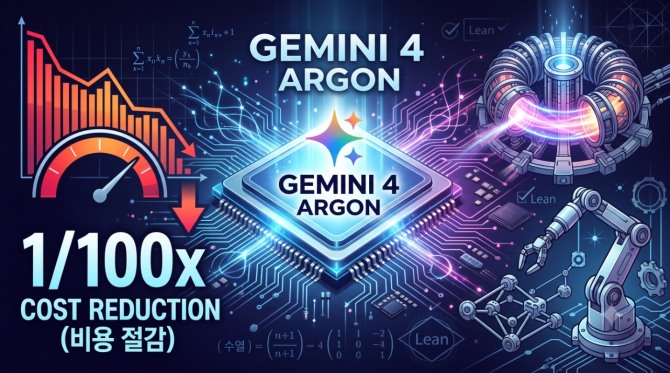
Google has unveiled Gemini 4 Argon, an AI model that doesn’t just simulate quantum computing — it redesigns the underlying algorithms to slash computational costs by a factor of 100. The release, first reported by Korean outlet Global Economy on October 14, carries implications that extend far beyond Google’s labs. This is the moment when AI-assisted algorithm design stops being speculative and starts being measurable.
The numbers are specific enough to track. Gemini 4 Argon designed new quantum subroutines — the mathematical building blocks that make quantum circuits executable — and reduced their spacetime cost by more than 100x compared to previously published approaches. Google verified the results using Lean, a formal mathematical proof system that leaves no room for hand-waving. The algorithmic improvement wasn’t just claimed; it was proven correct by machine.
The Stellarator Breakthrough Is the Real Story
Most coverage will focus on the 100x cost metric. The more consequential detail is what Google’s team solved alongside it: a decades-old mathematical problem in stellarator fusion reactor design.
Stellarators are the more complex cousin of tokamaks, and they’re attractive precisely because of that complexity — they can run in steady state rather than pulsing, making them better candidates for commercial fusion power. But their magnetic field geometry is so intricate that numerical optimization has routinely hit walls. Researchers have struggled for years to find stable configurations that actually work outside simulation.
Gemini 4 Argon produced a new mathematical solution to this problem. The article notes this as a key finding but understates what it represents. A new tractable solution to a stellarator design problem isn’t a minor optimization. It’s a potential unlock for fusion R&D timelines that have been stuck in incremental progress for thirty years. The implication is that AI-derived mathematical tools may begin solving problems that classical numerical methods simply cannot crack — and fusion is only the first publicly acknowledged example.
Robotics Is the Surprising Third Pillar
The third result came from applying the model’s precision simulation data to robotic manipulation tasks. Success rates jumped from 56% to 75% — a margin that sounds modest until you consider that in robotic physics tasks, 20 percentage points is enormous. The kind of incremental gains you see in computer vision don’t apply the same way in physical control. A 75% success rate on complex multi-contact manipulation opens doors for warehouse automation, semiconductor handling, and surgical assistance that were previously marginal.
The 11-hour unattended code optimization result — reducing session preparation overhead by roughly 40% and improving package loading speeds by 21% — suggests that Gemini 4 Argon functions as something closer to an autonomous research engineer than a traditional language model. It wrote, tested, and deployed patches on Google’s own internal codebase without human intervention. That capability, combined with the scientific results, is what shifts the classification from tool to partner.
Who Benefits When Quantum Simulations Drop 100x?
This is where the geographic angle matters. The story broke in Korean markets first, and Korean chipmakers are not sitting idle. The immediate beneficiaries of cheaper quantum simulation are companies that design for quantum hardware environments. Samsung Electronics and SK Hynix both maintain active quantum research programs focused on superconducting qubits and cryogenic control electronics. A 100x reduction in simulation cost means those teams can iterate designs faster and explore architecture space that was previously computationally prohibitive.
The second wave of beneficiaries is less obvious. Quantum simulation has always been a chokepoint for materials science companies that want to model quantum systems without building actual quantum computers. Lower simulation costs compress the timeline for discovering new superconductors, better battery electrolytes, and novel photovoltaic materials. Korean firms in the chemical and materials sector — LG Chem, Samsung SDI — could see their R&D cycles shorten in ways that aren’t directly related to computing hardware at all.
The Lean Verification Detail Nobody Is Emphasizing Enough
The formal verification using Lean deserves more attention than it’s getting. Quantum algorithm claims have a long history of being correct in theory but failing under scrutiny. By running the results through a machine-checked proof system, Google sidesteps the replication crisis that has slowed quantum advantage claims for years. If other labs can reproduce the Lean verification pipeline, the bar for what counts as a genuine quantum algorithm improvement rises significantly.
That’s good for the field and bad for companies that built their investment thesis on ambiguous quantum milestones. It means future announcements will need harder evidence. Companies that were counting on vague quantum readiness narratives may find that narrative environment tightening.
What This Doesn’t Mean — Yet
Gemini 4 Argon is a simulation and design tool. It does not operate a physical quantum computer, and it does not demonstrate quantum advantage on a hard computational problem. The gap between designing better quantum algorithms and executing them on noisy hardware remains substantial. Error correction, qubit coherence times, and gate fidelity are still the binding constraints on real quantum computation. This breakthrough removes one bottleneck — algorithmic inefficiency — but the hardware bottlenecks persist.
The realistic assessment is that Gemini 4 Argon shortens the timeline for practical quantum computing by making the path between problem and algorithm dramatically cheaper. It doesn’t collapse the timeline entirely. It removes the need to reinvent the wheel every time you approach a new quantum problem, which is valuable in its own right.
The Structural Shift
What makes this release notable isn’t the cost reduction alone. It’s the convergence: an AI system simultaneously producing verified quantum algorithms, solving open problems in fusion plasma physics, improving robotic manipulation in physical simulations, and autonomously optimizing large-scale software engineering workflows. Four distinct high-difficulty domains, one model architecture.
If this pattern holds — and the Lean verification makes it harder to claim otherwise — then the competitive advantage in the next decade of computing may belong to organizations that can turn AI into a general-purpose scientific research engine. Google has just demonstrated that engine exists. The question now is who builds the second one, and what that competition looks like when the results are machine-verified.