Google Is Testing Whether AI Can Run in Orbit — Here's Why It Matters
Google launched a test satellite carrying four TPUs to low Earth orbit as part of Project Suncatcher, the first serious attempt by a major cloud provider to run AI workloads off-Earth. The question isn't just whether it works — it's whether orbital compute will ever be cheaper than ground data centers.
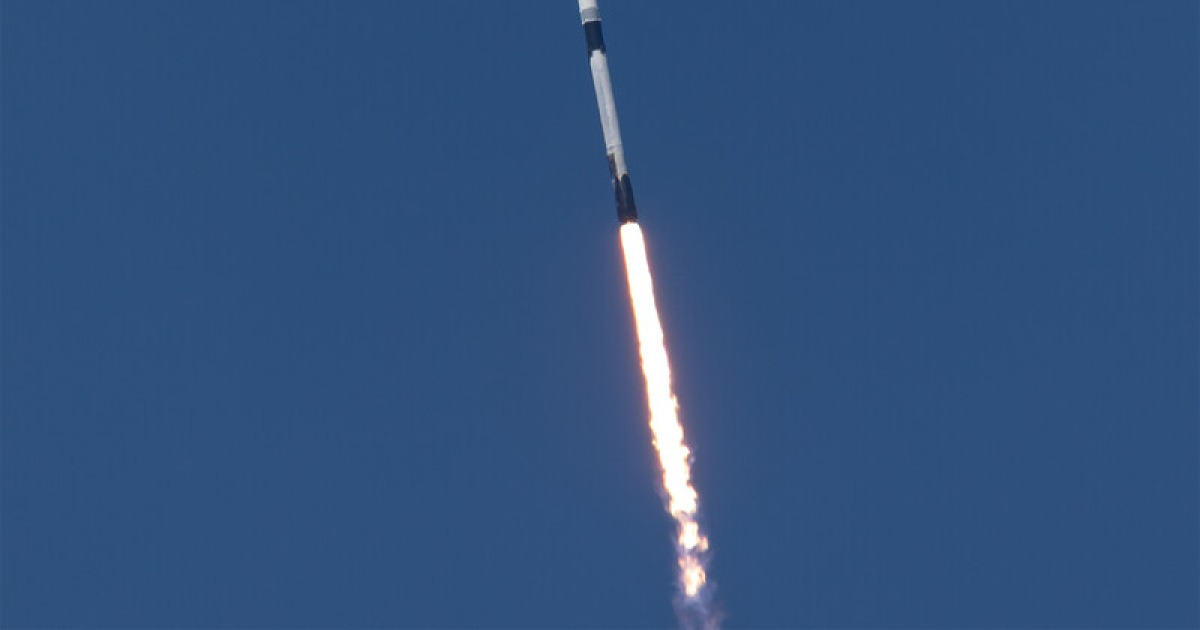
Google Just Put Four AI Chips in Orbit
Google launched a refrigerator-sized test satellite into low Earth orbit on October 1, carrying four Tensor Processing Units — the same custom AI chips it runs in terrestrial data centers. The payload rode as a hitchhiker on a SpaceX Transporter-18 mission from Vandenberg Space Force Base, tucked into a Planet Labs Earth-observation satellite because Google decided speed mattered more than building something purpose-built from scratch.
The result is Project Suncatcher, Google’s public plan to construct data centers in space. This flight is the minimum viable product: one year of operation, one kilowatt of solar power, and a Gemini model answering simple questions. It is not going to do anything useful tomorrow. But the fact that a major cloud provider is seriously testing whether AI can run off-Earth marks a genuine inflection point, and the implications extend well beyond Google.
Why Orbit Changes the Math
Google’s thesis is straightforward. A data center in low Earth orbit gets nearly constant sunlight — up to eight times more solar generation than a ground facility at similar latitude. It doesn’t need cooling water. It doesn’t compete for land. And crucially, it removes the geographic constraint that forces all AI compute into a handful of energy-rich, water-abundant regions on Earth.
The physics of heat rejection in vacuum is hard, which is why Google’s team spent most of its engineering time on thermal management. No fans. No liquid coolant loops you can refill. Instead: conductive heat pipes and radiators, cycling the chips on for 15 minutes at a time then shutting them down to shed heat passively. Google says its ground tests showed the TPUs withstood more radiation over a simulated five-year mission than expected. The orbital test will tell whether that holds up in practice.
The Real Question Is Latency-Tolerant Compute
Here’s what most coverage of this story misses: the commercial opportunity isn’t running GPT-5 or Gemini in orbit tomorrow. It’s proving that certain classes of AI workloads — inference that doesn’t require real-time human response, batch training runs, simulation jobs — can be offloaded to orbital infrastructure without violating the latency budgets that currently tie everything to ground stations.
That distinction matters because latency-tolerant AI is where the unsolved demand sits. Training large models already pushes the limits of what terrestrial clusters can do. Inference at scale for things like autonomous vehicle simulation, climate modeling, or emergency-response prediction systems generates heat and energy use that scales faster than data center expansion in many regions. If you can move part of that stack off-Earth, you’re not just solving a cooling problem — you’re unblocking a growth constraint.
The counterargument is obvious and worth taking seriously: launching hardware to orbit is enormously expensive per kilowatt of compute. Right now, ground data centers benefit from decades of optimization in power delivery, cooling density, and chip placement. No orbital system will beat that economics on raw performance-per-watt anytime soon. The question is whether there are workload categories where latency doesn’t dominate, and the marginal cost of orbital energy and heat rejection becomes competitive.
Everyone Is Doing This Now
Google isn’t alone, and that changes the calculus. Elon Musk has floated the concept of StarMind — a million-satellite constellation running AI workloads powered by Nvidia chips, with the first launch targeted for late 2027. Jeff Bezos’s Blue Origin hired space-data-center personnel earlier this year. Nvidia-backed StarCloud launched a test satellite last year carrying an H100 chip running Google’s open-source Gemma model. China’s 15th Five-Year Plan targets gigawatt-scale orbital AI data centers by 2030.
What’s notable is the diversity of approaches. Google is proving the TPU-in-orbit concept. StarCloud is demonstrating that existing commercial AI chips can survive the environment. SpaceX is building the launch and communications layer — inter-satellite laser links are the next experiment Google plans in 2027, and those links are the infrastructure that would turn a single satellite into a cluster. Nvidia is supplying the silicon across multiple programs. This isn’t a race with one winner; it’s a multi-front proof-of-concept phase that could produce several viable architectures.
Who Wins, Who Loses
The winners in this scenario are the companies that control the orbital launch and communications stack. SpaceX’s Transporter rideshare program just demonstrated it can deploy Google’s test satellite — and the same launcher is central to Musk’s own StarMind ambitions. Inter-satellite laser communication, if it scales, becomes the backbone of orbital compute clusters, and the company that owns that layer controls the plumbing. Nvidia benefits regardless of which chip architecture wins, since every competitor is buying its silicon.
The losers are less visible but real. Regions that have built their data-center economies on cheap hydroelectric power and abundant water — parts of Scandinavia, Quebec, British Columbia — could see reduced attractiveness for AI workloads if orbital alternatives prove viable for latency-tolerant jobs. The geopolitical dimension is sharper: orbital data centers sit in international space, outside the jurisdiction of any single nation’s energy or water policy. That’s an advantage Google and its competitors are counting on, and it’s a reason governments will watch this closely.
What Happens Next
Google’s James Manyika compared Suncatcher to the early years of autonomous-vehicle development: a long-horizon bet where visible results take a decade. The immediate milestones are clear. The MVP satellite will run for one year, validating TPU survival and thermal management in orbit. The 2027 follow-on launches will test inter-satellite laser links — the capability that turns a single node into a cluster. Only after those steps does the economics question become answerable.
The broader implication is that cloud computing may soon have an off-world dimension. Not tomorrow. Not next year. But the decision to start proving it matters, because the companies that treat this as a science project today will own the architecture of orbital compute tomorrow — and that architecture determines who profits when the first latency-tolerant AI workloads actually migrate off-Earth.
Google’s test satellite is small, underpowered, and intentionally limited. That’s the point. It’s not trying to replace a data center. It’s trying to prove that the idea isn’t absurd.