Googlebook Is Google's First Real Shot at an AI-Native PC
Google is launching Googlebook, a new laptop category built around Gemini AI and Android phone integration. The $899 device signals Google's push beyond Chromebooks into hardware that could reshape how people work across devices — if it can compete with Apple and Windows.
Googlebook Is Google’s First Real Shot at an AI-Native PC
Google is no longer selling just Chromebooks. On October 21 (U.S. time), the company announced Googlebook, a new notebook category developed in partnership with Acer, ASUS, Dell, HP, and Lenovo, starting at $899. The name itself is significant — it marks Google’s first attempt to claim a branded hardware category beyond Chromebooks, and it signals where the company believes the PC market is heading.
The device is built around what Google calls “Gemini Intelligence,” meaning AI features are baked into the operating system rather than layered on as apps. Google is also doubling down on its Android phone ecosystem, making the transition between phone and laptop nearly frictionless. It’s a clear bid to differentiate from both Apple’s MacBook and the Windows PC landscape.
The Hardware Is Serious
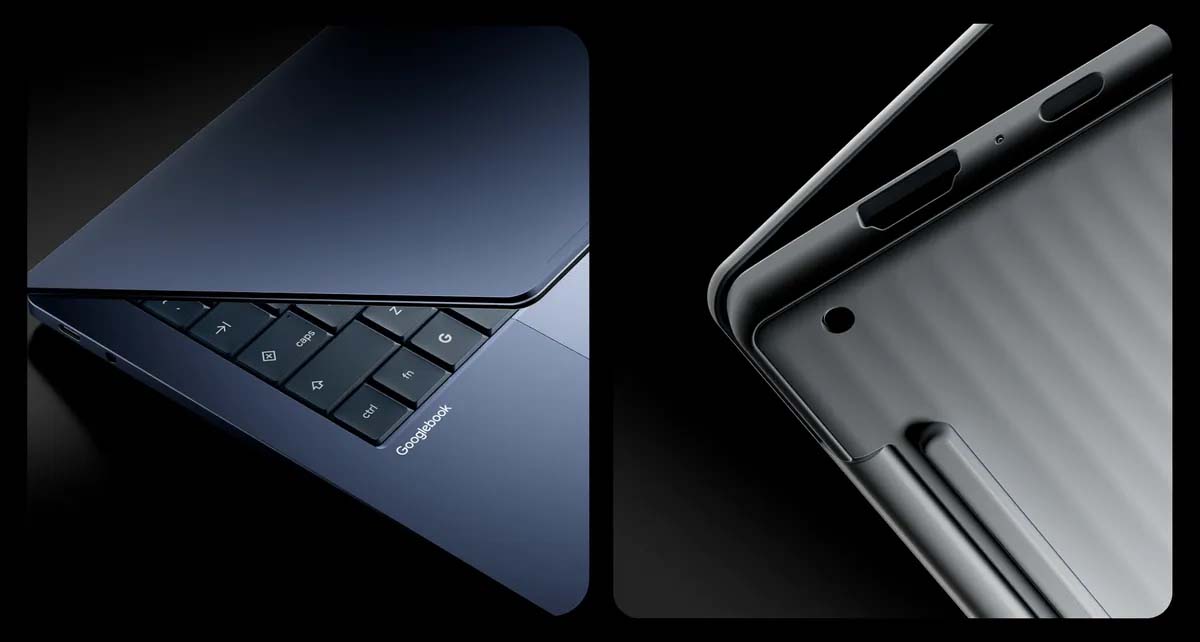
Googlebook won’t look like a Chromebook. The laptops feature aluminum, magnesium, and carbon fiber bodies, OLED touchscreens up to 2.8K, a haptic glass trackpad, and backlit keyboards. Under the hood, they use Intel or Qualcomm processors paired with a dedicated neural processing unit (NPU) capable of over 45 TOPS — a threshold Google says is necessary for on-device AI performance. Memory starts at 16GB, and battery life is rated at up to 14 hours.
There’s also the “Glowbar,” a colored light strip around the device’s edge that reacts to battery level and Gemini interactions with animation. It’s a small design detail, but it suggests Google is trying to make the laptop feel alive in a way most Windows and Mac machines don’t.
The 45 TOPS NPU target is notable because it exceeds the minimum required by Microsoft for Copilot+ PCs, which sit at 40 TOPS. Google is effectively setting its own bar higher than the industry’s current standard — or at least, the one Microsoft defined last year. That’s a positioning move as much as a technical specification.
Screen quality across the lineup is expected to vary by manufacturer, with OLED panels topping out at 2.8K resolution. The inclusion of a haptic glass trackpad places Googlebook closer to MacBook territory in terms of input experience, a deliberate contrast to the often-harsh feedback of Chromebook trackpads. Google is trying to erase the memory that defines its previous laptop category.
Android Integration Is the Differentiator
The phone-to-laptop bridge is the most concrete feature set Googlebook offers. During setup, your Android phone’s settings, saved passwords, Wi-Fi networks, and messages transfer automatically with end-to-end encryption. From there, you can pick up tasks wherever you left off on your phone. The Files app lets you browse and open phone content directly. A feature called “Cast My Apps” streams Android apps into desktop windows so you can use them with a mouse and keyboard without switching devices.
This isn’t entirely new — Samsung and Microsoft have experimented with similar cross-device continuity — but Google is making it a core selling point from day one. For Android users, that reduces the friction of owning a non-phone computer. For Apple users, it’s a reminder of what they miss.
The “Cast My Apps” feature deserves particular attention. Rather than simply mirroring your phone screen, it renders Android applications as native desktop windows with proper mouse and keyboard support. That’s a meaningful step beyond what Samsung’s DeX or Microsoft’s Phone Link currently offer. It suggests Google is investing in the backend compatibility layer to make this feel seamless, not just functional.
Second-order, this integration could deepen Google’s lock-in effect. If your workflow lives across your phone and Googlebook, switching to a Windows machine or Mac means more than losing an app — it means fracturing a unified experience. That’s the same strategy Apple has refined for decades, and Google is now applying it to the Android side of the equation.
AI Is Everywhere, and That’s the Risk
Googlebook’s AI features are named and prominent: “Magic Pointer” lets you summon Gemini from anywhere on screen; “Rambler” converts spoken thoughts into organized notes and checklists; “Create My Widget” builds desktop customizations from plain language. There’s also “Antigravity,” a platform for building and deploying AI agents directly on the device, with tools like Claude Code and a CLI terminal environment built in.
All Googlebooks include 12 months of Google AI Pro (with 5TB cloud storage and Gemini Advanced), plus three months each of YouTube Premium and Adobe Photoshop. The operating system promises updates and feature additions for up to 10 years.
The ambition is clear: Google wants Googlebook to be the first PC category defined by AI rather than legacy computing paradigms. But the risk is equally clear. AI features on laptops are already being added to Windows machines and Macs. Microsoft Copilot and Apple Intelligence are arriving on existing hardware. Googlebook isn’t the only player in this space — and being first doesn’t guarantee winning.
The 10-year update promise is significant on paper, but the real test will be whether Google can sustain AI capability over that span. Many consumers learned the hard way that Chromebook software support stretched far shorter than promised. Googlebook’s long-term viability will depend on consistent delivery, not just commitments made at launch.
Antigravity, the local AI agent platform, is the most ambitious feature here. By allowing users to build and deploy agents with tools like Claude Code and a built-in terminal, Google is trying to attract developers and power users — demographics that Chromebooks have struggled to capture. If Antigravity gains traction, it could shift Googlebook from a consumer device to a productivity platform.
The Price Point Matters
At $899 and up, Googlebook sits in a crowded middle ground. It undercuts most MacBooks and many premium Windows laptops, but it overlaps with Chromebooks that start far lower and Windows laptops that offer more familiar ecosystems at similar prices. Google is counting on the AI and Android integration to justify the premium over Chromebooks and the lower price to pull buyers away from Windows.
The Chromebook division has historically dominated the education market in the U.S., but that’s a segment Google already controls. Googlebook is aimed at consumers and professionals — the same market where Apple and Windows have deep loyalty. Convincing people to switch or choose Google for their primary computer is a much harder sell than convincing schools to buy cheap devices.
There’s also the question of what happens when AI subscription costs are factored in. The first year includes Google AI Pro, but after that, customers will need to pay for continued access to advanced features. That recurring cost could make Googlebook more expensive to own over time than a comparable Windows laptop with one-time software purchases or free alternatives.
What Happens Next
Googlebook launches in the U.S. on October 4 and in Canada, the UK, Ireland, France, Germany, and Australia on October 5. The participating manufacturers — Acer, ASUS, Dell, HP, and Lenovo — will each produce their own versions, which means variation in build quality and pricing that could confuse buyers.
If Googlebook succeeds, it could push the entire PC industry toward AI-first design languages rather than bolt-on features. It could also accelerate the decline of Chromebooks as a standalone category, since Googlebook occupies a higher market segment. And it would give Google a hardware brand to anchor its services ecosystem, similar to how Apple leverages the MacBook to drive App Store, iCloud, and subscription revenue.
If it falters, it will be another expensive experiment in a market where hardware iteration is costly and brand loyalty is fierce. Google has bet heavily on AI being the defining differentiator for the next generation of computers. Whether consumers agree remains an open question — but Googlebook is the company’s boldest statement yet on the subject.