GTA 6's Leonida Map Hides What Rockstar Plans Next
Rockstar's Leonida map isn't just a Florida parody—it's a carefully sectioned live world where unexplored counties signal future DLC plans. Here's what the fog reveals about GTA 6's content roadmap.
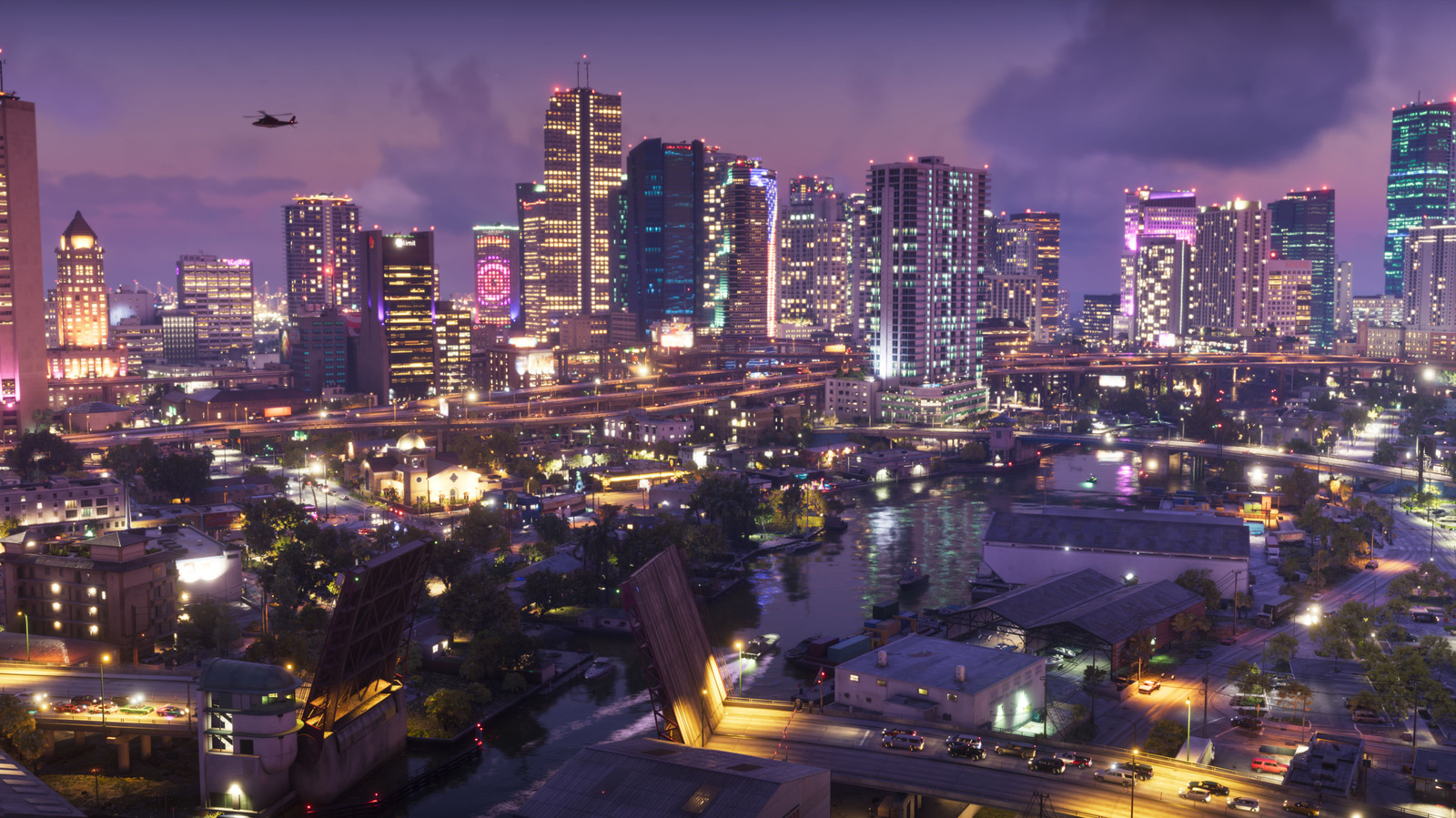
The Fog Is the Point
Open GTA 6 and you’ll be greeted by a map swallowed in black fog. Every road, every swamp, every inch of waterway must be traversed to reveal Leonida’s full scope. That design choice — deliberate fog-of-war across a state-sized map — is not merely an aesthetic nudge toward exploration. It’s a structural statement.
Rockstar has always built worlds meant to outlast launch day. But with GTA 6, the company appears to be embedding its post-launch roadmap directly into the geography itself. Several counties, particularly Lummox and parts of Leonard, arrive underdeveloped compared to Vice-Dale or Kelly. The unvisited zones are not empty because players have not gotten there yet. They feel like placeholders for content that Rockstar explicitly signaled would arrive later.
This approach represents a fundamental shift in how live-service design interacts with single-player open-world expectations. Where modern games often treat accessibility as paramount — unlocking everything through fast-travel networks within hours of starting — GTA 6 requires patience. The game forces players to earn proximity to new territory. That friction generates anticipation where other titles generate frustration. You drive through increasingly unfamiliar landscape knowing something beyond the horizon holds narrative weight. The waiting period itself becomes entertainment.
The fog also functions as a technical management tool. Loading states become predictable instead of unpredictable. Rockstar can stream content region-by-region rather than attempting impossible whole-map simultaneity. For players unaware of this underlying architecture, the effect reads purely as atmospheric mystery. That dual purpose — serving both engineering constraints and player psychology — suggests careful coordination between production teams that rarely surfaces in public documentation.
Who Wins From a Living Map
Players win most clearly. A map that continues to expand after launch transforms GTA 6 from a product into a platform. Each new district unlocked through update cycles gives the game renewed cultural urgency — think back to how GTA V’s online heists and subsequent updates kept the conversation alive for over a decade.
But the player experience carries a subtle tradeoff worth examining. Early adopters who exhaust available content quickly face the prospect of watching others discover terrain they’ve already completed. Social dynamics shift accordingly. Players who finish main storylines first become guides rather than explorers, losing some agency while gaining community capital. Those still unlocking new counties retain novelty but forfeit expert status. This tension mirrors social media behavior patterns more than traditional gaming hierarchies, creating a persistent class structure within what was designed as open-ended escapism.
Microsoft also wins. The acquisition of ZeniMax meant Bethesda titles got second lives through expansions. Red DEAD Redemption 2 proved the model works for Rockstar too. If future counties mirror that cadence, Microsoft can stretch one of its flagship exclusives well beyond any single fiscal quarter. The financial calculus extends further still: each major geographic unlock reinforces ecosystem lock-in. Players who invest time in Leonida become reluctant to migrate platforms. Hardware attachment compounds software attachment into durable revenue streams measured in years rather than months.
Competitors do not win equally. Open-world giants from Ubisoft to CD Projekt Red operate on fixed-content release cycles. When GTA 6 treats its map as a persistent canvas rather than a closed box, the bar shifts from “launch fidelity” to “ongoing relevance.” That is a harder race to run.
A secondary consequence affects indie developers working within similar genres. If GTA 6 validates the living-map model at blockbuster scale, publishers may redirect resources away from complete standalone experiences toward perpetual-update architectures. Smaller studios lacking server infrastructure or ongoing dev capacity find themselves competing against fundamentally different business models. Market consolidation accelerates as only well-capitalized entities sustain continuous geographic expansion. Player expectations harden around permanent novelty, making traditional finite experiences feel incomplete by comparison.
Which Counties Feel Finished — And Which Don’t
Leonida Keys deliver exactly what you expect from a tutorial zone: intimate, contained, purpose-built for early gameplay. Key Lento anchors the opening hours with modest scale but strong narrative function. Mike Zero Air Station introduces risk-reward mechanics right away. These areas exist to teach systems without overwhelming players with choices that require deeper mechanical understanding.
Mariana County introduces texture without overload. The Grassrivers swamp evokes the Florida Everglades faithfully enough to satisfy players seeking verisimilitude while leaving breathing room for fictional storytelling. Hamlet establishes gang presence early; Watson Bay offers Louisiana-inspired coastal charm. Capri rounds things out as a wealthier northern outpost. Each location serves distinct tonal purposes, creating an environmental progression that moves readers from rough beginnings toward aspirational settings.
Vice-Dale County is the clear centerpiece. Vice City’s districts — Little Cuba, Crosstown, Downtown, Salton, Bayside, Stockyard — each carry distinct visual identities and side-mission variety. The Rialto Islands add verticality to the wealth theme. This county is densely packed with activity because it is meant to be the heart of the experience. Everything else radiates outward from this core loop of urban fantasy.
Kelly County punches above its weight. Port Gellhorn, Ambrosia, Draper Island, Emerald Springs, Mud Club races — this region balances small-town grit with high-energy side content. The diversity here suggests Rockstar had the most creative freedom mapping this space. Secondary activities cluster naturally: boat racing routes follow waterfront geography; rural missions leverage agricultural infrastructure. Nothing feels artificially inserted.
Lummox County tells a different story. Mount Kalaga dominates the skyline but the surrounding terrain feels sparse. Millport exists more as industrial backdrop than playable destination. Lake Tallaloko and the reservoir provide natural beauty but limited interactive content. Leonard County similarly skews residential and suburban without enough distinguishing features to drive repeated visits.
These gaps matter because they represent divergent development priorities. Vice-Dale and Kelly received comprehensive mission design, environmental detail, and systemic integration. Lummox and northern Leonard stopped short of that threshold, arriving as atmospheric groundwork rather than finished experiences. The disparity likely reflects internal scheduling decisions rather than creative disagreement — certain regions probably entered production late or were deprioritized when scope tightened during development.
The Secret Signal in the Layout
Rockstar’s public comments about “future” zones align uncomfortably well with Lummox and northern Leonard. These areas exist but lack the density found elsewhere. In Rockstar’s catalog, that pattern consistently marks land reserved for post-launch addition — downloadable counties, special events, or narrative arcs that require fresh geography to justify their scale.
This approach mirrors how multiplayer maps rotate: a core set remains stable while peripheral areas host experiments. It also preserves player curiosity long past the credits roll. If you know a mountain range holds something unseen, you keep driving toward it.
Second-order behavioral effects emerge quickly. Speedrunners abandon route optimization in favor of systematic completion, knowing partial knowledge proves insufficient. Content creators generate extended exploration videos precisely because nothing guarantees territorial coverage. Streamers build series around sequential county unlocks, converting solitary play into serialized viewing. Community-driven discovery accelerates information distribution far beyond official channels, compressing what might otherwise require year-long organic engagement into weeks.
The strategy also insulates Rockstar from launch-day criticism common to massive open-world releases. Players encountering incomplete territory cannot fairly complain about missing features — they simply have not reached those areas yet. Expectation management happens invisibly through spatial design rather than marketing spin.
What Happens Next
Expect Vice-Dale and Kelly to remain the primary hubs for years. Secondary counties will likely receive incremental upgrades — new missions, additional NPCs, modified economies — rather than complete overhauls. The real expansion will come when Rockstar unlocks previously fogged territory or reshapes existing borders to accommodate larger narrative scopes.
That cycle typically follows a twelve-to-eighteen-month rhythm at Rockstar. Red DEAD Online launched with several untapped regions that arrived roughly eighteen months post-release. GTA Online’s first major expansion dropped within a year. If history repeats, Lummox County may see meaningful content additions somewhere between late 2026 and mid-2027.
The longer-term play is clearer if you watch what Rockstar is building now. GTA 6’s engine improvements, streaming optimizations, and cloud-synced save systems all point toward a world that will continue evolving. The map you unlock at launch is only version one of a much larger Leonida.
For players, the takeaway is simple: spend time in every county, but pay attention to the quiet ones. Those are the spaces Rockstar still intends to fill. Every unanswered question buried beneath that fog represents a promise implicit in the design — that this world grows with you rather than disappearing behind you once cleared. The map is not finished. Neither is the conversation about what comes next.