GTA 6 Trailer Proves Rockstar Still Rules Gaming Culture
Rockstar's GTA 6 launch trailer — shot entirely in-engine on PS5 — reveals a studio confident enough to show everything and withhold nothing. The Justice score and dual-protagonist story signal a cultural shift waiting to happen.
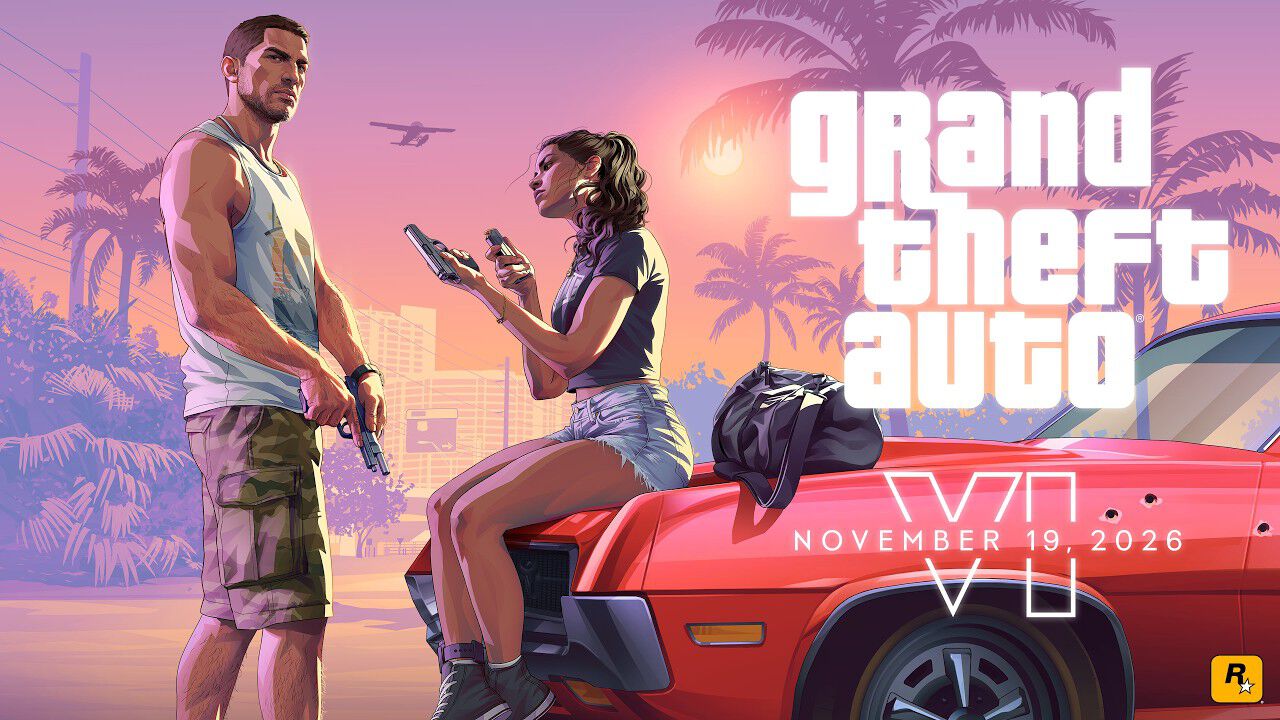
The trailer was made by a studio that doesn’t need to hide anymore
Rockstar Games dropped the GTA 6 launch trailer on October 14, 2026, and within hours it was the most-viewed entertainment video of the week. But the real story isn’t the view count — it’s what Rockstar chose to show, and what it chose not to.
Every frame in the trailer was captured in-engine on an actual PS5. No cinematic trickery. No pre-rendered cutscenes passed off as gameplay. This is the game running on hardware that millions of people already own. That decision matters because it signals a pivot in how Rockstar wants the world to see GTA 6: not as a polished marketing artifact, but as a product that delivers on its promises at launch. That is a rare level of confidence in an industry where trailers routinely diverge sharply from final builds.
The implications of that choice extend beyond goodwill. When a studio broadcasts its rough-in-the-edges honesty this prominently, it resets player expectations in a way that benefits long-term retention. Players who witness a trailer like this — where traffic density, NPC behavior, and environmental interaction are all visible without heavy post-processing — tend to engage more deeply in the early days of launch because the gap between expectation and reality is narrower. Reviews may be mixed, as they always are with open-world titles, but the initial burst of player investment is likely to be stronger and more durable than the typical pre-release hype cycle that burns out in days.
There is also a quieter second-order effect at play. By refusing to dress up unpolished footage with fake bloom and exaggerated lighting, Rockstar has inadvertently signaled to its competitors that the bar for transparency has been raised. Any studio that releases a trailer that dramatically overpromises relative to its playable build will now face a steeper skepticism curve. The damage from misrepresentation, which once faded into the background noise of release week, now carries a different kind of stigma — one that social media amplifies faster than any PR team can contain. That pressure will shape how upcoming AAA launches present themselves for years to come.
A crime story told through two people who need each other
The narrative center is Jason and Lucia, a pair drawn together after a seemingly simple score goes wrong. The trailer shows Lucia with what appears to be an electronic ankle monitor — a detail that suggests she has a prison record and is operating under constraints. Jason, meanwhile, has a military background that the trailer teases through scenes involving what look like special forces units. The dynamic between them is not simply romantic or adversarial. It is interdependent. They are surviving something bigger than themselves, and the game will test whether that survival changes who they are.
This is a deliberate shift for a franchise that built its identity on solo antiheroes. GTA 6 is asking players to manage a relationship under pressure, not just complete missions. If the game delivers on that premise, it could reshape how open-world games think about character dynamics — moving beyond companion AI into something closer to a co-dependent narrative engine.
The creative risk here is significant. Two-protagonist structures have been attempted before in major titles, and most of them faltered because the switching mechanic became a novelty rather than a narrative tool. What makes this approach potentially different is the ankle-monitor detail. It introduces an asymmetry — Lucia is constrained in ways Jason is not — which forces the game design to account for inequality in player agency rather than treating both characters as interchangeable switches. If Rockstar leans into that friction, the result could feel less like a gimmick and more like a genuine interrogation of trust and power.
There is also a commercial dimension to this narrative decision that deserves attention. Franchises with a single protagonist have a narrower merchandising and spin-off ceiling. A duo opens the door to character-driven DLC, animated series development, and expanded role-play within the community — all of which generate revenue streams far beyond the initial game sale. GTA 6’s dual-protagonist structure may be, in part, a long-form business strategy dressed as creative ambition.
The music is already a cultural event
Perhaps the most unexpected element of the launch trailer is the original track “Flower in a Hurricane” by Justice, the French electronic duo. This is not a licensed retro hit slotted over gameplay footage. It is a newly composed song, written specifically for GTA 6, and it features contributions from Tame Impala, SZA, and King Gizzard & The Lizard Wizard. That lineup alone signals Rockstar is treating this soundtrack as a standalone cultural product, not an afterthought attached to a game.
The full album, “Grand Theft Auto VI: The Album,” is already available for pre-order across digital platforms, vinyl, and CD. Physical media for a video game soundtrack in 2026 is itself a statement. It tells you that Rockstar expects this music to outlive the game’s launch window.
This strategy has precedent. GTA San Andreas and GTA V both turned their soundtracks into cultural touchstones. But those were curated radio stations. What Rockstar is doing with GTA 6 is different — it is commissioning new work from artists who are already headliners at festivals and award shows. The line between the game and the music industry is deliberately blurring.
The ripple effects of this approach are already visible. Streaming platforms have seen a surge in Justice catalog streams following the trailer drop, and similar effects are expected for the featured artists. Record labels that once treated video game soundtracks as marginal revenue are now scrambling to replicate this model with other franchises. We are likely to see a wave of game studios approaching major-label artists for custom compositions in the next 12 to 18 months, and the competitive bidding for those partnerships will inflate production costs across the industry.
There is also a subtle cultural positioning at work. By aligning with artists who occupy the intersection of indie credibility and mainstream appeal, Rockstar is insulating the franchise against the charge of relying on nostalgia-driven licensing. The soundtrack is not a museum of past hits; it is a living document of the present moment. That is a sharper cultural intervention than any amount of period-accurate radio programming could achieve.
Why a Japanese outlet breaking the news first is worth noting
The initial report came from Famitsu, one of Japan’s most influential gaming publications. That sequence — a Japanese outlet leading on a Rockstar announcement — reflects the broader shift in gaming’s cultural center of gravity. Japan has long been the domestic market for many of the world’s biggest game releases, and Rockstar has historically courted Japanese fans with early access, exclusive content, and regional marketing partnerships. The fact that Famitsu secured exclusive interviews and gameplay impressions before Western outlets suggests Rockstar is investing more deeply in the Japanese market than ever before.
That investment makes strategic sense. Japan accounts for a significant portion of global console revenue, and GTA has always had a cult following there. But it also means Western audiences are sometimes reading the same news through a secondary lens — translated, framed, and filtered through a different cultural context. For a franchise built on American satire, that irony is not lost.
The Famitsu sequence also highlights a structural change in how gaming journalism operates. Exclusive early-access deals, particularly with Japanese publishers and Western media outlets, have become a currency in themselves. Studios trade access for favorable coverage, and outlets trade that access for clicks. When the most prominent outlet in Japan moves faster than the most prominent outlets in the United States, it underscores how decentralized the gaming information ecosystem has become. No single market controls the narrative anymore, and Rockstar’s decision to lean into Japan signals an acknowledgment of that reality.
This shift has consequences for players in other regions. When news originates in one cultural context and migrates to another, details can be lost, softened, or reinterpreted. The humor in GTA 6’s satire may land differently when filtered through Japanese editorial sensibilities, and the timing of those translations affects how global conversations unfold. The studio that controls the flow of information controls the rhythm of the hype cycle, and Rockstar appears to be distributing that control more evenly than it ever has before.
What happens next
GTA 6 launches on November 19, 2026, on PS5 and Xbox Series X/S. The in-engine trailer suggests Rockstar is ready to put the game on display early and often. The extended look that premiered on Netflix ahead of the trailer drop indicates a multi-platform rollout strategy designed to keep the game in public conversation for weeks before release.
The risk for Rockstar is enormous. Any gap between the trailer’s promise and the final product will be met with immediate and ruthless scrutiny. But the studio has survived worse. GTA 5 was mocked for its graphics at E3 2013 and went on to sell over 195 million copies.
What sets GTA 6 apart from that earlier experience is the speed at which any shortfall will be communicated. Social media in 2026 operates at a velocity that made even the GTA 5 era look sluggish by comparison. Player backlash does not wait for review aggregation or editorial consensus. It erupts in real time, amplified by clips, reactions, and meme formats that can redefine a launch week within hours. Rockstar is entering a moment where accountability is instantaneous and the margin for error is thinner than at any point in the franchise’s history.
Yet there is reason to believe the studio is prepared for that scrutiny precisely because of the choices it has made leading up to launch. The in-engine trailer, the dual-protagonist structure, the custom-scored soundtrack, and the deliberate distribution of press access all point toward a studio that understands the modern media landscape not as a threat but as a condition of the business. GTA 6 is not being launched into a vacuum where marketing can manufacture consensus. It is being launched into an environment where transparency is the only viable strategy.
The trailer is not just a preview. It is a declaration. And the declaration is this: Rockstar does not need to sell you a fantasy anymore. It needs you to prove it can deliver one.