GTA VI's Launch Is Straining Supply Chains, Not Just Servers
Rockstar Games' most anticipated title in over a decade has hit shelves and servers, but beneath the cultural frenzy lies a much bigger story — one of crushed logistics, strained internet infrastructure, and a console war suddenly looking very different.
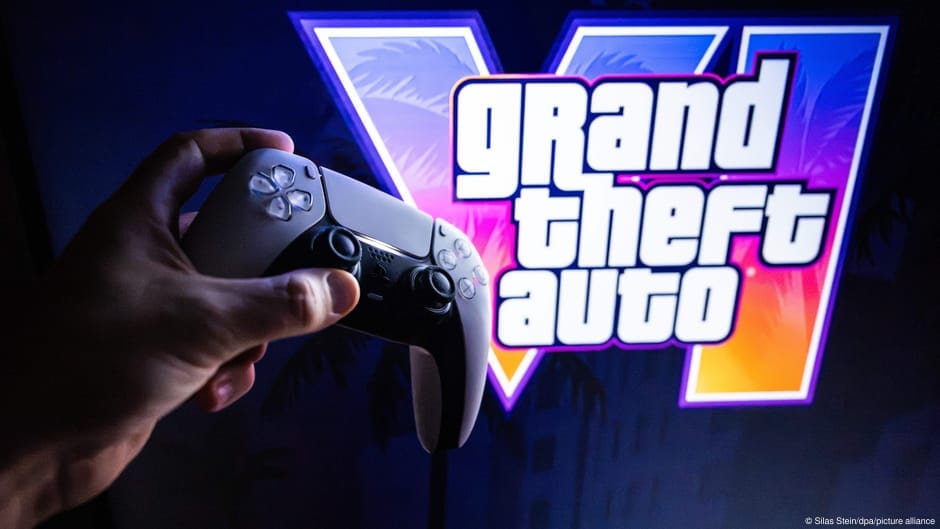
The Game That Broke the Internet Before It Even Launched
New Zealand internet providers were already bracing for a traffic spike before midnight. A single game — 212 gigabytes in size, larger than a quarter of the average Kiwi household’s monthly data consumption — was about to descend on their networks simultaneously across an entire time zone. This is not hyperbole. This is the new reality of blockbuster gaming, where a digital download can overwhelm regional infrastructure the same way a natural disaster might.
Grand Theft Auto VI launched Thursday after a thirteen-year wait, becoming not just the most anticipated game in the history of the medium but arguably the most logistically complex consumer product launch ever attempted. The number matters less than what it represents: a single file requiring coordination between Rockstar Games, Take-Two Interactive, Sony, Microsoft, internet service providers, and physical retailers across dozens of countries — all hitting zero hour at once.
Reports from SparkNZ emerged within hours indicating degraded service during peak download windows. Multiple suburban areas experienced latency spikes consistent with bandwidth contention from mass simultaneous downloads. These are not the complaints of casual gamers; they are the friction signals of a distribution model colliding with static infrastructure.
The Physical Retail Crunch Nobody Is Talking About
While the digital download story dominates headlines, a far more immediate crisis is unfolding in brick-and-mortar stores worldwide. The game launched on PlayStation 5 and Xbox Series X, meaning every physical copy printed by Take-Two represents a unit of limited hardware demand competing against millions of pre-orders. Supply chain analysts have noted that console production — particularly the custom silicon inside the PS5 and Xbox Series X — remains constrained well into 2025. Any surge in game-driven console purchases will exacerbate an existing shortage.
Retailers are reportedly scrambling to restock. Some locations reported sold-out status within hours of opening. This is the second time in two years that a single software release has outpaced the physical distribution capacity built for a market already stretched thin by pandemic-era supply disruptions and ongoing component shortages.
What makes this particularly sharp is that GTA VI is not a day-one exclusive for either platform. Both Sony and Microsoft are shipping physical copies, which fragments retail floor space and inventory allocation. Store managers face the absurd calculus of dividing finite shelf space between two competitors whose hardware is already harder to source than ever. Target, Best Buy, and Walmart in North America reported inventory allocations that fell short of consumer demand within the first forty-eight hours, triggering cascading delays for customers who had placed layaway holds weeks earlier.
In Europe, where physical game sales still represent a meaningful share of total revenue, UK retailers described a scene that mirrored the post-pandemic console shortage rather than any previous launch. GameStop locations in London and Manchester reported overnight queues — a phenomenon rarely seen outside Apple product drops or Super Bowl merchandise releases.
Sony’s Position Suddenly Looks Different
For Sony, the GTA VI launch is both opportunity and exposure. The PlayStation brand has long benefited from first-party exclusives — God of War, Spider-Man, The Last of Us — but none carry the cultural weight of a Grand Theft Auto title. Having access to the game on day one is supposed to reinforce the PS5 as the premium console. But if demand for the game outstrips the availability of the hardware it runs on, the narrative flips. Consumers see empty store shelves and conclude that PlayStation simply cannot deliver, regardless of Rockstar’s involvement.
Microsoft faces the opposite problem. The Xbox Series X runs GTA VI equally well, yet the darker gray market and weaker marketing presence mean fewer consumers associate the title with Microsoft’s platform. This could accelerate the gap between the two ecosystems that many analysts feared post-Switch era — one where Sony’s install base continues to grow while Xbox struggles to convert third-party hype into sustained hardware momentum.
Take-Two’s stock rising eight percent the day before launch reflects Wall Street’s confidence, but it also raises the stakes for every downstream player. If the game underperforms — and no one outside Rockstar’s internal testing knows whether it will meet the impossible standard set by its predecessor’s $1 billion three-day retail run — the financial damage cascades through publishers, retailers, and platform holders alike.
There is a subtler second-order effect as well. Retailers watching these supply-demand imbalances may begin requesting earlier delivery commitments from platform holders, shifting leverage away from Sony and Microsoft and toward the distributors who control physical inventory. Every missed window of availability reinforces the argument that digital-only models reduce risk, even as they concentrate power with the platforms themselves.
The Infrastructure Test That Nobody Funded
Internet service providers in New Zealand were not compensated for preparing to handle a sudden nationwide download event. The same applies to broadband operators in Japan, where Asian markets received early access before the United States and Europe. No regulatory body required the ISPs to upgrade capacity ahead of schedule. No government funded the bandwidth expansion. This is entirely private-sector improvisation under extraordinary pressure.
The broader implication extends far beyond gaming. If a 212-gigabyte entertainment product can create emergency-level traffic events for national internet providers, then any future launch — a health app during a pandemic, a government service update, a major telehealth rollout — will face the same untested infrastructure baseline. Gaming may be the canary, but it is not the only species in the cage.
European telecom regulators have begun quietly reviewing the concept of critical digital events, drawing parallels to emergency broadcast protocols. While no framework currently exists, the conversation itself signals that the industry recognizes a structural vulnerability. As game files continue to grow — easily reaching 300 gigabytes within this console generation — these events will not become rarer; they will become regular stress tests on networks designed for incremental usage growth, not concentrated spikes.
The Bigger Picture Behind the Hype Cycle
Rockstar has described Leonida, the fictional Florida-inspired state at the heart of GTA VI, as its most detailed open world to date. The same description could apply to the logistical ecosystem required to deliver the game to 212 million potential players. Neither world is simple. Both are expensive to build.
What separates this launch from previous industry milestones is the velocity of failure points. In earlier eras, a troubled launch meant customer complaints and return rates. Today, the same dynamics surface simultaneously across continents — in server logs, warehouse manifests, fiber optic congestion maps, and retail floor plans. The global supply chain, once praised for its efficiency, revealed itself to be brittle when asked to move unprecedented volume through predetermined chokepoints.
For the next console generation, the lessons will not be abstract. Platform holders will factor launch-day load into hardware design decisions, including network throughput requirements and thermal profiles. Publishers will reconsider print run economics, favoring digital-first strategies and dynamic allocation over static regional commitments. And regulators may soon ask why a private company’s product release is treated as an unavoidable disruption to essential communications infrastructure, without any obligation to prepare for it.
GTA VI arrived with the cultural force of a tidal wave. What followed was less a celebration than a systems check — one that exposed how little the industry, the providers, and the governments behind them had prepared for an event of this magnitude.