GTA 6 Broke CoD's Retention Loop. It Hasn't Fixed Itself
Alinea data shows Call of Duty's daily active users fell 44% at GTA 6's launch and haven't recovered, unlike Fortnite and FC 27. The asymmetry exposes a structural fragility in CoD's episodic content model.
The Number That Should Worry Activision
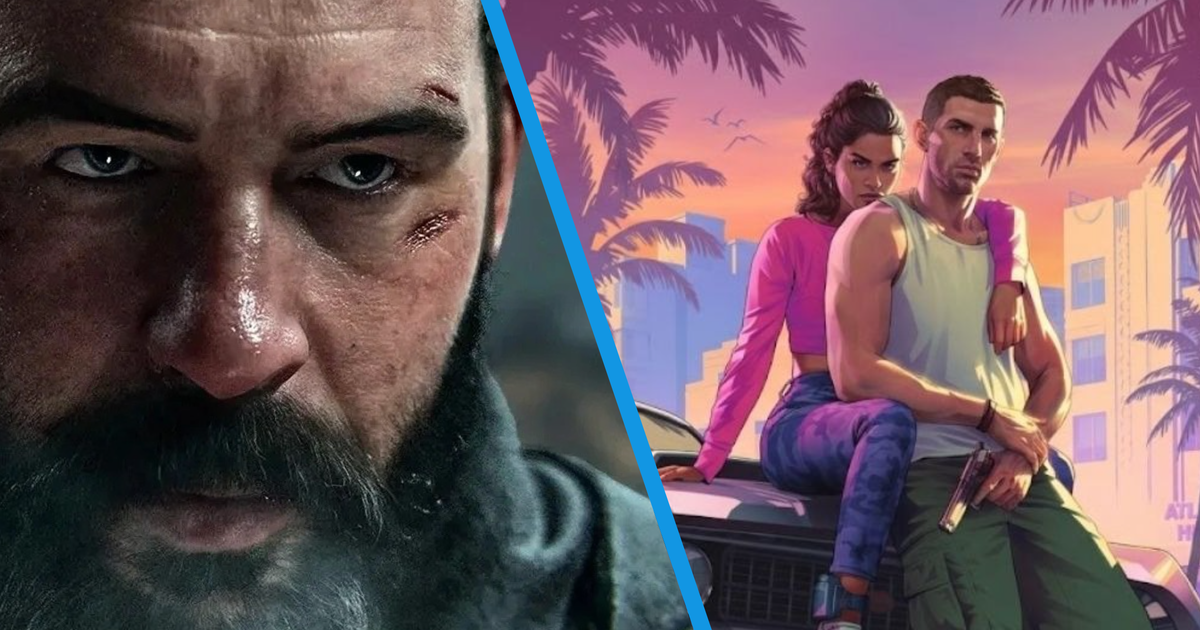
44 percent. That is the gap between Call of Duty’s daily active users before GTA 6 launched on November 19 and four days after. Rhys Elliott at Alinea Analytics tracked the slide: 7.5 million DAUs across PlayStation, Xbox, and Steam collapsed to 4.4 million the moment Rockstar’s biggest title in nearly a decade hit digital shelves. By the following Saturday, the figure had barely inched up. CoD was still down 41 percent from baseline.
Fortnite took a 28 percent hit, from 17.8 million to 12.8 million DAUs. FC 27 bled 27 percent, falling from 5.9 million to 4.3 million. But both titles clawed back within days. By the weekend, Fortnite was running only 19 percent below its normal floor, and FC 27 was within 20 percent. They are habit loops: weekly seasons, cosmetic drops, ranked ladders that re-anchor players every 72 hours.
Call of Duty is not a habit loop. It is an episodic content pipeline. You buy the base game, you play a warzone map rotation for a few weeks, you wait for the next title. The retention architecture is linear, not circular. A one-time 150-hour blockbuster doesn’t just compete for your Thursday night. It severs the habit thread that the next CoD title was supposed to re-splice. And until the next CoD drops, there is nothing to re-splice it onto.
That is the structural asymmetry that Alinea’s data lays bare, and it is the piece most industry observers skipped when they celebrated GTA 6’s record 32.5 million pre-release copies and $3.79 billion first-day revenue.
What the Crossover Data Actually Says
Alinea tracked overlap. Of the players who touched GTA 6 by launch weekend, 29 percent had also played Fortnite that month. Sixteen percent had played Call of Duty HQ. Eleven percent had played FC 27. The gradient is telling: the more habit-anchored the title, the more likely a GTA 6 player is to keep returning to it in parallel. The less habit-anchored, the more likely they simply stop.
Elliott put it plainly. CoD is “the outlier here,” and Xbox “should, candidly, be worried about one of its premier franchises.” That last clause carries more weight than it reads like. CoD HQ runs on Xbox Game Pass, which means the franchise is doing double duty as both a standalone AAA product and a retention tool for a subscription service that justifies its price to consumers through a library of must-play titles. If the installed base is permanently hollowed, the Game Pass value proposition thins, and the subscription churn math gets uncomfortable.
The Second Wave Is Coming, and It Is Worse
Elliott flagged something the launch-week coverage mostly glossed. Everything above is the impact of GTA 6’s single-player mode only. Rockstar has not shipped the online component. The PC port has not happened. Both are expected “some time next year,” and when they land, the competitive pressure on CoD’s live-service players shifts from a temporary dent to a sustained drain. A dedicated online mode with persistent progression, competitive modes, and cross-platform play does not just steal a weekend. It rewrites the default destination for millions of players who were in the middle of a CoD grind cycle.
Alinea already sold 44.9 million copies of GTA 6 and tallied more than $4 billion in revenue. The online launch will expand that audience and lock a portion of it into a long-tail loop that CoD’s annual-release cadence cannot match without shipping a full game.
The Post-Purchase Model Under Pressure
This is where the business-model conversation gets interesting. The AAA live-service playbook has run on a simple assumption for six years: the base purchase is the on-ramp, and the Battle Pass, season pass, and cosmetic shop are the revenue engine. Post-purchase monetization requires a large, stable, and returning audience. It does not require a passionate audience. It requires volume.
GTA 6 broke that volume assumption for one specific cohort: the players who would have bought the next Call of Duty in 2026, played its first three seasons, and cycled through two or three Battle Passes. They are now in Vice City. Some of them are back in a fortnight. Many will not be, or will return to a CoD universe that already shipped new content they missed.
The implication is not that CoD is dead. It is that the installed base is smaller than the pipeline was built for. A franchise that planned its 2026 title around seven or eight million concurrent DAUs now faces a floor closer to four or five. Every season pass sold, every cosmetic pack, every Warzone map rotation now addresses a thinner crowd. The revenue per user may stay flat, but the aggregate revenue ceiling drops. And that ceiling matters to Disney, which has been quietly restructuring its interactive entertainment division and treating CoD as a cash-flow anchor for broader IP strategy.
Who Wins, Who Loses, What Next
Rockstar wins the launch window in the most literal sense. No other studio on earth has a title that can take 44 percent of a rival franchise’s daily audience and not get it back. That is a structural moat, not a marketing feat.
Fortnite and FC 27 lose a weekend and get it back. Their seasonal architecture absorbs the shock. Epic’s December 5 live event to close the current season is a textbook re-engagement play, and the data suggests it will work.
Call of Duty loses something it cannot buy back with a season pass. The habit thread is snapped, and the next splice point is the next annual title, which is 12 to 18 months away. In the gap, there is no CoD content to hold the audience. There is a GTA 6 online mode that may or may not arrive next year, and it will be aimed at exactly the same player demographic.
Xbox loses on two fronts: the Game Pass value prop and the franchise that was supposed to anchor its first-party library. Sony loses a bit less, because CoD was never as central to its ecosystem, but the PlayStation 44 percent drop still stings.
The broader lesson is not that single-player blockbusters kill live service. It is that live service built on episodic content, rather than continuous habit, is one 150-hour weekend away from a permanent contraction. The next studio that ships a game with comparable depth and audience reach should be planning its release window not against a competitor’s marketing calendar, but against a competitor’s retention architecture. And for Activision, the question for 2026 is no longer how to make the next CoD better. It is how to make it return faster, because four days was not enough.