GTA6 Is Rewriting How Koreans Work, Eat, and Watch
Grand Theft Auto VI's release triggered something beyond record sales: South Korean office workers skipping meals and deliveries for all-night streams. What the country's response reveals about games as social infrastructure.
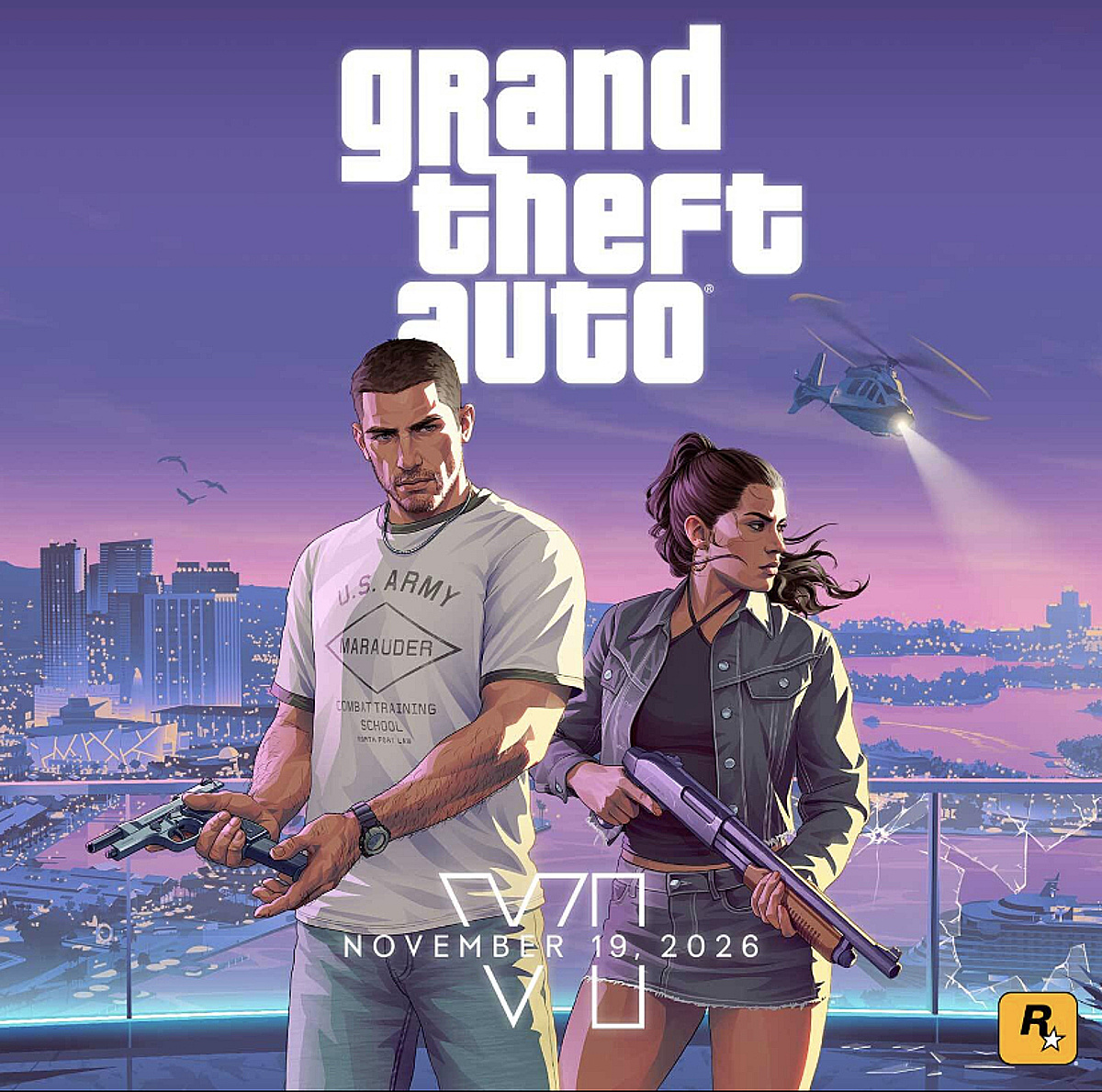
The Game That Stopped a Country’s Lunch Breaks
When Grand Theft Auto VI shipped on October 26th after thirteen years of speculation, Rockstar Games didn’t just sell a product — it rewired how millions of people spend their evenings. The financial headlines are striking by any standard: Sensor Tower estimates pre-order revenue exceeded $1.5 billion, three times faster than the pace that took GTA V to its own billion-dollar mark in 2013. S&P Global Forecast projects the title will generate roughly $2 billion in sales within six weeks alone, approaching the domestic box-office haul of Spider-Man: Brand New Day, the highest-grossing film of the past five years.
But the story that matters most isn’t in those spreadsheets. It’s happening inside Korean offices, where workers are skipping the usual midday food-delivery order to stay online longer, and it signals something larger about what a franchise this big can do to ordinary routine.
“GTA Flu” Becomes Real
The term originated in American sports culture decades ago — faking illness to attend a major event. The New York Times reported it applying here: employees calling in sick, students skipping class, all to hit the ground running on release day. South Korea adopted it without irony. Rockstar itself poured an estimated $3 billion into development, the largest budget in gaming history, and built a fictional Miami called Vice City around Jason and Lucia — the series’ first female-led narrative, designed partly as a corrective to long-running criticism of the franchise’s treatment of women.
The response crossed genre and geography. Logitech introduced paid leave so its engineers could play. That one decision is a quiet bellwether: a Silicon Valley hardware company treating a video game launch as legitimate operational disruption worth compensating, not penalizing.
In Seoul, the pattern repeated with local flavor. Korean workers traditionally order lunch and dinner through apps like Baemin and Yogoshop, creating predictable demand curves through the workday. During GTA6’s opening week, those curves flattened. Delivery drivers reported light afternoons in business districts typically saturated between 12 and 2 p.m. — not because people weren’t hungry, but because they were too absorbed to interrupt a session.
This isn’t rebellion. It’s attention redistribution.
The Streaming Machine Runs at Full Throttle
The numbers behind GTA6’s broadcast footprint are extraordinary. Within the first 26 hours, viewers accumulated 118 million hours of watch time across platforms. A single concurrent audience peaked at 7.25 million, with Twitch alone accounting for 3.31 million of those viewers simultaneously. Internet personality Kai Cenat teased his marathon stream with a trailer that hit 2.4 million views in twenty-four hours. His agency confirmed influencers planned to keep cameras rolling until they completed the entire game — eating and sleeping on stream, treating completion as a live event rather than a solo experience.
Twitch prepared months ahead. Mike Minton, the platform’s chief product officer, described an organization-wide readiness posture unusual for a content launch. The scale justified it: every major studio release since 2020 has tested platform capacity, but GTA6 operated at a tier above.
Advertising moved with equal velocity. The GTA series has historically carried reputational risk — its depictions of drug use and organized crime made brands cautious about adjacency. This cycle broke that resistance. Twitch banner advertisements sold out months before launch, and advertisers who had previously declined partnership opportunities competed for placement. The NBA’s Miami Heat went further, converting its home arena into a Vice City replica set for promotional events, blurring the line between virtual setting and physical experience.
The Clipper Economy Underwhelms
Not everyone profited proportionally. Smaller creators turned to clipping — trimming highlights from major streamers’ broadcasts for secondary upload on TikTok, YouTube Shorts, and Instagram Reels. The math discourages participation. A clip reaching one million views nets roughly $31.50 after platform fees, according to industry tracking cited in the source reporting. The real money flowed upward: companies selling AI editing tools and monetization workshops to aspiring clippers captured more revenue than the creators themselves.
That dynamic matters beyond aesthetics. It illustrates a structural tension in the creator economy: platforms concentrate view volume among top-tier accounts while downstream participants compete for scraps. GTA6 amplified existing inequalities rather than redistributing opportunity.
What This Means for Games as Social Infrastructure
South Korea offers a particularly revealing lens because its digital habits already sit at the global frontier. High-speed internet penetration, mobile-first commerce, and dense urban living make the country a natural laboratory for testing how entertainment intersects with daily logistics. When Korean workers stop ordering food because a game holds their attention, that’s not anecdotal — it’s data about behavioral switching costs.
Three implications follow.
First, the games-as-social-platform thesis gains empirical weight. GTA6 isn’t merely content people consume; it’s a coordination event that synchronizes schedules, conversation, and spending patterns across millions of individuals. The release functioned as a temporal anchor, restructuring how people allocate time over an extended window. No film premiere or album drop in recent memory has produced measurable ripple effects on offline commerce the way this did.
Second, advertisers learning to ignore genre stigma will reshape marketing strategy. The willingness of major brands to attach to a violent-crime franchise signals that reach now trumps reputation management in peak-launch moments. Expect similar campaigns for future releases, and expect media buyers to front-load budgets earlier in the calendar as anticipation windows extend.
Third, workplace policy will adjust incrementally. Logitech’s paid-leave model won’t become standard overnight, but it establishes precedent. Companies in tech-dense markets — Seoul included — may formalize informal flex periods around major releases, recognizing that punitive attendance policies push engagement underground rather than eliminating it. The alternative, as Korean delivery-data suggests, is simply losing control of when employees log off.
Who Wins, Who Loses
Rockstar and Take-Two win decisively: near-$2 billion in six weeks against development and marketing costs already amortized across years of anticipation. Twitch wins second: platform stickiness reinforced, advertiser confidence restored despite category friction. Logistics companies lose quietly: disrupted demand curves hurt short-term throughput, though recovery arrived once players surfaced for restocking runs.
Small-scale creators lose disproportionately. The clipper economy demonstrated clearly that view count no longer guarantees meaningful income, and tool vendors extracted value from desperation rather than talent. Middle-tier influencers face mounting pressure to maintain perpetual availability — the Cain Cenat model of round-the-clock streaming raises the floor for professional commitment without raising the ceiling for compensation equally.
Workers win conditionally. The freedom to prioritize play over obligation represents cultural progress in societies that still treat leisure as secondary to labor. But the cost lands on delivery workers, restaurant staff, and anyone whose income depends on predictable daytime demand spikes. The aggregate effect is neutral: attention moves, nothing disappears.
What Comes Next
GTA6’s lifecycle extends far beyond initial sales. Rockstar’s track record with GTA V — nearly a decade of sustained revenue through updates, multiplayer expansion, and community events — suggests this title will generate comparable longevity. The cultural disruption observed in Korea shouldn’t be read as temporary excitement either. It’s evidence that a sufficiently large franchise can restructure daily behavior across multiple markets simultaneously.
If South Korean workers continue skipping deliveries around major releases, employers will respond. If advertisers keep spending into controversial IP, the premium adjacency problem dissipates. If Twitch maintains its readiness posture, other platforms face pressure to match infrastructure investment.
The game itself is rated 99 on Metacritic. The economic and social aftereffect may prove harder to quantify, but arguably more consequential.