Gundam's Western Gamble With Rogue Orbit
Bandai Namco is betting big that a Western-localized Gundam action game can become a global franchise pillar. Rogue Orbit's March 2027 launch signals a shift from niche anime titles to mainstream console competition.
The Move Behind the Mobile Suit
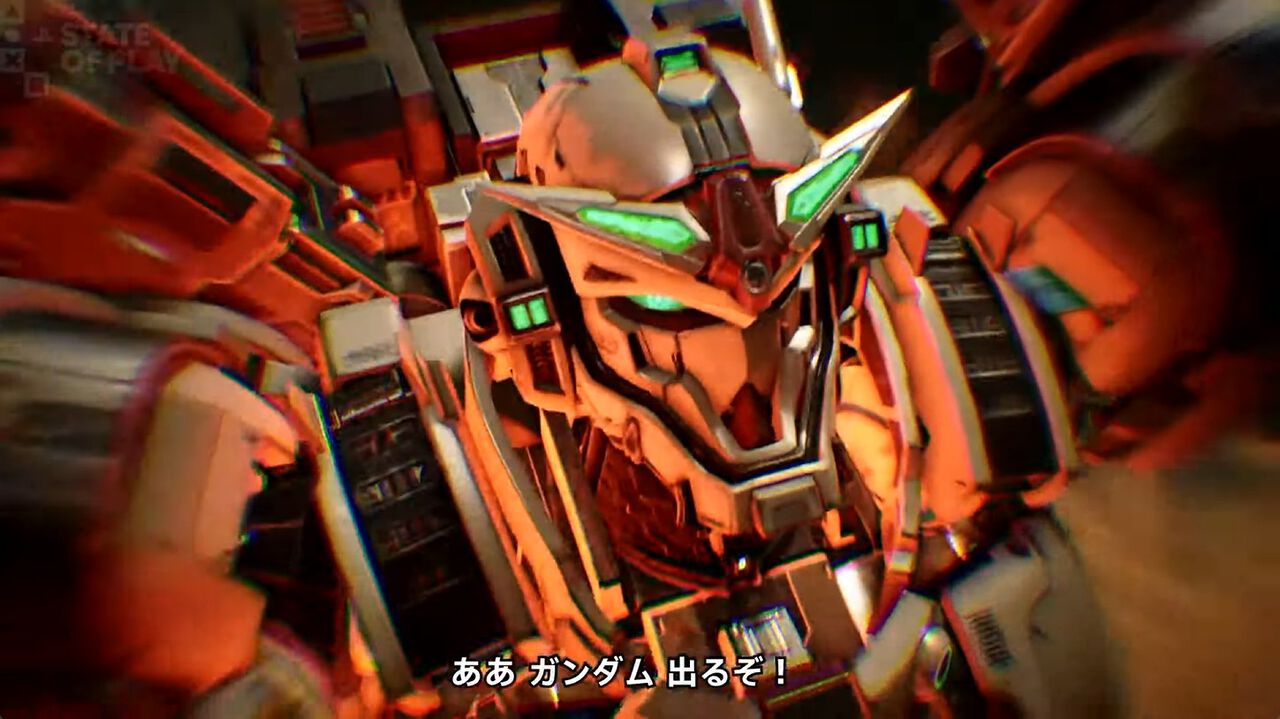
Bandai Namco is not quietly releasing another regional exclusive for the Gundam faithful. The announcement of Gundam Rogue Orbit for PS5 — with a confirmed March 5, 2027 launch, full Western localization, a $60 price point, and extensive gameplay footage shown at State of Play — signals a deliberate pivot. This is an anime IP playing in the same arena as Spider-Man, God of War, and Horizon. The subtext matters more than the press release.
For decades, Gundam games were built inward: faithful adaptations for fans who already knew every frame of the show, every mech variant, every continuity thread. Gundam Rogue Orbit flips that script entirely. It is designed outward, starting from a Western-console player who may have encountered the name “Gundam” at a streaming service or through social media but understands little of the One Year War or the Universal Century timeline. The game shares its universe with Kenji Kamiyama’s upcoming anime Gundam RG XARX-ZERO, but the narrative appears accessible on its own terms — you play as a pilot named Rex with a companion Haro called Vee, fighting a mysterious threat in a photorealistic space environment. That structural decision alone is the real story.
Who This Actually Targets
The pricing and platform choice tell you where Bandai Namco sees the money. At 8,910 yen — roughly $60 — this sits firmly in the AAA action-game bracket. The detailed weapon systems, frame customization, tactical skills, and Apollys Units suggest the studio is aiming at players who expect mechanical depth, not casual tourists browsing the digital storefront.
But depth alone does not win Western audiences. Accessibility does.
The inclusion of MOD Skins — visual-only overhauls that let you fly an RX-78-2 Gundam with classic color schemes while retaining modern gameplay — is a calculated bridge between eras. Longtime fans get nostalgia. New players get an entry point through the most recognizable Gundam in existence, without being asked to memorize decades of canon first. This is the same strategy that made Guilty Gear Strive and Granblue Fantasy Versus: Rising work in fighting games: lower the barrier to entry without sacrificing mechanical depth for those who want it. It is a formula that has repeatedly proven itself in Japanese-to-Western translation projects.
The Bigger Bet
What makes this significant beyond the game itself is the franchise strategy it reveals. Gundam has spent years building a multimedia ecosystem — anime, merchandise, model kits, games, theme parks — but the gaming half has remained fragmentary. Titles came and went, rarely crossing cultural boundaries or achieving anything like sustained revenue streams. Rogue Orbit is the first Gundam game announced with the packaging and budget of a global flagship release, not a regional curiosity.
This aligns with a broader pattern. Bandai Namco has been steadily investing in Western-market titles across its IP portfolio, from Tekken revivals to expanded Soulcalibur development cycles. The difference now is that Gundam carries a specific weight: it is one of the few anime properties with genuine global recognition outside of Japan, with a fanbase that spans continents and generations. Making a Gundam game that competes as a game first and an anime tie-in second is an acknowledgment that the franchise has outgrown its core market and the economics of niche releases no longer sustain it.
The second-order effect is worth watching: successful localization of a property this size changes how Western publishers evaluate anime IP. It signals that anime intellectual property is no longer a licensing curiosity — it is a competitive asset that can anchor a triple-A release. Other publishers may accelerate their own localization bets, and the competitive landscape for anime-themed console games could shift dramatically within two to three years.
What Could Go Wrong
The risk is real and familiar. When a beloved property gets a mainstream treatment, the fanbase reacts sharply if the execution falters. Social media reactions to previous Gundam games — Extreme VS 2 DLC controversies, the Iron-Blooded Orphans game reception — show how quickly a misstep can crystallize into long-term brand damage. The character roster already announced — April Freeman (Marina Inoue), Ellei Garard (Asami Seto), Big Paul (Kenta Miyake) — suggests an original story rather than a direct adaptation, which is the right creative call but also a tighter rope walk. New characters need to earn affection in a universe where decades of canon already exist and where every design decision is scrutinized against it.
The game’s success will also depend on whether the combat system can stand on its own merits. The weapon types shown — Assault Sword with charge attacks and anchor grapple, Sword Lance with distance-based damage scaling, Whip Sword with mode-switching between close and wide attack ranges — are mechanically interesting but entirely unproven in practice. If the action feels generic beneath the Gundam skin, if the frame-by-frame responsiveness expected from a Bandai Namco action title misses the mark, the localization investment yields nothing. The gap between promising mechanics and polished execution is where many anime games have stalled.
There is also the question of whether a March 2027 launch date faces headwinds. The first quarter console window is historically sparse but increasingly competitive, with major studios spreading releases to avoid clashing with holiday blockbusters. Rogue Orbit will need to carve attention in a landscape where even well-budgeted mid-tier titles can disappear under algorithmic indifference on digital storefronts.
What Happens Next
If Rogue Orbit performs well in the West, expect a ripple effect that extends far beyond the Gundam franchise. Other anime IP holders — Toei Animation, Shueisha, smaller licensors who have watched Bandai Namco build this momentum — will take notice and accelerate their own localization strategies. Bandai Namco’s own catalog could see accelerated Western plans for titles that previously would have stayed Japan-only, particularly in the Tales and Star Ocean series where localization has long been sporadic. The franchise model for anime gaming shifts from “fan service product” to “mainstream competitive product,” and the business case for investing in Western QA, voice acting, and marketing becomes harder to deny.
The reverse risk is also worth tracking. If the game underperforms commercially outside Japan, it will likely slow the momentum rather than kill it — anime IP gaming will persist, but the window for pushing at this scale may close for several years. The current enthusiasm for anime in Western gaming is still somewhat novel, and publishers are testing how much institutional commitment they can justify. A high-profile miss would recalibrate expectations across the industry.
One detail worth watching closely: the Deluxe Edition includes exclusive color sets and MOD Skins, and early pre-orders unlock the Earth Blue color scheme. Bandai Namco is already structuring this as a collector economy, which means the revenue model extends well beyond the initial sale into what the company clearly hopes will be recurring engagement through cosmetic drops and seasonal content. The question is whether the game earns enough goodwill to sustain that model or becomes another cautionary tale about over-monetizing a legacy IP — a pattern that has haunted several high-profile anime game launches in recent years.
The Bottom Line
Gundam Rogue Orbit is not just another mobile suit game. It is a signal that Bandai Namco sees Gundam as a global franchise brand first and an anime property second — at least when it comes to gaming. Whether that strategy pays off depends on combat quality, narrative execution, and timing against an increasingly crowded 2027 console lineup. But the ambition behind the announcement is unmistakable: Gundam is no longer competing for anime fans. It is competing for players, and that shift — however carefully staged — could redefine what anime games are expected to achieve.