How Hanwha Ocean Is Betting on Reviving US Shipbuilding
Hanwha Ocean has become the Trump administration's key foreign partner in rebuilding American shipyards — but high costs, supply chain gaps, and Washington's budget uncertainty threaten to slow the venture.
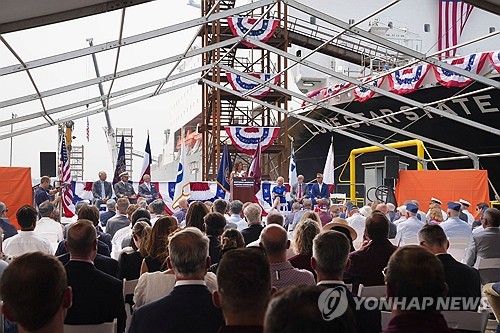
A South Korean Company Runs America’s Newest Shipyard Push
The Wall Street Journal recently published a story that sounded almost surreal to anyone who has followed American industrial decline: a Korean company is being positioned as the Trump administration’s principal partner in reviving a shipbuilding sector that accounts for less than one percent of global output.
Hanwha Ocean, the renamed successor to the former Daewoo Shipbuilding & Marine Engineering, is not simply participating in this effort. It is leading it — at least among foreign companies. No other overseas firm has acquired a US yard in recent years. That exclusivity matters.
The US is trying to rebuild something that has been hollowed out over decades. China alone ships more vessels than America can build multiplied by 230. The gap is not a policy problem to be solved in a quarter. It is a generational industrial challenge.
The Investments Are Real, But So Are the Constraints
Hanwha acquired the Philo Shipyard in Pennsylvania in December 2024. Since then it has committed roughly $350 million to facility upgrades and has signaled plans to deploy additional capital. The yard is now working as a subcontractor on the Navy’s Next Generation Combat Logistics Ship program — a contract awarded in March — and was named earlier this month as a builder for special auxiliary vessels connected to the so-called Golden Dome missile defense system, a project championed by President Trump.
All of this is tangible progress. But it is early progress in a sector where timelines run long and margins run thin.
Philo itself is struggling with the kind of problems that define American heavy industry today: elevated production costs, a thin local supplier base, and constrained physical footprint. These are not temporary snags. They are structural features of a US shipbuilding ecosystem that lost its training pipelines, its tooling culture, and its supply chains after the industry collapsed in the 1980s and was never fully replaced.
The $150 Billion Backdrop
South Korea’s commitment here is not trivial. In the context of the 2024 US-Korea trade agreement, Seoul pledged up to $150 billion in investment toward strengthening American shipbuilding and defense industrial capacity. Hanwha is the visible tip of that broader effort.
The logic is clear from the Korean side. Korea’s maritime exports depend on maintaining technological leadership while deepening alliance ties with Washington. Investing in American yards is a way to lock in strategic relevance and insulate the Korean shipbuilding cluster from future geopolitical friction. It is also a hedge against the possibility that US demand for allied construction could shift orders away from domestic yards if America builds enough capacity to serve itself.
From the Trump side, the calculus is simpler. There is a political narrative of American industrial revival, and Hanwha provides the fastest path to visible results without waiting for a US workforce to be retrained from scratch.
The Budget Question Hanging Over Everything
Perhaps the most consequential uncertainty is not technical at all. It is fiscal.
Congress has not finalized the federal defense budget for the coming year. Without that certainty, the Navy cannot commit to multi-year procurement schedules, and private investors like Hanwha cannot justify scaling up further with confidence. WSJ noted this explicitly, pointing out that any expansion by Korean or Japanese allies into the US market will depend on the Department of Defense committing to predictable future demand — something Washington has not been able to do consistently in recent years.
This is not a new problem. It is the recurring pathology of American defense procurement: the gap between strategic ambition and Congressional appropriations.
Hanwha’s Next Move — and Why It Matters
Despite these headwinds, Hanwha is pressing forward. In August the company put forward a proposal exceeding $1 billion to acquire Oster USA’s shipyard in Mobile, Alabama. The deal is still under negotiation. If it closes, Hanwha would control two US yards on opposite coasts — one on the Atlantic, one on the Gulf — a geographic spread that would dramatically improve its ability to service both Navy programs and commercial contracts across the Eastern seaboard.
Alex Wong, Hanwha’s chief strategy officer, told reporters the goal is straightforward: capture more defense department orders and operate commercial and naval yards side by side. “That is the next stage,” he said.
Whether that stage arrives depends on three variables — US budget discipline, the pace of supplier network development around Philo and potentially Mobile, and Hanwha’s ability to compress costs to a level that makes American-built hulls competitively viable without perpetual subsidy.
What This Means for Korea’s Maritime Dominance
Korea has held the world’s largest shipbuilding market share for nearly two decades. The industry’s dominance rests on scale, supply chain density, and engineering throughput that no other country can currently match. Hanwha’s US investment does not threaten that position directly, but it does signal a strategic pivot: Korean shipbuilders are willing to export capability, not just vessels, to cement their role in allied defense architectures.
For Washington, Hanwha is a rare example of a foreign firm with both the capital and the technical credibility to participate meaningfully in American defense industrial renewal. That makes Hanwha a target for attention — and possibly for political scrutiny, given the sensitivity around foreign ownership of US defense-adjacent infrastructure.
The Trump administration’s Golden Dome and broader naval modernization plans will require ships. America cannot build them fast enough on its own. Hanwha can. The question is whether Washington will provide the budget certainty and industrial policy consistency required to make that partnership durable — or whether another administration, or another congressional impasse, will leave the yard gates half-open again.