Why Honam's Semiconductor Hub Changes Everything for Korea's Chip Geopolitics
SK Hynix and Samsung are racing to build a $10B+ semiconductor cluster in South Korea's Honam region — a move that could reshape fab density, supply chains, and the calculus around China-Taiwan risk. Here's who wins, who loses, and what happens next.
A Second Silicon Coast
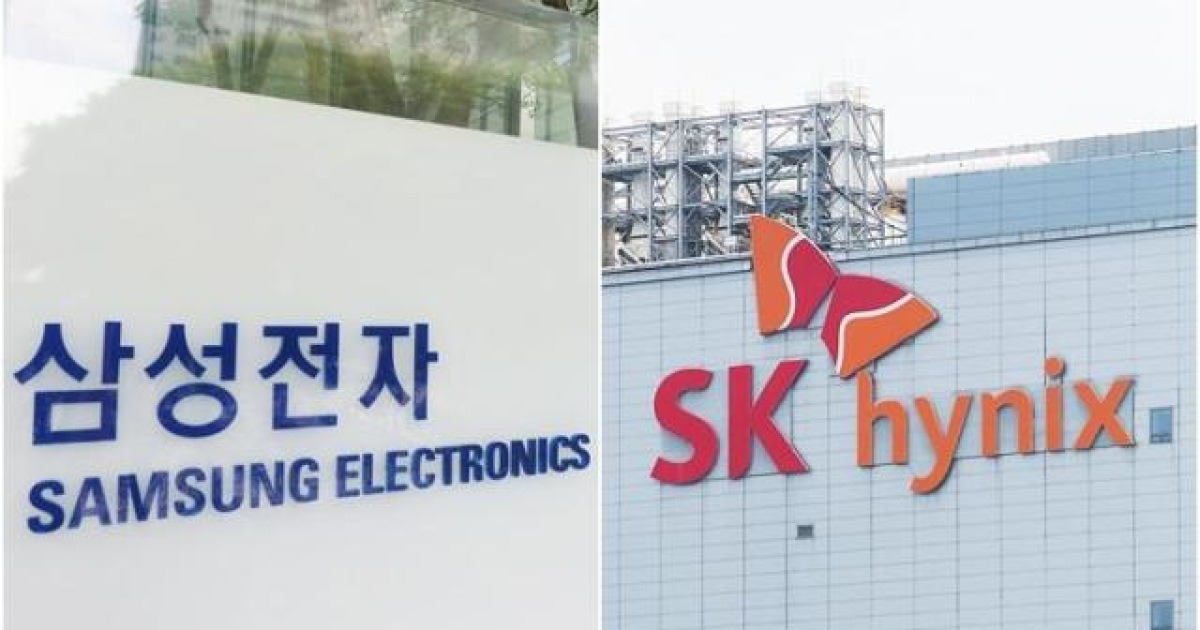
South Korea is about to do something it has never done before: build a second major semiconductor cluster outside the Pyeongtaek corridor that has hoarded the country’s fab density for two decades. The Honam National Industrial Complex — a 8.26 million-square-meter site near Gwangju — is now moving from concept to construction, driven by an unusually visible race between SK Hynix and Samsung Electronics that has local government officials scrambling to keep both companies equally happy.
What makes this story worth watching is not just the scale of the investment. It is the strategic logic behind it. Korea’s chip industry has become dangerously concentrated. Pyeongtaek, roughly an hour south of Seoul, hosts the vast majority of Samsung’s memory and logic fabs and SK Hynix’s most advanced HBM lines. A single earthquake, a disrupted supply route, or a geopolitical escalation in the Taiwan Strait — where over 90 percent of Korea’s foundry input flows through Taiwan — could choke the industry overnight. Honam is an insurance policy written in concrete and silicon.
The Two-Speed Race
The news cycle last week made one thing clear: SK Hynix and Samsung are playing different games, and the local government is trying not to favor either side.
SK Hynix is thinking big on land. The company has formally requested the military airbase relocation site within Gwangju for a massive new fabrication plant. Since July, SK Hynix executives have visited the site nine times. Their management team toured the facility in Ichon, met with Mayor Min Hyung-bae, and discussed everything from long-term cooperation frameworks to exact site-selection criteria. SK Hynix is moving deliberately — it wants the land, the zoning, and the infrastructure commitments locked in before breaking ground.
Samsung, by contrast, is pushing for speed. Kim Yong-kwan, who oversees business strategy for Samsung’s Device Solutions division, told a recent briefing that the national industrial complex needs to accelerate. Samsung’s leadership visited the Gwangju airbase site in July and simultaneously sent teams to Pyeongtaek to negotiate power, water, and logistics terms with metropolitan officials. Samsung’s posture is clear: it wants to break ground faster and start producing sooner, even if the full infrastructure package is not yet in place.
The integrated special city of Gwangju-Jeonnam has responded by carving out approximately 630,000 pyeong (roughly 2.1 million square meters) of immediately available land — former ammunition depot sites that can be transferred without the delays that come with civilian rezoning. The goal is to begin land development in 2027, secure basic power and water by late 2028, and launch first mass production by June 2030. That timeline is aggressive for a project of this scale. It is also politically unavoidable — both companies are watching each other, and any perception of favoritism could trigger a public relations problem for the municipality.
Why Honam Matters Beyond Korea
The conventional narrative frames this as an economic development story: create jobs in the Honam region, revitalize a part of the country that has lagged behind the Seoul metro area and the Taegion industrial corridor. That is real. But the deeper significance is geopolitical.
Korea’s semiconductor industry is the linchpin of the global memory-chip supply chain. SK Hynix and Samsung together produce the majority of the world’s DRAM and NAND flash, and SK Hynix alone dominates the high-bandwidth memory market that powers Nvidia’s AI accelerators. Any disruption to that output — whether from a natural disaster, a trade dispute, or a conflict that closes Taiwan’s shipping lanes — would send shockwaves through the global technology economy.
Building a second cluster in Honam is a direct hedge against that risk. It also sends a signal to Washington and Brussels that Korea is serious about supply-chain resilience, even as it navigates the delicate balance of not antagonizing Beijing. China is already Korea’s largest export market for semiconductors. Any move perceived as explicitly decoupling from China risks retaliatory measures. Honam lets Korea diversify its domestic risk without publicly declaring a geopolitical stance.
The timing is also notable. As of mid-2026, the Taiwan Strait remains a persistent flashpoint. The United States has tightened export controls on advanced chipmaking equipment to China, and Taiwan’s own government has invested heavily in securing its semiconductor industry against physical attack. Korea’s calculation appears to be: if Taiwan’s fabs are ever compromised — by conflict, blockade, or even prolonged political instability — Honam can absorb at least some of the memory-chip production that would otherwise go idle.
The Infrastructure Challenge
The 2030 production target is achievable only if three massive infrastructure projects complete on schedule: relocating a military airbase, building a dedicated power substation capable of supplying a fab-scale load, and constructing a water treatment and recycling facility for a region that does not currently have that capacity. None of these are trivial. A single advanced memory fab can consume up to 50 megawatts of power and millions of gallons of ultra-pure water daily.
The decision to pre-allocate 630,000 pyeong of former military land is smart — it sidesteps the longest phase of the approval process. But power and water will remain bottlenecks until the regional grid and municipal systems are upgraded. The local government has committed to having basic infrastructure in place by late 2028, which leaves only 24 months before first production. That is tight.
Who Wins, Who Loses
SK Hynix wins if it gets the airbase site on favorable terms. The company’s HBM business is its crown jewel, and proximity to Samsung’s new operations could create supply-chain synergies — or competitive friction, depending on how the municipal authorities structure the cluster. Samsung wins if it breaks ground first. The company’s strategy of pushing for accelerated timelines suggests it believes Honam will be a memory-chip powerhouse and wants to establish operational precedence.
The Gwangju-Jeonnan municipality wins politically if it can claim credit for balancing both companies’ demands without appearing to choose a winner. Local residents in the Honam region win if the promised jobs materialize — the area has long sought high-tech industrial investment to counter decades of economic stagnation relative to the capital region.
The loss is borne by anyone who depends on a stable memory-chip supply in the near term. If Honam slips past 2030 — and infrastructure delays make that a real possibility — the global AI and data-center markets, which are already strained by HBM shortages, will feel the impact. SK Hynix’s competitors in Japan and the United States will watch closely and adjust their own capacity plans accordingly.
What Happens Next
The next three milestones matter more than anything else. First, the anticipated October lease agreement between Gwangju and SK Hynix — if that signs cleanly, it signals that SK Hynix’s land negotiations have reached a decisive point. Second, Samsung’s follow-up executive meeting with city officials, which will reveal whether Samsung’s demand for speed translates into concrete infrastructure commitments or remains rhetorical pressure. Third, the 2027 groundbreaking for the 630,000-pyeong parcel — if that happens on schedule, it confirms that the municipality can deliver on its timeline promises.
If all three unfold as planned, Honam becomes the most significant shift in Korea’s semiconductor geography since the Pyeongtaek cluster was built in the early 2000s. If any of them slip, the 2030 production target becomes a moving goalpost — and the strategic rationale for the entire project weakens.
The race is on. The question is whether Korea can build a second silicon coast before the geopolitical window that made it necessary closes.