Hondas $3B Ohio Bet: Why Hybrid Factories Beat EV Lines
Honda's $3 billion Ohio plant producing mostly hybrid vehicles reveals the auto industry's quiet retreat from its EV schedule. What looks like a defensive move could define North American competition through 2030.
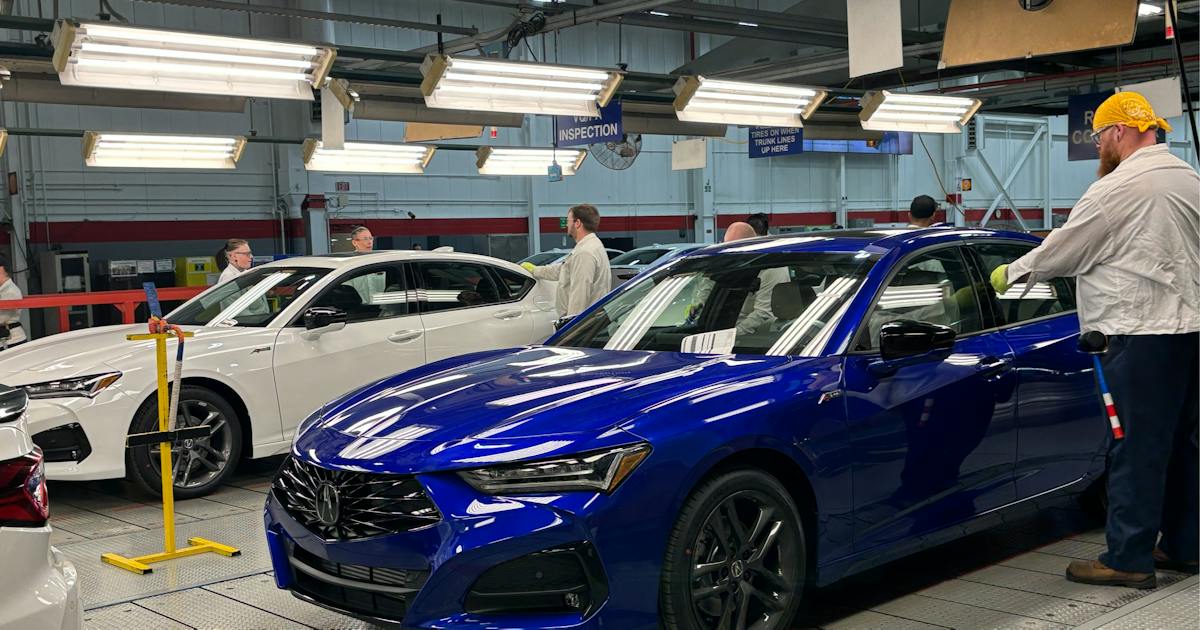
The Factory That Says What Nobody Wants To Announce
Honda said last week it will spend $3 billion to build a new vehicle-assembly plant near Marysville, Ohio, one of two existing factories the company already operates in the state. Production is targeted for mid-2029, when the facility adds roughly 10 percent to North American output. The cars rolling off that line will be predominantly hybrids.
That combination — a brand-new U.S. plant devoted largely to internal-combustion technology, announced in 2026, with no fanfare about zero-emission credentials — is the signal most observers missed. It confirms what quarterly reports and supplier conversations have been suggesting for months: the North American transition away from gas-powered vehicles is slipping past the schedules set three years ago, and incumbents who diversified their product lines early are quietly capturing the gap.
Hybrid Is the Bridge Everyone Forgot Was Built
The math behind Honda’s decision is straightforward enough. American consumers continue to buy more hybrid and plug-in-hybrid vehicles than battery-electric ones, year after year, partly because charging infrastructure remains uneven outside coastal corridors and partly because many buyers see hybrids as a way to cut fuel costs without rethinking their daily routines. Major rivals — notably Ford and General Motors — have already extended the life cycles of their hybrid models past initial projections. Hyundai and Kia have been doing the same. This is not a niche preference anymore.
A dedicated hybrid-capable assembly line changes something fundamental about how a manufacturer responds to demand swings. Honda’s existing Ohio plants already blend some hybrid and conventional powertrain output on shared conveyor systems, but a third facility gives the company room to specialize — to schedule longer hybrid runs without cannibalizing time allocated to pure gasoline or, later, pure electric versions. That operational flexibility compounds quickly when consumer sentiment shifts overnight, which it has done several times recently.
The 10 percent North American capacity increase sounds modest until you compare it to the contraction happening elsewhere. Honda has acknowledged deteriorating profitability in China, where Japanese-brand competition has hardened under local alternatives offering similar or better equipment at lower prices. The Midwest plant partly offsets losses from that market while keeping the domestic supply chain intact. Analyst Tō Shin notes the ratio of Honda’s global sales represented by the United States has climbed from just under 30 percent in 2020 to roughly 40 percent today. Each point of that shift makes every Ohio worker, every tier-one supplier, and every localized part more valuable than it was four years ago.
Supply Chains That Matter Are Already Here
The deeper consequence of Honda’s announcement lies in what it tells the companies that feed it. Transmission manufacturers, battery pack assemblers, wiring harness producers — all of these groups have spent the last several years uncertain whether to invest further in North American capacity or hedge bets toward battery-electric tooling that might sit idle if demand flattens. A greenfield plant signaling hybrid production for the remainder of this decade reduces that ambiguity considerably.
Under the Inflation Reduction Act, hybrids receive weaker incentives than battery-electric vehicles, but they still benefit from broader manufacturing tax credits and, more importantly, from rules that encourage regional sourcing of components. Honda’s ability to keep hybrid-specific parts sourced domestically — rather than importing them from Asia, where labor costs remain lower but tariffs and logistics expenses rise — improves the company’s compliance posture under those regulations. Tier-one suppliers sharing this ecosystem gain the same advantage.
This dynamic is the opposite of what many policymakers imagined when they drafted the IRA. The legislation assumed a linear path from gasoline toward full electrification, leaving hybrids in a regulatory gray zone. What actually happened is far messier: hybrids survived, demand persisted, and manufacturers used them to maintain employment, tooling, and supplier relationships while waiting for the battery-electric market to reach the volumes executives promised.
The China Problem Honda Is Trying to Solve
China’s domestic auto market presents a separate challenge that complicates every calculation Honda makes about North America. The country produces and consumes more electric vehicles than the rest of the world combined, and it does so at price points that make imported Japanese brands uncompetitive in volume segments. Honda’s struggling presence there is a known variable, not a speculation. When analysts describe the Ohio facility as partly a hedge against worsening Chinese earnings, that shorthand hides the structural issue: China no longer needs Honda the way it once did, and Japanese companies are adjusting their revenue geography accordingly.
Two-wheeled products offer another potential revenue stream, but motorcycle margins do not approach those from passenger vehicles. The real question is whether North American hybrid sales can sustain the R&D expenditure Honda requires to compete with cheaper Chinese EVs abroad and more aggressive European luxury brands at home.
What Happens Next
Mid-2029 arrives well beyond most electoral cycles and policy horizons, which means the political framing of this investment will be almost entirely positive. Union leaders will emphasize job creation. State officials will tout foreign-direct investment figures. Environmental groups will note that hybrids emit less CO₂ per mile than conventional gasoline cars, which is technically true even if it sidesteps the question of tailpipe emissions under full battery-electric operation.
What will likely go unsaid is that a brand-new assembly plant designed around a technology cycle most regulators assumed would end a decade earlier reflects a very different assessment of consumer behavior than the one driving federal incentive programs. If Honda’s expectation holds — that hybrid demand remains robust through the second half of this decade — competitors will follow with parallel investments. If it does not, the company may repurpose the facility faster than anyone expects, since the modular architecture of modern North American assembly lines allows relatively quick switches between powertrain types.
Either way, the announcement settles a question that has occupied auto industry strategists for three years: the transition timeline is longer than expected, and the companies best positioned are not the ones that bet everything on full electrification at speed. They are the ones that built flexibility into their largest markets and kept their options open.