How Hormuz Escalation Is Rewriting Energy Risk Premiums
Iranian attacks on tankers near Qatar push Brent past $105 and prove the Strait of Hormuz is no longer enough to contain the risk. What $105 oil means for inflation—and the US election—before anyone can catch their breath.
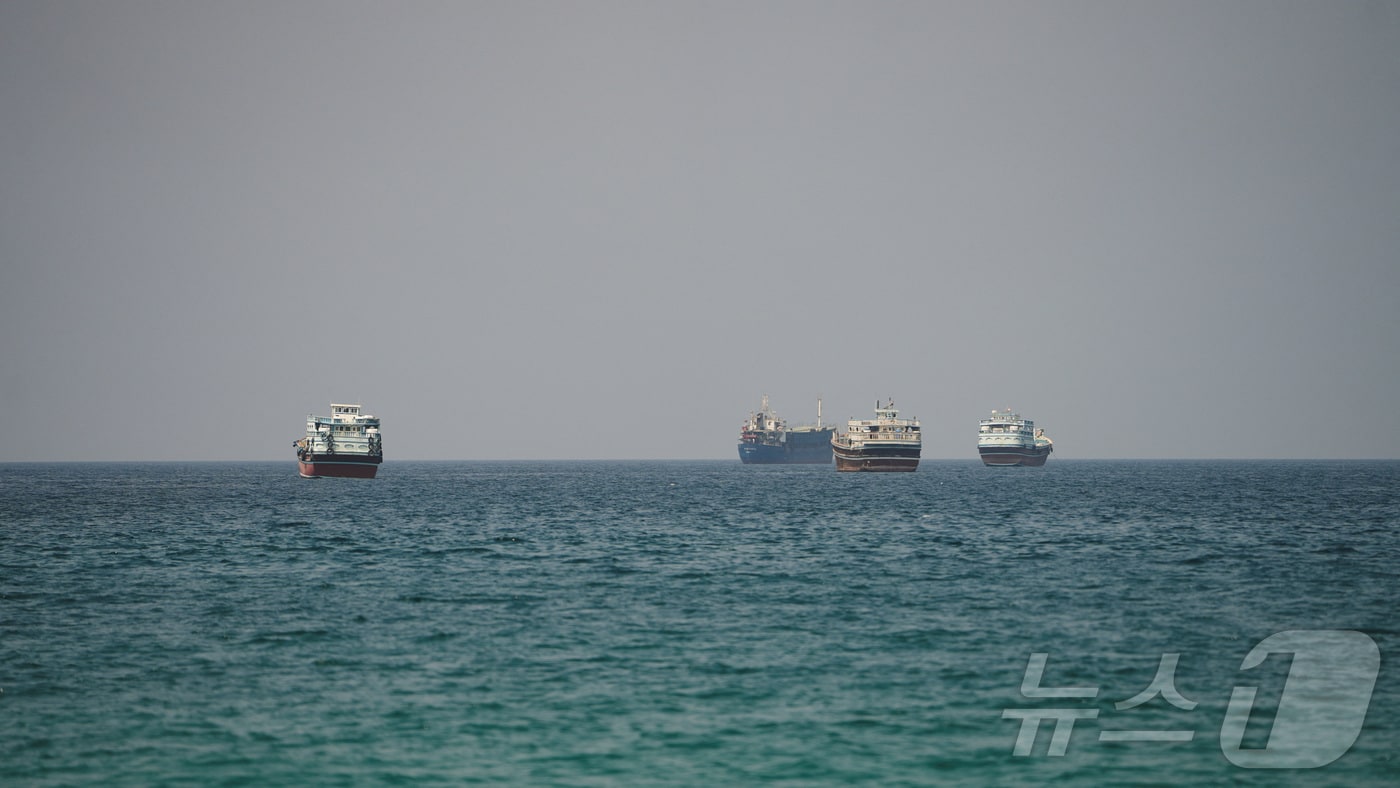
The Attack That Changes Everything
The tanker Acers was hit by multiple projectiles about 51 nautical miles north of Madinat ash Shamal, Qatar, on the evening of September 7. Casualties were reported. No one has claimed responsibility, but the geography of the strike tells the story: this was not a Hormuz incident. It was an invitation.
Within hours, Brent crude jumped roughly 5 percent, clearing $105 a barrel. The market did not need a confirmation of Iranian involvement to react. It needed only to see that the attack zone had shifted.
For months, the strategic narrative around the Strait of Hormuz has been one of containment. Iran has targeted ships in and around the narrow chokepoint—those 10 tankers attacked between September 1 and September 4 represent the highest weekly toll of the year, according to data firm Kpler—but the assumption, implicit in shipping routes and insurance pricing, was that the violence would not easily travel farther into the Persian Gulf.
That assumption just broke.
Why Qatar Changes the Calculus
Qatar sits deep inside the Persian Gulf, far from the strait. Its LNG terminal at Ras Bufontas is one of the largest export facilities on Earth. A tanker attacked 51 nautical miles from its waters is not a Hormuz problem—it is a Gulf problem.
This is the distinction that matters. The Hormuz chokepoint is narrow, militarized, and already priced for disruption. The wider Gulf is where the regional infrastructure lives: Qatar’s LNG exports, the Jebel Ali terminal in the UAE, the oil transfer hubs that make up the shuttle system Gulf producers built after Iran’s initial封锁 attempts.
When attacks reach these waters, the risk premium stops being about a single chokepoint and starts being about an entire sea lane. That is a different order of magnitude.
UKMTO records the Acers strike, but the signal the market is reading is broader: if Iran can reach this far with precision, there is no part of the Gulf that feels immune. Insurance rates will adjust. Charterers will demand higher premiums or refuse routes entirely. Ships will reroute through the longer, more expensive route around Arabia—or simply wait.
The Shuttle System Is Already Under Stress
Here is what most English-language coverage has missed about the logistics: after Iran’s earlier封锁 of Hormuz, UAE and other Gulf producers did not abandon exports. They built a workaround. Tankers load crude inside the Persian Gulf, then move to waiting vessels outside the strait for onward shipment. It is slower, more expensive, and operationally fragile—a complex handoff that assumes both sides of the transfer can operate without interference.
The Acers attack suggests Iran is explicitly testing that fragility. Even if the target was not a shuttle vessel, the psychological effect is designed to undermine confidence in the entire system. Every day of uncertainty adds cost. Every cancelled voyage adds supply risk. And at $105 Brent, that risk is no longer abstract—it is already on every airline’s cost sheet, every shipping line’s balance, and every consumer’s grocery bill.
Who This Hurts First
The inflation channel is the most underappreciated angle here. The US is roughly four months from the November midterms. Oil prices above $100 have historically exerted measurable upward pressure on consumer inflation within 60 to 90 days—a lag that coincides almost exactly with the period when midterm voters are most attentive to price tags at the pump and the grocery store.
Trump has publicly signaled sensitivity to high fuel costs. That is not speculation; it is a recorded political stance. An Iranian campaign calibrated to pressurize Washington before the election carries a logic that goes beyond military strategy. It is economic statecraft aimed at a specific deadline.
The analysis from Azur Strategy’s Alice Gawer, quoted by the WSJ, is blunt: Iran is calculating that a resolution before November is unlikely, and that sustained disruption will carry political weight in Washington. Whether that calculation is correct depends on whether the US responds with restraint or force—and the warning from the same analyst is equally direct. Without a credible diplomatic off-ramp, both sides risk a spiral of retaliation that makes escalation far more likely than de-escalation.
What Comes Next
Three scenarios deserve attention, none of them comfortable.
The first is further Iranian escalation into the Gulf proper—targeting LNG tankers, port infrastructure, or shuttle operations. That would push Brent toward $110 or beyond and force a rapid re-pricing of global energy risk.
The second is a limited US military response against Iranian naval assets or coastal radar and missile sites. That could open space for Hormuz traffic but risks pulling regional allies into a wider confrontation.
The third—and the one most likely to materialize—is a grinding war of attrition: continued low-intensity attacks on commercial shipping, rising insurance premiums, incremental rerouting, and a slow bleed in supply confidence. Oil stays elevated, inflation persists, and the market digests the new normal without any dramatic trigger.
For global markets, the immediate takeaway is simple. The $105 Brent level is not a spike driven by a single event. It is a repricing of risk across an entire maritime region. And until the attack zone contracts back toward Hormuz—or the political calculus shifts—the premium is likely to hold.
The question for investors, policymakers, and anyone watching the inflation data is no longer whether Iran can disrupt Gulf shipping. It is whether they can keep doing it without triggering something neither side wants.
Right now, the evidence suggests they can—and are choosing to.