Hot CPI Rewrites the Fed Playbook — and the World Economy
The US August core CPI beat sent Fed hike odds soaring to 86%, reshaping global markets. Emerging-currency debacles and commodity demand shifts are coming.
A Number That Redrew the Board
The August core CPI print did not merely miss the consensus — it embarrassed it. At 0.3 percent month over month, the figure was a full hundred basis points above the 0.2 percent expectation. The headline number at 3.4 percent year on year looked tame by comparison. It was the stripped-down measure, the one policymakers stare at because it has enough signal and not enough noise, that did the damage.
Within hours, the CME FedWatch tool was flashing a new reality. The probability of a September 15–16 rate increase jumped to 86.3 percent, up from 72.4 percent the day before and 59.4 percent just a week earlier. That is not a gentle rerating. It is a market changing its mind in real time.
Who Loses First
Emerging-market currencies are the immediate casualty class. When the dollar steepens on hotter inflation data, the carry trade unwinds fast. Central banks from Buenos Aires to Jakarta to Nairobi hold floating exchange rates and finite reserves. A surprise tightening cycle in Washington removes their breathing room overnight.
Chile’s peso, Mexico’s peso, and the Brazilian real are the first ports of call for algorithmic position flattening. Turkey and South Africa sit further down the risk list, where a single hawkish Fed whisper already had traders sweating. The yield hit on their sovereign bonds will be second-order at best. The currency move is the primary event.
Portfolio investors who priced in a soft landing with a single cut in 2027 are now repositioning. The math is simpler than it feels: every basis point of added terminal rate cost weighs on EM debt spreads by roughly five to eight basis points. That is not abstract. It is the difference between a central bank able to intervene and one forced to let the currency go.
The Bond Market Is Already Pricing Fear
US Treasury futures are the canary here. The front end — the two-year note — moves first when the Fed is on the table. Expect that curve segment to price in at least one additional quarter-point move, possibly more, before year end. The WSJ noted correctly that since the 1990s, there has been only one instance of a single rate hike being treated as a standalone event: 1997. The pattern since then favors repetition.
If the Fed delivers a quarter-point in September and holds steady into November, the market will likely read that as pause-for-breathing-room rather than pause-for-give-way. Either interpretation shifts duration positioning. Either way, the curve steepens or flattens depending on which sector you watch — and both are happening at once in different tenors.
The Commodity Paradox
Oil prices fell on the CPI release. Brent dropped 2.81 percent to $104.61 a barrel and WTI slipped 2.37 percent to $100.05. That reaction tells you something important: the market is pricing tighter demand ahead, not looser money. A stronger dollar and a higher-for-longer rate path compress commodity demand forecasts for Q4.
Copper tells a similar story. The industrial metal is already sensitive to China’s property sector drag and global manufacturing slowdown. An additional US rate hike叠加s a second headwind. Lithium and cobalt follow the same trajectory but at slower velocity — EV demand cycles do not accelerate on Fed commentary, and they certainly do not decelerate because one data point surprises.
Gold is the anomaly. It should fall with a stronger dollar and higher real yields. It may not, because geopolitical risk and central bank buying continue to underpin demand independently. Do not read comfort into a gold bounce after a hawkish print. The metal often diverges from simple macro narratives for reasons unrelated to inflation.
The Fed Chair Test
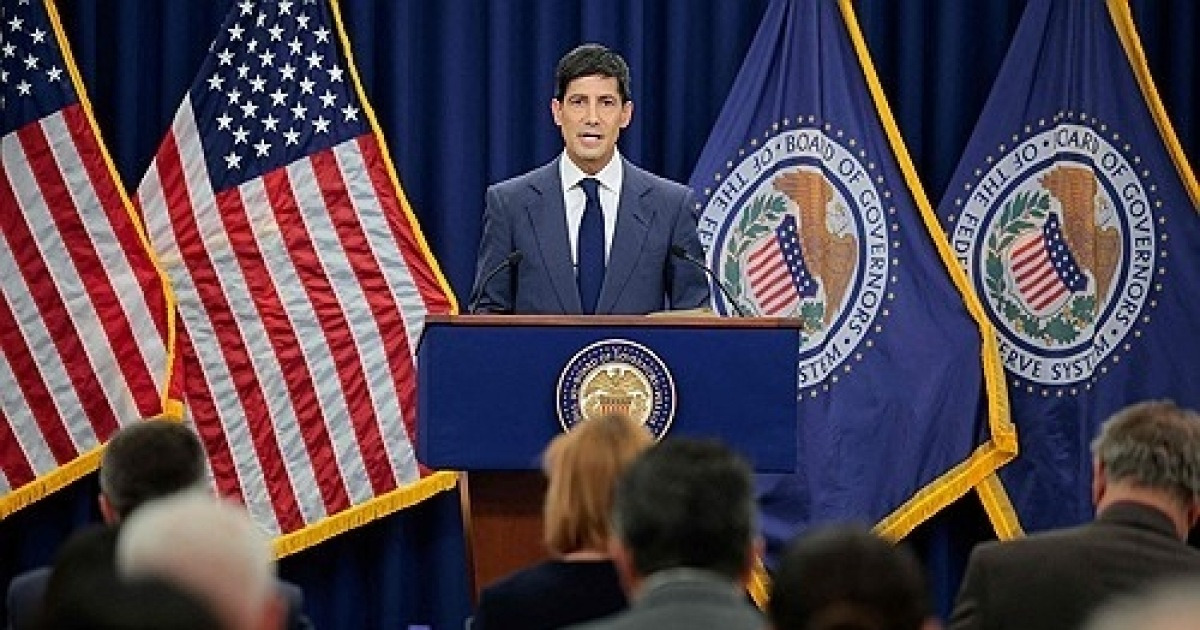
Kevin Wash entered the job with a clear mandate: anchor inflation expectations and prove that the 1990s-style single-hike narrative was not the template. The Jackson Hole remarks made that explicit. This CPI number is the first live exam.
A hike on September 15–16 would be the mechanical response. The harder question comes next. Can the Fed raise without spooking the labor market enough to force a reversal? The August jobs report matters here. If wage growth remains contained while prices stay sticky, the case for gradualism holds. If the two move in tandem, the Fed faces a choice between inflation credibility and employment credibility — and neither outcome is painless.
What to Watch Next
Two things will determine whether this is a temporary repricing or a regime shift.
First, the September core PCE. CPI is backward-looking and seasonally adjusted; PCE is the Fed’s preferred gauge and includes a broader basket. If PCE echoes the CPI surprise, the hike odds extend. If PCE moderates, the market may conclude that August was an outlier.
Second, the FOMC statement language. The dot plot is more informative than the rhetoric. A single hike followed by a neutral stance is possible. Two hikes through year end would mark a decisive tightening reset. Neither is good for EM debt, but the second option is structural rather than cyclical.
The Takeaway
Hot inflation does not just raise the federal funds rate. It raises the cost of everything funded by capital markets, everything priced against a dollar yield curve, and every policy response available to emerging economies that assumed the US central bank had pivoted. The market has not yet moved to worst case, but it has stopped pretending the base case remains unchanged. That is the difference between a routine data release and a inflection point.
The next fortnight will tell which.