Houthi Missile Reach Changes Everything for Riyadh and Global Oil
Saudi Arabia confirmed the first Houthi ballistic missile attempt on Riyadh, a dramatic escalation that exposes Riyadh's interceptor shortage and reframes the conflict from proxy skirmish to direct strike territory.
A Red Line Crossed
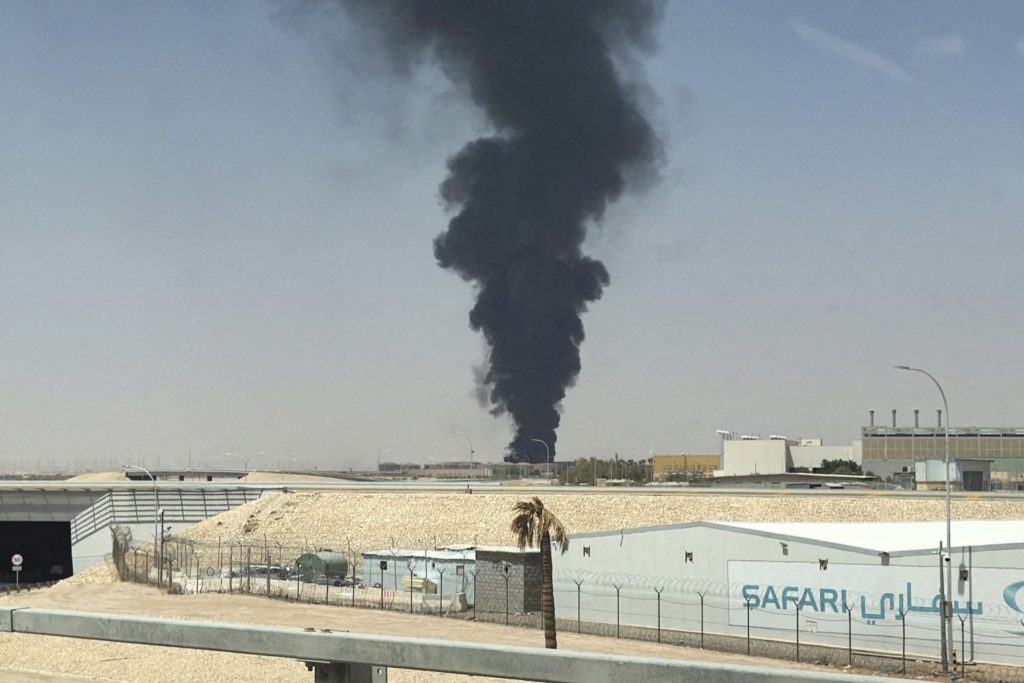
Saudi Arabia confirmed on Saturday that Houthi rebels fired a ballistic missile at Riyadh, and it was intercepted. Residents heard explosions. A plume of smoke rose near King Khalid International Airport. No casualties were reported, and no infrastructure was visibly damaged. But the event itself — a hostile projectile launched from Yemen and arcing over populated Saudi territory — marks a threshold that didn’t exist even two weeks ago.
This is the first time Riyadh has been directly targeted since the current escalation began. Prior Houthi strikes have focused on border provinces, military installations, and energy facilities farther from the capital. The attempt to hit Mecca earlier this week, which Saudi called a red line, was dismissed by the Houthis as a false flag. This missile strike, however, is documented and acknowledged by both sides, even as each assigns blame differently.
The Interceptor Gap
Here is what Riyadh isn’t saying loudly enough: it is running low on missile interceptors. Regional officials told the Associated Press that Saudi Arabia has asked France, Britain, Pakistan, and Egypt for air defense support. That is not a request born of abundance. It is a request born of necessity.
The U.S., a close Saudi ally, has publicly signaled no current fight with the Houthis. That leaves Riyadh to manage a widening threat with inventory it did not anticipate depleting this fast. Every intercepted drone, every downed missile, every cluster munition fragment that killed a civilian in Saudi Arabia on Thursday — these are not abstract losses. They are real gaps in a defensive architecture that was built for a slower, lower-intensity war.
Yanbu and the Pipeline
The Houthis also attempted strikes on Yanbu, Taif, Baysh, and Farasan. Yanbu matters most. It is where a key Saudi oil pipeline terminates — a critical node in the kingdom’s export chain. The Houthis claimed they triggered massive fires at Aramco facilities there. Aramco did not comment. The pipeline, according to a separate report, has already been hit and could be out of service for several weeks.
Even if Yanbu was not successfully struck this time, the fact that the Houthis are directing fire at pipeline endpoints changes the calculus for global energy markets. Yanbu is one of two primary routes Saudi Arabia uses to move crude away from the Strait of Hormuz. If that route is degraded — whether by direct hit, near miss, or the threat that forces rerouting — the kingdom’s ability to manage export flows under pressure weakens significantly.
Territory Gained, Leverage Multiplied
While the missile campaign intensifies over Saudi cities, Houthi ground forces have been racing down Yemen’s Red Sea coast. They seized the port city of Mokha and islands at the southern end of the Bab el-Mandeb Strait within the past week. Those islands give the Houthis visual and sensor coverage of one of the world’s most critical maritime chokepoints.
The Houthis have said they are only targeting Saudi ships. In practice, that distinction blurs quickly. Any vessel operating under a Saudi flag, carrying Saudi goods, or transiting routes linked to Saudi exports becomes a potential target. And with improved surveillance from captured islands, the Houthis can monitor traffic with far greater precision than before.
Iran’s Calculus Shifts
The Iran war had one front — proxy skirmishing through militias across the region. Now it has a second: direct strike capacity demonstrated from Yemen onto Saudi soil. That dual-front reality forces Tehran to weigh new risks. Every missile launched from Houthi territory toward Riyadh is an action that can be traced back, diplomatically and militarily, to Iranian support structures.
But the reverse is also true. If Saudi Arabia absorbs repeated attacks without a decisive response — as it appears to be doing while waiting for interceptor shipments from Europe and Pakistan — Iran and its proxy network gain confidence that the cost of escalation can be absorbed. The current posture rewards aggression.
Who Wins, Who Loses
The Houthis win by shifting the geography of the conflict inward. Every successful interception still proves they can project force onto Saudi territory. Every near miss still forces civilian disruption, airport uncertainty, and insurance premium spikes across the Gulf. They don’t need to hit Aramco headquarters to extract economic and psychological cost.
Saudi Arabia loses on three fronts: defensive sustainability, regional credibility, and energy infrastructure security. Each intercepted missile depletes stockpiles. Each failed deterrent strengthens Houthi resolve. Each threat to Yanbu or the pipeline raises the risk premium on global oil flows that pass through the Red Sea and Bab el-Mandeb.
Global energy markets lose because uncertainty is priced into every barrel. The Strait of Hormuz was always the nervous system of oil markets. Now the Bab el-Mandeb is exposed in real time, and there is no credible guarantee that either chokepoint will remain safe for commercial shipping.
What Happens Next
Several trajectories are possible, and none are comforting. If Saudi Arabia receives interceptor replenishment from France, Britain, Pakistan, or Egypt, the immediate threat to Riyadh may recede — but the underlying capability gap remains. The Houthis have demonstrated they can launch ballistic missiles over 1,000 kilometers. That range does not shrink because Riyadh buys more Patriots or Thaad systems.
If the Yanbu pipeline stays offline for weeks, Saudi export capacity takes a real hit. The kingdom has alternatives, but they are slower and more expensive — alternatives that compress profit margins and raise prices downstream.
And if the Houthis continue their coastal advance, they may secure not just surveillance positions but launch sites closer to Saudi population centers and energy infrastructure. Distance has been Riyadh’s advantage. That advantage is eroding.
The United States faces a choice it has so far avoided: engage the Houthis directly or let Riyadh manage a war it cannot win defensively. Neither option is clean. Engagement risks drawing Washington into another regional ground war. Inaction cedes the Red Sea to a non-state actor with Iranian backing and growing territorial control.
Riyadh’s red lines keep moving. First Mecca was the line. Now the capital is the target. Lines that move become lines that lose meaning — and that is exactly where the most dangerous phase of any conflict begins.