Houthi Surge Tests Saudi Air Defenses and US Commitment
Houthi strikes killed at least six people near Saudi airports and an Aramco facility, triggering a US non-essential evacuation order. The attacks mark an escalation that exposes gaps in Gulf air defenses and tests Washington's willingness to absorb Middle Eastern volatility.
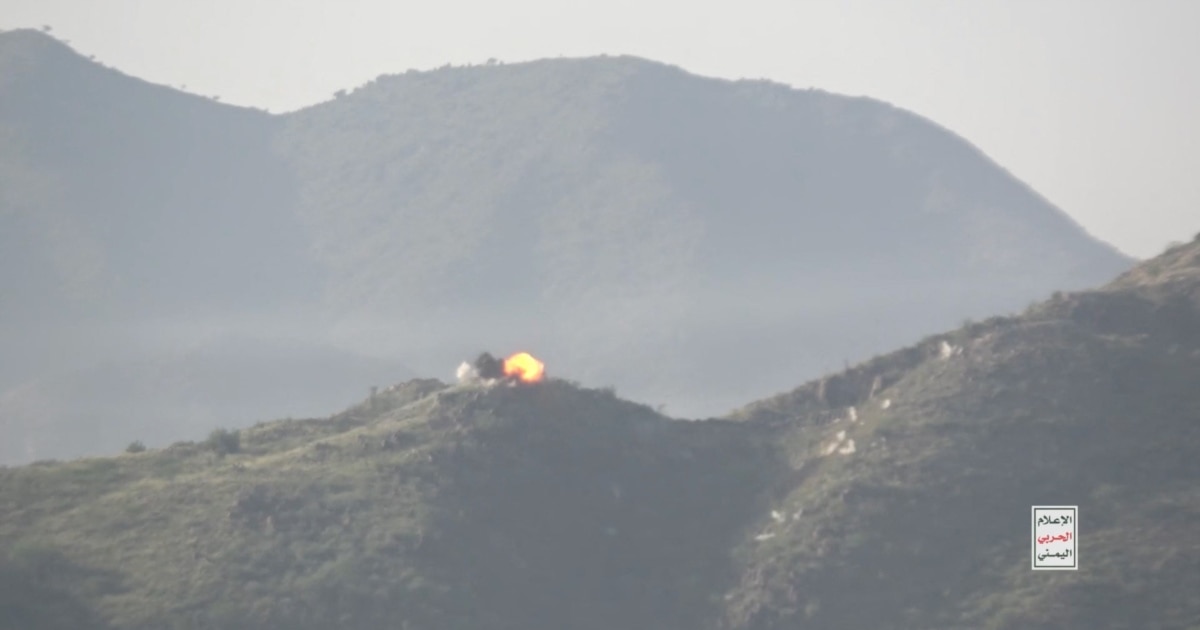
A Strike Too Close to Home
Four drones. Six dead. Two critical infrastructure sites hit within hours of each other.
The latest Houthi offensive against Saudi Arabia, reported on July 22, is not a routine skirmish. It is a coordinated push that struck the kingdom’s civilian airports and its oil-processing backbone simultaneously, killing a Saudi national and an Indian citizen at King Fahd International Airport in Dammam, then hitting the Shaybah production facility in the Eastern Province, where falling drone debris killed a Filipino and a Nepali worker.
By evening, the US State Department had ordered non-essential American government staff and their families to leave Saudi Arabia. The message was blunt: the threat environment has shifted from distant instability to immediate operational risk.
What happened over 48 hours, according to Houthi military spokesperson Yahya Sari, includes attacks on the Riyadh Defense Ministry, King Fahd Airport in Dammam, Abha International Airport in the southwest, and Aramco facilities near Yanbu. Sari also claimed, without independent verification, that Saudi forces have carried out more than 2,900 air and missile strikes on Yemen in the past 100 days, killing over 562 people including women and children.
The numbers may be disputed. The pattern is not.
Who Is Targeting Saudi Arabia—and Why Now
The Houthis have long waged a proxy war through Iran, but their recent targeting decisions reveal a recalibration. Airports are soft, high-visibility targets. They disrupt commercial life, trigger insurance payouts, and generate global news cycles. Aramco facilities are harder targets but carry strategic weight: Shaybah processes light crude that feeds both domestic refining and export flows through the Red Sea and Gulf corridors.
Striking both types of target in the same weekend suggests a command structure comfortable with operating on multiple timelines—immediate chaos and longer-term economic pressure.
The timing is also worth noting. Saudi Arabia has been investing heavily in diversifying its energy portfolio and positioning itself as a regional security hub under Vision 2030. Misha’al Airport, NEOM, and the Red Sea Project all depend on an image of normalcy. Houthi strikes on civilian infrastructure directly undermine that narrative.
The US Evacuation Order: Signal Over Substance
The State Department directive is procedural but loaded. Non-essential evacuation orders are not declarations of war. They are risk recalibrations that signal to markets, allies, and adversaries that Washington sees the threat trajectory as upward.
Tommy Pilot, a State Department spokesperson, framed it plainly on X: Iranian-backed Houthi forces have escalated hostilities against Saudi Arabia, including attacks on civilian airports and critical infrastructure, resulting in civilian casualties and severe travel disruptions. The safety and security of American personnel and their families remain our top priority.
The language mirrors previous warnings but carries more weight now because it is tied to concrete attacks. The US has not committed combat forces to defend Saudi airspace. It has committed diplomatic infrastructure—and even that is being pulled back.
What This Means for Global Energy
Aramco is the world’s most prolific oil producer, pushing roughly 12 million barrels per day at peak. Shaybah alone contributes significantly to that output. The facility was hit but appears to have resumed operations quickly, according to Saudi energy ministry statements. No major production shutdown has been announced.
That is the best-case scenario. The worst case is already playing out in the Red Sea, where Houthi forces have been targeting commercial shipping since late 2023. The US and UN have repeatedly warned that the group’s control of Yemen’s coastline threatens regional peace and maritime transport routes.
Oil markets have absorbed these threats so far. Brent crude has not spiked dramatically on each new attack. But the risk premium is real, and it compounds. Every successful strike on Saudi infrastructure makes insurers more cautious, shipping routes longer, and energy transit more expensive.
For countries like South Korea and Japan, which import the vast majority of their oil from the Middle East, these are not abstract concerns. They are balance-of-payments calculations. Every percentage point increase in shipping insurance or rerouting costs flows directly into import bills.
India’s Reaction: A Regional Pattern
India condemned the attacks alongside other nations, confirming one Indian national killed at Dammam Airport and another injured at Shaybah. New Delhi has deep energy ties with Riyadh and a large expatriate workforce in Saudi Arabia. The casualties reflect that reality.
India’s response has been measured but firm. It has not called for military action. It has not threatened sanctions. It has joined the chorus of condemnation that characterizes most Western and Gulf-aligned capitals.
The shared language across these condemnations reveals something important: the Houthi attacks have normalized a level of violence against civilian infrastructure that would have triggered crisis-level diplomatic responses five years ago. We are adapting to escalation rather than resisting it.
The Iran Question: Who Is Pulling the Strings
Iran denies direct operational control over the Houthis, but the weapons, intelligence, and training flows are well documented. The US, EU, and Gulf states have all attributed the group’s advanced drone and missile capabilities to Iranian assistance.
Tehran faces its own pressures: Western sanctions, regional isolation, and a economy still reeling from decades of mismanagement. Supporting proxy forces is a low-cost way to project power without direct confrontation. But each Houthi strike that hits Saudi soil increases the risk of miscalculation.
Saudi Arabia has responded with its own strikes on Yemen, which Sari claims number nearly 3,000 in 100 days. The cycle is self-reinforcing. Each side views its actions as defensive; each views the other’s responses as escalation.
What Comes Next
Three scenarios are plausible over the next quarter.
The first is contained escalation: more attacks on lower-value targets, occasional infrastructure hits, continued US diplomatic pullbacks but no direct military involvement. This is the baseline.
The second is a major incident: a strike that kills dozens of civilians at a busy airport or causes a significant Aramco facility fire. That would force Washington to reconsider its defensive posture and could trigger coalition-based security commitments.
The third is a regional spillover: Houthi attacks draw Iranian forces into direct confrontation with Saudi or US assets, opening a second front in the Gulf.
All three are worse than the status quo. The status quo, as we now know, is already deteriorating.
The Bigger Picture: Proxy Wars in the Age of Information
The Houthis have mastered something their predecessors in the region did not: they understand that a drone strike on an airport generates more global attention than a battalion defeat in the desert. Social media amplifies every casualty video, every burned terminal, every evacuation order.
This is asymmetric warfare in the information age. The goal is not territorial conquest. It is cost imposition—making it expensive for adversaries to maintain their positions, their supply lines, and their sense of security.
Saudi Arabia is spending billions on air defense systems. The US is deploying additional naval assets to the region. Insurance premiums for commercial flights over the Gulf and Red Sea continue to climb.
None of this addresses the root cause: a Yemen that remains fractured, an Iran that views proxies as cheap leverage, and a Saudi leadership that cannot afford to look weak.
The six dead at Dammam and Shaybah are not statistics. They are the human cost of a conflict that refuses to stay contained.
The question is not whether the Houthis will strike again. It is whether anyone involved is willing to absorb the next escalation before it becomes unrecoverable.