Houthi Strikes Hit Saudi Arabia With Korean Industry in Crosshairs
Houthi missile and drone attacks on Saudi airports and refineries have directly targeted a facility in Rabigh where Korean companies operate, raising alarms for global energy supply chains and East Asian insurance markets.
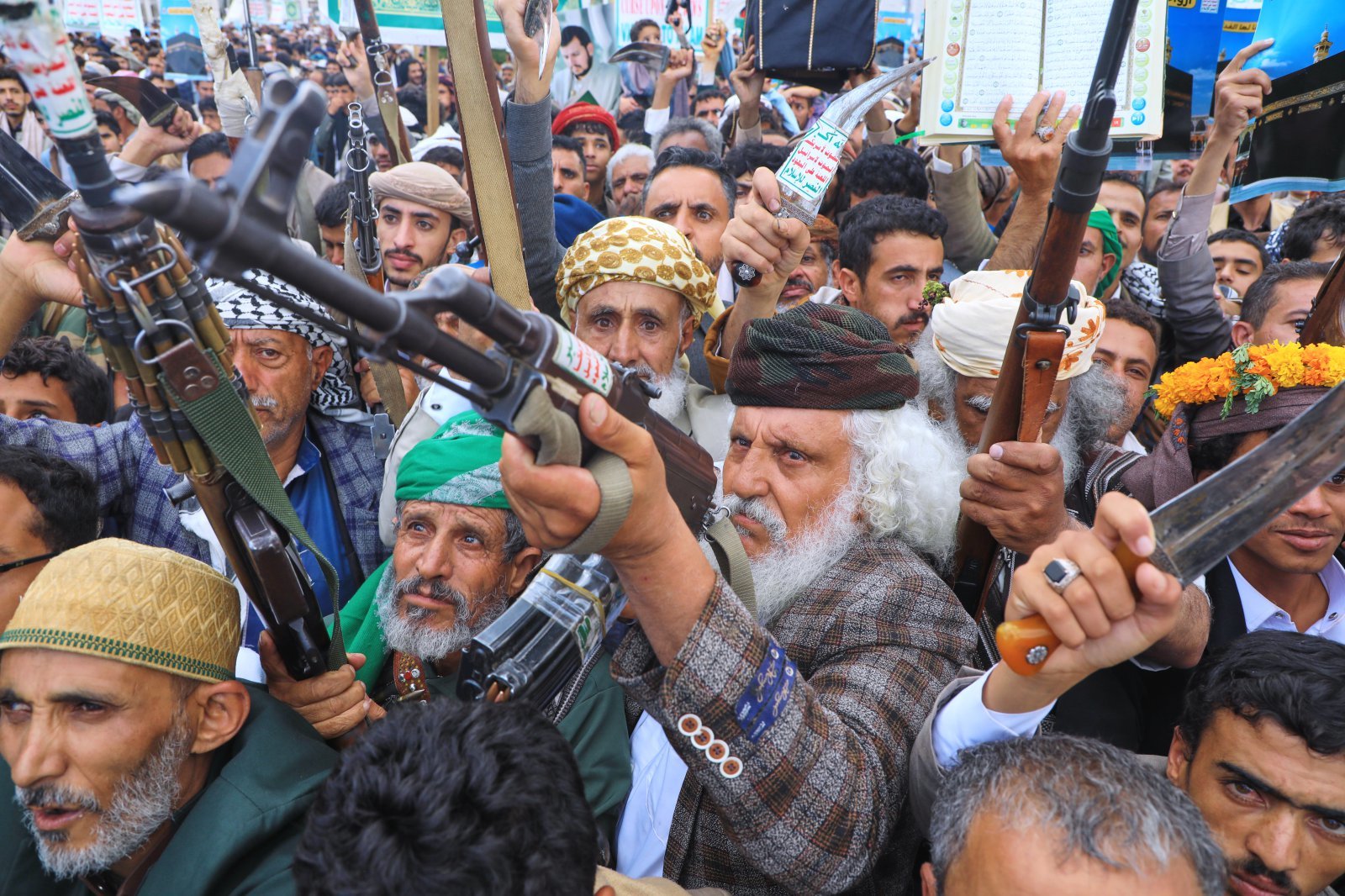
The Attack That Changes Everything
Saudi Arabia’s King Abdulaziz International Airport in Jizan and Najran International Airport were struck by Houthi missiles and drones on October 6, injuring three people and damaging infrastructure near the Yemeni border. What makes this escalation qualitatively different from the dozens of similar strikes over the past two years is that the Houthis explicitly claimed they also hit the Aramco refinery in Rabigh — and Rabigh is where Hyundai Motor and other Korean industrial giants are building their most significant Middle Eastern footprint.
The fire at the Rabigh facility was reported by Houthi spokesperson Yahya Sari, who listed it alongside strikes on King Khaled International Airport in Riyadh, Abha Airport, and the Khamis Mushayt air base. Saudi authorities have not yet confirmed the full extent of damage at Rabigh, but the timing and targeting pattern suggest a deliberate pivot: the Houthis are no longer content with maritime interdiction alone. They are striking deep into Saudi industrial territory, and Korean assets sit squarely in the blast radius.
Why Rabigh Matters More Than You Think
Rabigh is not a minor stopover. It sits on the Red Sea coast roughly 120 kilometers north of Jeddah and hosts one of the Saudi Kingdom’s most important petrochemical corridors. The Aramco refinery there has been a strategic target before, but never with the same intensity of coordination seen in this latest wave. More critically for global markets, Hyundai Motor is constructing a major automobile manufacturing plant approximately 40 kilometers south of Rabigh inside the King Salman Industrial Zone — a $2 billion+ bet on Saudi Arabia’s industrial diversification strategy that relies on stable Red Sea logistics corridors.
Hyundai confirmed that no injuries or facility damage have been reported among its construction sites or employees, many of whom are housed in Rabigh-area accommodation. The South Korean embassy in Riyadh has issued advisories urging Korean nationals in the region to avoid sensitive installations, including oil facilities. That diplomatic caution speaks louder than corporate reassurances.
But the implications run deeper than any single facility. The King Salman Industrial Zone was designed to be the crown jewel of Saudi Vision 2030’s manufacturing push, and Hyundai’s plant was supposed to be its anchor tenant. An estimated 1,200 Korean engineers and technicians are currently on-site, supported by a subcontractor network that spans Turkish, Indian, and Filipino firms. Any sustained disruption to the Rabigh corridor doesn’t just delay Hyundai — it sends a signal that Saudi Arabia’s ambitious industrial transformation may be more vulnerable to regional spillover than policymakers on both sides of the Strait of Hormuz have been willing to acknowledge.
The Strategic Calculus Behind the Escalation
The Houthis have been fighting a proxy war for years, but this latest escalation follows a specific military trigger: Saudi-backed Yemeni government forces recently reclaimed territory around the Bab el-Mandeb strait, including the port city of Mocha, which had been under Houthi control. The Bab el-Mandeb is the chokepoint through which roughly 10 percent of global trade passes and where all oil bound for Europe and East Asia must transit.
By striking Saudi airports and refineries — including facilities near Korean industrial zones — the Houthis are attempting to raise the cost of that territorial reversal. The message is simple: if you take back my coastline, I will make your refineries and your partners’ factories feel the war. It is a strategy of economic coercion aimed not just at Riyadh but at the multinational supply chains that depend on Red Sea stability.
Military analysts note that the coordination between the airport strikes and the Rabigh claim suggests improved Iranian-backed guidance — possibly involving loitering munitions that can hover over fixed industrial targets rather than the crude rocket barrages of previous years. This is a force-proliferation problem: cheap drone technology, distributed across multiple proxies, makes absolute defense economically impossible for any host nation.
Who Wins, Who Loses
The Houthis win in attention and in disrupting the assumption that the Red Sea is finally settling after months of shipping chaos. They force every insurer, every logistics operator, and every East Asian energy importer to reassess risk models that had begun improving. The war in Yemen was always a regional conflict with global consequences. This escalation makes those consequences tangible for Korean industry specifically.
Saudi Arabia loses ground in its own territory. The fact that Iranian-backed militants can strike airports and refineries 120 kilometers from the Yemeni border without being intercepted reveals persistent gaps in Saudi air defense coverage — gaps that Tehran and its proxies have been exploiting systematically. The three injured at Jizan and Najran airports are symptoms of a broader vulnerability that no amount of Patriot battery deployment can fully close.
Global shipping insurers lose predictability. The war risk premiums that had been clawing back from their 2024 peaks face a fresh repricing cycle. East Asian energy importers — Japan, South Korea, China — lose the margin of safety they had begun to enjoy as Red Sea traffic normalized. Every strike on Saudi infrastructure is a reminder that the alternative routes around the Cape of Good Hope remain far more expensive and slower, adding days to delivery windows and hundreds of dollars per barrel to landed costs.
Second-Order Effects: Insurance, Supply Chains, and Diplomatic Strain
The ripple effects are already visible beyond the immediate blast zone. Lloyd’s of London and other marine war-risk insurers are expected to reopen negotiations on Red Sea premium rates within days, potentially undoing the modest relief that global shipping had started to feel. Container rates that were beginning to return to pre-crisis levels could spike again, hitting manufacturers from Busan to Hamburg.
For South Korea specifically, the second-order effects cut two ways. On one hand, Seoul’s energy security depends on uninterrupted Gulf shipments — roughly 75 percent of South Korea’s crude oil enters through the Bab el-Mandeb. On the other hand, Korean auto and battery makers see Saudi Arabia as a strategic pivot market, a foothold in a region where domestic demand is growing and where production costs can undercut European and North American operations. The Rabigh strike forces Seoul to weigh these competing interests in real time.
Petroleum downstream operations at the Rabigh facility also affect global refining margins. The complex processes naphtha and distillate streams into products consumed across the region and beyond. Even partial disruption there creates localized shortages that reverberate through regional fuel markets — something that matters acutely as Saudi Arabia prepares to absorb additional OPEC+ production flexibility in the coming months.
What Happens Next
South Korea’s industrial exposure in the region is about to be tested. Hyundai’s King Salman plant is one of the largest Korean industrial investments in the Middle East, and its construction timeline depends entirely on supply chains moving through the Red Sea. If the Houthis can disrupt Rabigh’s refinery operations or threaten the industrial zone’s logistics, Hyundai’s Saudi ambitions face delays that could stretch into years, not months.
Other Korean firms with Saudi presence — Samsung SDI, SK Innovation, LG Energy Solution — all have petrochemical and battery-material supply chains that pass through this same corridor. None of them have publicly commented on the Rabigh strike, but internal risk assessments are almost certainly being revised. The broader question is whether Korean conglomerates will treat Saudi Arabia as a diversification opportunity worth the risk or reconsider the geographic concentration of their Middle Eastern exposure.
Diplomatically, Seoul faces a dilemma. It needs to protect its citizens and investments without alienating Riyadh, its key energy supplier, or Washington, which backs the Saudi campaign in Yemen. The embassy’s advisory to avoid sensitive sites is measured, but the real question is whether Seoul will push harder for Red Sea security guarantees or accept that its industrial footprint in the region now carries war-risk pricing.
The Houthis have signaled that they will keep escalating. The question for Korean industry is whether Rabigh was a warning shot or a preview — and whether Seoul is prepared to absorb the cost of that uncertainty.