Houthi Strikes on Saudi Soil Are Not Just Another Middle East Flashpoint
The Houthis' largest strike on Saudi territory since the US-Iran war began signals an escalation that global markets can no longer treat as background noise. With oil above $100 and shipping routes increasingly contested, the spillover is already reshaping energy costs, portfolio flows, and alliance calculus worldwide.
The strike that changes everything
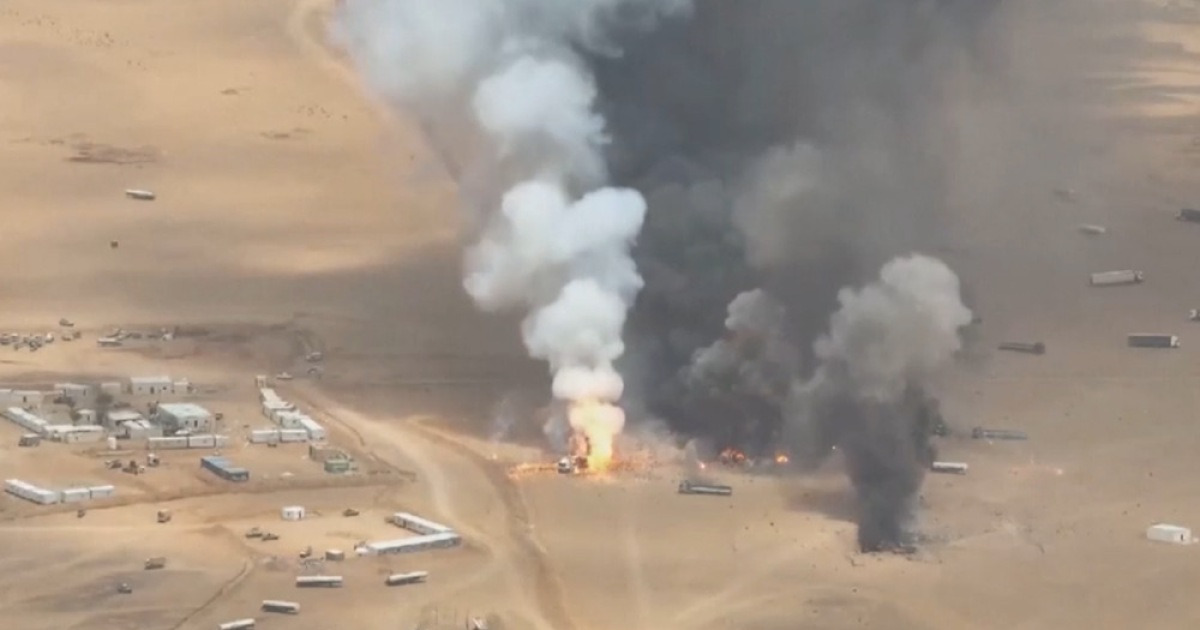
Seven days ago, the Houthis hit four Saudi cities. Seventy-three people were injured. A Saudi air base took damage. So did a core Aramco refining facility — not a peripheral pipeline or a remote storage tank, but a key processing site in the kingdom’s southern industrial corridor.
This is the largest direct attack on Saudi territory since the US-Iran war erupted in February. The distinction matters because it marks a qualitative shift: the conflict is no longer being fought on Yemeni ground or in the maritime chokepoints. It has crossed a border that both Riyadh and Washington treated as sacrosanct.
What happened
According to Saudi officials, the Houthi assault on September 8 used a coordinated mix of drones and missiles — the kind of arsenal that has become dangerously reliable after years of attrition warfare. The targets were not random. A military air base and an Aramco refining node were chosen specifically to maximize economic and strategic impact.
The Saudi-led coalition responded immediately, striking eastern areas of Yemen’s capital. That the retaliation came within hours rather than days signals how quickly the escalation ladder is moving. Both sides are now locked in a pattern of action-reaction with no apparent off-ramp.
Over the past week alone, more than 500 people have been killed in fighting around the Bab el-Mandeb strait — the narrow water passage that connects the Red Sea to the Gulf of Aden and carries roughly 12 percent of global trade throughput.
The oil picture
Crude is trading above $100 a barrel. Not on speculation. Not on OPEC+ messaging. On the actual, visible risk of Iranian-aligned forces striking Saudi infrastructure that feeds into global supply chains.
Aramco is not just Saudi Arabia’s state oil company. It is one of the largest single-point-of-failure nodes in the global refining system. The company’s ability to absorb a hit to its southern facilities without disrupting flows to Asia and Europe remains untested at this scale. That uncertainty alone is enough to keep risk premiums elevated.
Three straight days of global market declines have followed the news. The correlation between Houthi headlines and equity sell-offs is no longer incidental — it is structural. Portfolio managers who treated the Red Sea crisis as a seasonal disruption are now repositioning, and the speed of that repositioning is what will amplify or dampen the next leg of the move.
Who wins, who loses
The Houthis win narrative and tactical space. Each successful strike on Saudi soil validates their claim as the most effective proxy force in the region — a claim that directly serves Tehran’s strategic calculus. Iran benefits from a distracted Saudi Arabia, a disrupted Gulf, and a global market that increasingly prices in Middle Eastern instability without a clear resolution timeline.
Saudi Arabia loses credibility. The kingdom has spent years building the image of a post-oil vision anchored in economic transformation. Attacks on Aramco facilities and military bases on Saudi ground puncture that image in real time. The immediate retaliation into Yemen is necessary for domestic political reasons but risks widening a war that Riyadh has long claimed it wanted to contain.
Global consumers lose the most quietly. An oil price sustained above $100 does not make headlines the way a bombing does. But it raises shipping insurance costs, reroutes supply chains through longer corridors, and adds a persistent inflation tax to everything from fertilizers to plastics to air freight. That tax is invisible until you are the one paying it.
The Bab el-Mandeb problem
The strait is where this story becomes truly global. Control of Bab el-Mandeb is currently a shared nightmare — not fully held by any single actor, but contested enough to make commercial navigation a risk calculation rather than a routine decision.
Iranian-backed forces, including the Houthis, have demonstrated repeatedly that they can disrupt maritime traffic without needing to fully close the strait. A few successful strikes on commercial vessels are enough to make insurers raise premiums and shipowners reroute. That rerouting adds days to transit times and hundreds of thousands of dollars to individual voyages.
n
The past week’s casualty figure of over 500 near the strait suggests the fighting is intensifying precisely at the geographic point where local conflict becomes global supply chain disruption. If Bab el-Mandeb faces even partial closure for more than a few days, the commodity shock shifts from elevated to acute.
What happens next
The immediate question is whether Aramco’s damaged refining capacity can be restored quickly enough to prevent a supply gap. Saudi Arabia has strategic reserves and emergency protocols, but the kingdom’s oil exports are calibrated to run at near-maximum capacity — there is little slack in the system by design.
The second question is whether the US-Iran war, which has been playing out across multiple theaters since February, now gains a third front on Saudi soil. Every escalation cycle raises the probability that this stays contained. The probability also rises that it does not.
The third and least discussed question is what happens to commodity markets if the current trajectory holds. Oil above $100 is already pricing in moderate escalation. It is not pricing in a sustained multi-front conflict involving Iranian proxy networks, Saudi retaliatory campaigns, and contested maritime chokepoints. The gap between what markets are pricing and what is physically occurring is where the next sharp move will come from.
The story wire desks will flatten
n
Tomorrow’s news feeds will describe this as another Houthi attack, another Saudi response, another regional flare-up. The facts will be correct. The framing will be wrong.
This is not a regional skirmish. It is an escalation event with direct lines to global energy prices, shipping costs, and equity valuations. The Houthis are no longer just a Yemeni insurgent group with Iranian backing. They are a force that can project violence onto Saudi territory and threaten infrastructure that the world economy depends on.
The seven-decade-old assumption that the Gulf’s security architecture could contain this conflict is being tested in real time. The market is still adjusting. Most readers have not noticed yet.