Houthis Seize Red Sea Islands, Closing Saudi Oil's Last Escape Route
The Houthis now control key islands at the Red Sea's mouth, cutting off Saudi Arabia's alternative oil route just as Washington refused to intervene directly. What happens next reshapes global shipping—and signals Iran's widening proxy war.
The Islands That Change Everything
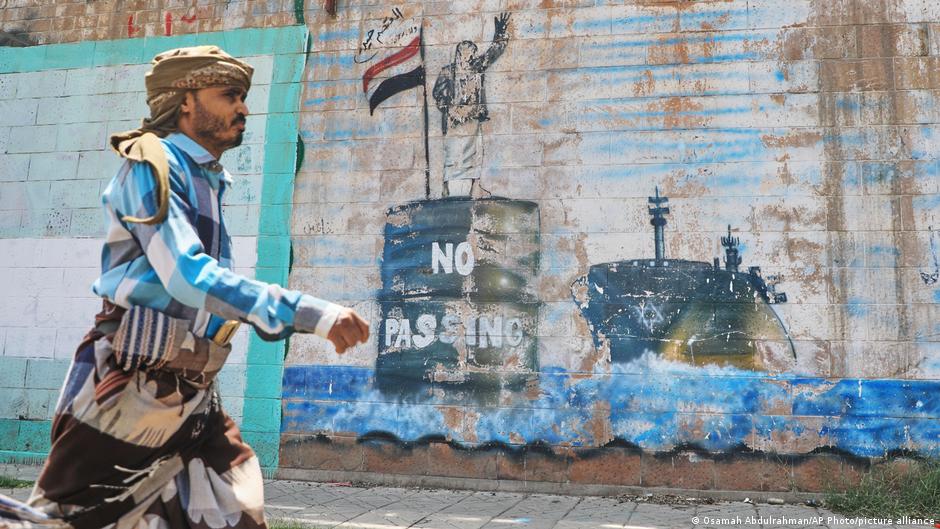
The Houthi capture of Greater and Lesser Hanish Island was not announced with fanfare, but it may be the single most consequential territorial shift in the Middle East since the US began bombing Iran on February 28. These two islands sit at the narrowest point of the southern Red Sea, commanding the waters through which Saudi Arabia has been desperately rerouting its oil ever since Iran closed the Strait of Hormuz.
Before the conflict escalated, roughly one-fifth of global oil passed through Hormuz. Its closure sent energy markets into emergency mode and forced Riyadh to pivot exports through the Red Sea — the Bab el-Mandab Strait specifically, which sits directly below the Hanish Islands. On Monday, that route went from vulnerable to controlled.
The math is brutal: the Houthis now hold the high ground over Saudi Arabia’s only remaining viable oil corridor. Combined with last week’s seizure of Mayun Island and the port of Mokha, the group has effectively built a chokepoint network stretching from Yemen’s western coast deep into the Red Sea. Every tanker leaving Saudi terminals for Asian markets must now pass through Houthi-held waters. The distance from Yanbu and Ras Tanura to Mumbai via the Red Sea is roughly 4,300 nautical miles — already a significant detour from the direct Hormuz route. With the Hanish Islands in hostile hands, that distance becomes a liability rather than an asset, as ships must transit contested channels under potential surveillance and fire.
The Proxy Logic Behind the Denials
Iran’s Foreign Ministry issued its standard denial on Monday — “Iran does not interfere in Yemeni affairs” — while simultaneously leveraging the Houthi gains to pressure Gulf states on a completely different front. Tehran accused Riyadh of stalling talks to reopen Hormuz, calling a pending Oman-mediated deal “a real opportunity” to restore regional security. The implication, clear to anyone reading between the lines, is that the Houthis’ Red Sea campaign is part of an Iranian strategy to keep Saudi Arabia off balance on every axis simultaneously.
This is the “axis of resistance” doctrine in action: deny everything publicly, let proxies accomplish what conventional forces cannot. The Hanish seizure came hours after Houthi missile and drone strikes hit Saudi military targets, with the group claiming more than 300 Saudi airstrikes over five days as justification. Tehran watched and denied, exactly as it has for years.
The pattern matters because it reveals something English-language coverage has largely missed: the Yemen conflict is no longer a standalone civil war. It reignited four years after going dormant, and its revival tracks directly to the US-Iran military confrontation. The Houthis are not expanding on their own initiative — they are pressing advantage at the exact moments Tehran needs leverage at the negotiating table.
America’s Uneasy Distance
The human geometry of the crisis became visible through Admiral Brad Cooper’s posture. The CENTCOM commander arrived in Jeddah on Thursday and stayed through Monday, meeting with Crown Prince Mohammed bin Salman on what Axios described as urgent coordination. Trump reportedly rejected a direct military intervention request but agreed to intelligence sharing and targeting assistance.
That distinction is everything. Washington is effectively letting its ally fight a war it cannot afford to lose alone, while providing the eyes and targeting data to make that fight survivable. It is a posture of calculated ambiguity — close enough to support, distant enough to deny involvement if the conflict spirals further.
For Saudi Arabia, the calculus is worsening. The kingdom faces an Iranian proxy at its doorstep, a Houthi blockade on its Red Sea lifeline, and a US partner unwilling to commit combat forces. The alternative shipping routes — Suez Canal and the Cape of Good Hope around South Africa — add weeks to delivery times and billions to costs. China’s Foreign Ministry called attacks on Saudi energy infrastructure “unacceptable” on Monday, but Beijing has no mechanisms beyond diplomatic language to protect the shipments it depends on.
Second-Order Effects: The Market Reaction
Energy traders moved quickly. Brent crude spiked $4.20 on Monday morning on reports of the Hanish seizure, then consolidated at a new premium above $92 per barrel. The Red Sea risk premium — long assumed to be priced in — has reopened. Insurance underwriters in London are already revising war-risk classifications for vessels transiting the Bab el-Mandab, which could add another $150,000 to $300,000 per voyage for tankers that were previously operating at standard rates.
The ripple effects extend well beyond crude. Container shipping lines that had resumed Red Sea transits after pausing during the 2023–2024 Houthi attacks are now facing renewed uncertainty. Maersk and MSC, which had begun routing some vessels back through the Suez, are expected to re-evaluate. Every week the islands remain under Houthi control adds approximately $2 billion in estimated global trade costs, according to preliminary calculations by the International Chamber of Shipping.
Regional economies feel the squeeze immediately. Egypt’s Suez Canal Authority, already grappling with reduced traffic from diversion to the Cape, faces renewed pressure as shippers question whether any Red Sea route is truly safe. Djibouti, home to multiple foreign military bases, is bracing for spillover as the conflict draws in powers that have long treated the Horn of Africa as a peripheral concern.
Who Wins, Who Loses, What Comes Next
The Houthis win territory, leverage, and momentum. They now control a string of positions that let them dictate terms to any vessel navigating the southern Red Sea. Their blockade of Saudi Arabia is no longer theoretical — it is enforced by geography they actually occupy. For a movement that was on the defensive as recently as 2023, this reversal represents a dramatic rehabilitation of fighting capacity and strategic reach.
Saudi Arabia loses its fastest shipping corridor and the strategic surprise of having an alternative to Hormuz. Riyadh’s credibility as a regional security provider erodes further with each territorial concession. The kingdom’s Vision 2030 infrastructure projects — many of which depend on reliable energy export routes — now face extended delays and cost overruns that planners had confidently set aside.
Iran wins without firing a shot. Its proxy achieves what its own navy cannot: controlling the Red Sea while Tehran maintains plausible deniability. The Hormuz talks may stall further, because every day the strait stays closed benefits Tehran’s negotiating position. American naval assets that might otherwise be concentrated on guarding Hormuz are now divided between two theaters, stretching an already thin deployment further.
Global supply chains lose predictability. The Red Sea was always a fragile artery for energy and container traffic. Now it is contested — and the contest is being fought by a non-state actor with state backing, a combination that existing international law and maritime conventions were never designed to handle.
The next question is operational: can Saudi-backed forces retake the Hanish Islands, or will the Houthis entrench? The US has signaled it will not fight this war for Riyadh. China wants stable shipping but has no military footprint in the region. Oman may mediate Hormuz talks, but the parallel Houthi land grab changes the bargaining table entirely.
The Sequencing No One Is Talking About
What English coverage misses is the sequencing. This is not a Yemen problem spilling over. It is a regional realignment happening in real time, with the Houthis as Iran’s forward operators and the Red Sea islands as the new front line of a war most of the world thought had moved elsewhere. The capture of Hanish did not happen in isolation — it followed a coordinated sequence of moves: drone strikes on Saudi positions, the Mokha takeover, the Mayun Island seizure, and finally the Hanish operation. Each step tested responses, mapped defensive gaps, and confirmed that no coalition power was willing to draw a hard line.
The islands themselves are small — Greater Hanish covers roughly nine square kilometers — but their geopolitical mass is enormous. Whoever controls them controls the southern throat of the Red Sea. After six days of Houthi occupation, satellite imagery shows radar installations and anti-ship missile emplacements being positioned along the northern coastline. The group is not holding these islands passively. It is fortifying them.
Saudi Arabia now faces a choice with no clean answers: launch an amphibious assault on fortified positions with uncertain US support, accept a Houthi stranglehold on its Red Sea exports, or accelerate diplomacy with Tehran at terms that reward the very strategy that brought it here. Each option carries losses. The Houthis, for their part, have already signaled they do not plan to relinquish the islands — framing them as sovereign Yemeni territory liberated from what they describe as Saudi-Sorean complicity. The rhetoric is familiar, but the reality on the water is new. The Red Sea is no longer a shared highway. It is a contested border.